Chronic kidney disease diagnosis in University Hospital Frankfurt am Main
University Hospital Frankfurt am Main
Frankfurt am Main, Germany


 BookingHealth Price from:
The Department of Nephrology at the University Hospital Frankfurt am Main offers a comprehensive range of services for the prevention, diagnosis, and treatment of kidney diseases. One of its key areas of expertise is providing medical care to patients before, during, and after kidney transplants. The department's physicians have extensive expertise in managing patients throughout the transplantation process – appropriate preparation measures before the transplantation and comprehensive follow-up care after it have a significant impact on the overall success of treatment. Another major area of specialization is the treatment of glomerulonephritis, systemic diseases with kidney involvement, and congenital kidney disorders, including polycystic kidney disease. The department is also part of the Center for Rare Diseases at the university hospital, which gives patients access to specialized medical services and advanced treatment modalities. Depending on the complexity of the clinical case, medical care can be provided in an outpatient or inpatient setting. The department is equipped with modern facilities for ultrasound examinations and clinical assessments. In addition, patients with chronic kidney disease have access to a state-of-the-art Dialysis Unit with the necessary equipment to provide a wide range of blood purification procedures. The department is headed by Prof. Dr. Dr. med. Thimoteus Speer.
The department operates a specialized Diagnostic Center that focuses on advanced ultrasound examinations and biopsies. The nephrology team has extensive experience in performing a variety of ultrasound examinations, including duplex sonography and contrast-enhanced ultrasound, which play an important role in assessing kidney structure and identifying pathological changes. They also perform more than 150 biopsies of native and transplanted kidneys each year, often enabling accurate diagnosis and appropriate treatment strategy selection. Kidney biopsies are performed under local anesthesia using ultrasound guidance to provide accuracy. Typically, patients require a short-term hospital stay after the procedure for close medical monitoring.
The department comprises several specialized sections focused on the specific needs of different groups of patients. The general nephrology wards and transplant wards admit patients with a variety of nephrological conditions, including autoimmune diseases affecting the kidneys, particularly glomerulonephritis, and systemic disorders such as vasculitis or systemic lupus erythematosus. This section is also equipped with the necessary facilities for performing kidney biopsies to investigate suspected kidney disease. The department's Dialysis Unit is located in the immediate vicinity of this section, which makes it easy to care for patients after dialysis. Section A4 is intended for patients who have undergone kidney transplants. It is equipped with a central monitoring system for continuous assessment of all vital signs after surgery. The department also has a specialized Intensive Care Unit for critically ill patients. This unit mainly treats acute kidney failure, autoimmune diseases affecting the kidneys, severe infections, and sepsis.
Another major structural element in the department is the Dialysis Unit with an expert team of doctors specializing in hemodialysis, peritoneal dialysis, plasmapheresis, immunoadsorption, and liver support therapies. Some of these procedures become necessary when kidneys or liver can no longer properly perform their functions, while others are used to treat severe autoimmune diseases by removing antibodies responsible for autoimmune reactions.
Hemodialysis is a form of renal replacement therapy that is used when the patient's own kidneys are unable to adequately clear the body of waste products and excess fluid. In addition to this therapeutic option, the department's medical team also provides peritoneal dialysis. When using this dialysis method, the peritoneum (the lining of the abdominal cavity) serves as a natural dialysis membrane. Unlike hemodialysis, peritoneal dialysis can usually be performed at home, often while patients sleep. This means patients do not need to visit a dialysis center several times a week, which offers them greater flexibility and comfort. Other specialized blood purification procedures offered in the department include plasmapheresis and immunoadsorption, which may be used to treat certain autoimmune diseases. They work by removing circulating antibodies and other disease-causing substances from the blood. However, immunoadsorption is a more selective approach that removes only the specific harmful antibodies, while plasmapheresis removes and replaces the patient’s plasma as a whole, including the antibodies.
In addition, the medical team at the department's Dialysis Unit provides liver support therapies for patients with liver failure. These procedures help eliminate specific toxins and other substances that accumulate in the body when liver function is severely impaired.
The department's key areas of specialization include:
The department's range of diagnostic and treatment options includes:
Academic and Professional Career
Primary Research Interests
Awards and Honors
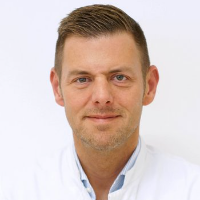
Photo of the doctor: (c) Universitätsklinikum Frankfurt
FOCUS, an internationally respected magazine, has consistently ranked the University Hospital Frankfurt am Main among the best hospitals in Germany!
The foundation of the hospital dates back to 1914. Since then, it has developed into a well-known German medical facility, whose clinical activities are based on the combination of rich traditions in medicine and scientific innovations. Like other leading German university hospitals, the University Hospital Frankfurt am Main is committed to providing world-class medical care through the implementation of state-of-the-art advancements for the benefit of patients, including those from abroad. The hospital offers many unique and highly effective therapies, which allow it to achieve remarkable treatment results and offer hope to patients even in the most complex cases.
The hospital runs 33 specialized departments and 23 research institutes, all equipped with the necessary technology and staffed by qualified specialists to provide the most effective medical care for every patient. The hospital has 1,593 beds for comfortable inpatient care. The University Hospital Frankfurt am Main annually provides its medical services to more than 50,000 inpatients and about 500,000 outpatients with conditions of varying complexity. These figures alone speak volumes about the medical facility's exceptional reputation among patients.
The University Hospital Frankfurt am Main leads in many medical fields, with neurology, neurosurgery, oncology, and cardiology being its top priorities. This medical facility also achieves outstanding results in organ and bone marrow transplantation, which are life-saving treatments for many patients with severe diseases.
Overall, this medical facility is a strong player in both German and European healthcare. The hospital's medical staff make every effort to help patients recover using the most advanced therapies currently available, and they excel at their task. The University Hospital Frankfurt am Main offers not only first-rate medical care, but also patient-centered service in a comfortable environment.
Photo: (c) depositphotos
The patients of the University Hospital Frankfurt am Main live in comfortable rooms made in modern design and meeting the highest standards of European medicine. Each room is equipped with an ensuite bathroom with a toilet and a shower. The standard room includes a comfortable, automatically adjustable bed, a bedside table, a wardrobe, a table and chairs for receiving visitors and a TV. If desired, patients can use Wi-Fi. The patients can also stay in the enhanced-comfort rooms.
The patient and his accompanying person have a daily choice of three menus. If for any reason you do not eat all the food, you will be offered an individual menu. Please inform the medical staff about your dietary preferences prior to the treatment.
Standard rooms include:
Religious services are available upon request.
During the inpatient program, an accompanying person may stay with you in a patient room or in a hotel of your choice.
During the outpatient program, you may stay in a hotel of your choice. Managers will help you choose the most suitable options.