Prof. Dr. med. Christian Hagl
Department of Adult and Pediatric Cardiac Surgery
Specialized in: adult and pediatric cardiac surgery
The program includes:
- Initial presentation in the clinic
- clinical history taking
- physical examination
- cardiological examination
- laboratory tests:
- complete blood count
- biochemical analysis of blood
- TSH-basal
- inflammation indicators
- indicators blood coagulation
- measurement of arterial blood pressure
- electrocardiogram
- Holter monitoring (24h)
- echocardiography
- transesophageal echocardiography
- preoperative care
- cardiac catheterization
- complete intracardiac repair (corrective surgery)
- symptomatic treatment
- control examinations
- the cost of essential medicines and materials
- nursing services
- full hospital accommodation
- explanation of future recommendations
Required documents
- Medical records
- Echocardiography (if available)
Price from:
Type of program :
Price for 1 day:
Expected duration of the program:
The minimum duration of the program:
Select
Hospital directly:
Saving:
 BookingHealth
Price from:
About the department
The Department of Adult and Pediatric Cardiac Surgery at the University Hospital of Ludwig Maximilian University of Munich offers all the possibilities of modern surgery for treating heart disease, including a heart transplant. The department's team of surgeons admits both adult patients and children. The department annually performs more than 3,500 operations, including minimally invasive ones. The most common diseases in the clinical practice of cardiac surgeons include heart failure, coronary artery disease, heart arrhythmias, and heart valve and aortic pathologies. The department's operating rooms have all the resources for efficient and safe heart surgery. The patients' health is in the safe hands of a highly qualified team of doctors and nursing staff, numbering more than 155 employees. The main task of surgeons is to provide an optimal treatment based on the very latest advances in modern medicine. At the same time, the specialists always show a humane attitude towards a patient, considering his individual needs and wishes. The Head Physician of the department is Prof. Dr. med. Christian Hagl.
One of the most demanded surgical procedures in the department is coronary artery bypass grafting. Such an operation is usually indicated for patients with severe coronary artery disease, in which the myocardium suffers from a lack of oxygen and nutrients. The goal of the surgical intervention is to create a new blood flow path around the affected artery. The department's cardiac surgeons perform coronary artery bypass grafting both with and without a heart-lung machine (on a beating heart). Open surgery with the use of a heart-lung machine is considered to be quite complex, since it requires a thoracotomy and a temporary cardiac arrest. The duration of this surgery is 3-5 hours. Cardiac surgeons try to perform coronary artery bypass grafting without connecting a patient to a heart-lung machine whenever possible, since the risks of such an intervention are quite low, and rehabilitation is much easier.
An integral part of the department's clinical practice is the surgical treatment of heart valve pathologies (stenosis and insufficiency). In appropriate clinical indications, the affected heart valve can be reconstructed, and in severe pathological changes, cardiac surgeons perform an operation to replace the valve with a prosthesis. The department's specialists use high-quality mechanical and biological prostheses. The optimal type of prosthesis is selected individually. Each of the prostheses has its own advantages and disadvantages: a mechanical prosthesis has a long service life (20-30 years), but patients with such a prosthesis need to take anticoagulants for life; when implanting a biological prosthesis, there is no need to take drugs for life, but this prosthesis cannot boast of a long-term service life (up to 15 years). Young patients are usually indicated for the implantation of a mechanical prosthesis, and the elderly have a biological one implanted.
The department's cardiac surgeons successfully perform operations for heart rhythm disturbances (arrhythmias). In many cases, arrhythmias are amenable to drug control, but if such a therapy is ineffective, the department's cardiac surgeons prescribe an operation for a patient. If the heart rate is low, a pacemaker implantation surgery is performed. If the patient's heart rate is too high, a defibrillator implantation is indicated. With more than 600 operations to implant pacemakers and defibrillators every year, the specialists of the medical facility have rich experience in this field. Cardiologists, including pediatric ones, are usually also involved in the therapeutic process. The department also pays particular attention to the replacement and removal of infected or damaged electrodes on pacemakers and defibrillators. Surgeons perform more than 120 such surgical interventions annually, which are highly complex operations. Atrial fibrillation (one of the most common heart rhythm disturbances) is often treated with radiofrequency ablation. The technique is minimally invasive and involves the use of catheter-based techniques. Radiofrequency ablation is performed jointly with cardiologists.
In the field of pediatric cardiac surgery, special attention is paid to the repair of congenital and acquired heart defects. Cardiac surgeons, together with pediatric cardiologists, offer expectant mothers the chance to undergo fetal echocardiography, which makes it possible to detect congenital heart pathology even in the womb (before the 20th week of pregnancy). After the baby is born, an echocardiogram is repeated. Heart catheterization procedures and CT or MRI scans can also be performed, after which the final decision is made on the surgical intervention. Pediatric cardiac surgeons often perform heart valve replacement interventions with homografts and Contegra valve conduits (mechanical valves are used very rarely). Surgical treatment of heart diseases in children is carried out in accordance with the current recommendations of professional societies and current clinical protocols.
The department's range of surgical options includes:
- Surgical treatment of coronary artery disease
- Standard coronary artery bypass grafting with the use of a heart-lung machine
- Coronary artery bypass grafting without the use of a heart-lung machine
- Minimally invasive coronary artery bypass surgery
- Jarvik 2000 left ventricular assist system implantation
- Intra-aortic balloon counterpulsation
- Surgical treatment of heart valve pathologies
- Aortic valve pathologies
- Aortic valve surgical repair
- Aortic valve replacement, including transcatheter aortic valve implantation (in collaboration with cardiologists)
- Mitral valve pathologies
- Mitral valve surgical repair
- Mitral valve replacement
- Tricuspid valve pathologies
- Tricuspid valve surgical repair
- Tricuspid valve replacement
- Pulmonary valve pathologies
- Pulmonary valve surgical repair
- Pulmonary valve replacement
- Surgical treatment of end-stage heart failure
- Triple-chambered pacemaker implantation for cardiac resynchronization therapy
- Left ventricular assist device (LVAD) implantation
- Extracorporeal membrane oxygenation (ECMO)
- Surgical treatment of types A and B aortic dissections (according to Stanford classification)
- Open surgery
- Endovascular surgery
- Surgical treatment of heart arrhythmias
- Pacemaker implantation
- Cardioverter-defibrillator implantation
- Radiofrequency ablation
- Care for patients with previously implanted pacemakers and defibrillators
- Surgical treatment of heart disease in children
- Open and minimally invasive surgery for the repair of congenital and acquired heart defects
- Palliative interventions for heart defects in children (for example, univentricular heart, atrioventricular canal defect, and tetralogy of Fallot)
- Heart transplant in adults and children, including combined heart-lung transplant
- Other diseases and treatment methods
Curriculum vitae
Higher Education
- 1988 - 1990 Pre-clinical training at the Semmelweis University in Budapest, Hungary, and at the Saarland University in Homburg.
- 1990 - 1995 Medicine studies at the Universities of Mannheim and Heidelberg.
- 1995 Admission to medical practice.
Clinical Practice
- Since 2011 Head Physician of the Department of Adult and Pediatric Cardiac Surgery at the University Hospital of Ludwig Maximilian University of Munich; permission to conduct advanced training courses in basic surgery, cardiac surgery and surgical intensive care.
- 2009 - 2011 Managing Senior Physician, Department of Cardiothoracic Surgery, Transplant Surgery and Vascular Surgery at the Hannover Medical School.
- 2007 - 2009 Board Member, Surgery Center at the Hannover Medical School.
- 2004 - 2008 Senior Physician, Department of Cardiothoracic Surgery, Transplant Surgery and Vascular Surgery at the Hannover Medical School.
- 2004 Board certification in Cardiac Surgery and Emergency Medicine.
- 2001 - 2004 Assistant Physician, Department of Cardiothoracic Surgery, Transplant Surgery and Vascular Surgery at the Hannover Medical School.
- 1999 - 2001 Research Fellowship, Mount Sinai Medical Center, New York University, USA.
- 1997 Medical Officer, Bundeswehr, 62nd Air Transport Squadron, Wunstorf.
- 1996 - 1997 Assistant Physician, Department of Cardiothoracic Surgery, Transplant Surgery and Vascular Surgery at the Hannover Medical School.
- 1995 - 1996 Internship, Department of Cardiac Surgery at the hospital of the University of Kiel.
Academic Career
- 1997 Thesis defense in Experimental Surgery, Ruprecht Karl University of Heidelberg.
- 1999 - 2001 NIH Fellow: Research Fellowship, Mount Sinai Medical Center, New York University, USA.
- 2002 - 2005 Head of the Working Group "Brain Protection in Cardiac Surgery", HTTG Forschung, Hannover Medical School.
- 2005 Habilitation, Hannover Medical School.
- 2006 - 2008 Head of the Department of Experimental Surgery, Member of the Executive Committee of the HTTG Forschung, Hannover Medical School.
- 2009 - 2011 Lecturer, Department of Cardiothoracic Surgery, Transplant Surgery and Vascular Surgery at the Hannover Medical School.
- 2010 Extraordinary Professorship, Hannover Medical School.
- 2011 W3 Professor, Department of Cardiothoracic Surgery at the University Hospital Muenster.
- 2011 W3 Professor for Cardiac Surgery, Ludwig Maximilian University of Munich.
Prizes, Awards and Honors
- 2002 Hancock Prize from the German Society for Thoracic and Cardiovascular Surgery (DGTHG).
- 2003 and 2004 Hans Borst Award from the European Association for Cardio-Thoracic Surgery (EACTS).
- Franz Köhler from the German Society for Thoracic and Cardiovascular Surgery (DGTHG).
- 2010 Ernst Eickhoff Prize from the Society of Friends of the Hannover Medical School.
Memberships in Professional Societies
- 2006 - 2008 Board Member of the German Society for Thoracic and Cardiovascular Surgery (DGTHG).
- European Association for Cardio-Thoracic Surgery (EACTS).
- Professional Association of German Surgeons (BDC).
- German Society for Cardiology - Cardiovascular Research (DGK).
- International Society for Heart and Lung Transplantation (ISHLT).
- German Transplantation Society (DTG).
- German Heart Foundation.
- 2013 - 2015 Member of the Advisory Board for Thoracic Surgery, Eurotransplant.
- Fraunhofer Institute for Cell Therapy and Immunology.
- Member of European Tissue Banks.
Photo of the doctor: (c) LMU Klinikum
About hospital
The renowned FOCUS magazine ranking consistently positions the University Hospital of Ludwig Maximilian University of Munich among the best medical facilities in Germany with top-tier care and remarkable treatment success rates!
This hospital is one of the largest multidisciplinary medical facilities with a status of a leading training and research center in Germany and Europe, enabling it to make unique scientific discoveries that benefit the world. The University Hospital of Ludwig Maximilian University of Munich is proud of its nearly 200-year history and is committed to maintaining its top positions in both national and international healthcare.
The medical facility has two main campuses: Grosshadern and Innenstadt. The University Hospital of Ludwig Maximilian University of Munich operates 28 specialized departments, 16 institutes, and 63 interdisciplinary centers. The hospital has around 2,000 beds to accommodate patients. This large medical complex receives more than 551,000 patients each year and provides outpatient services to around 460,000 people. The hospital employs a highly professional team of 11,908 medical staff whose main task is to restore patients' health in a comfortable and friendly environment, making use of advanced medical resources.
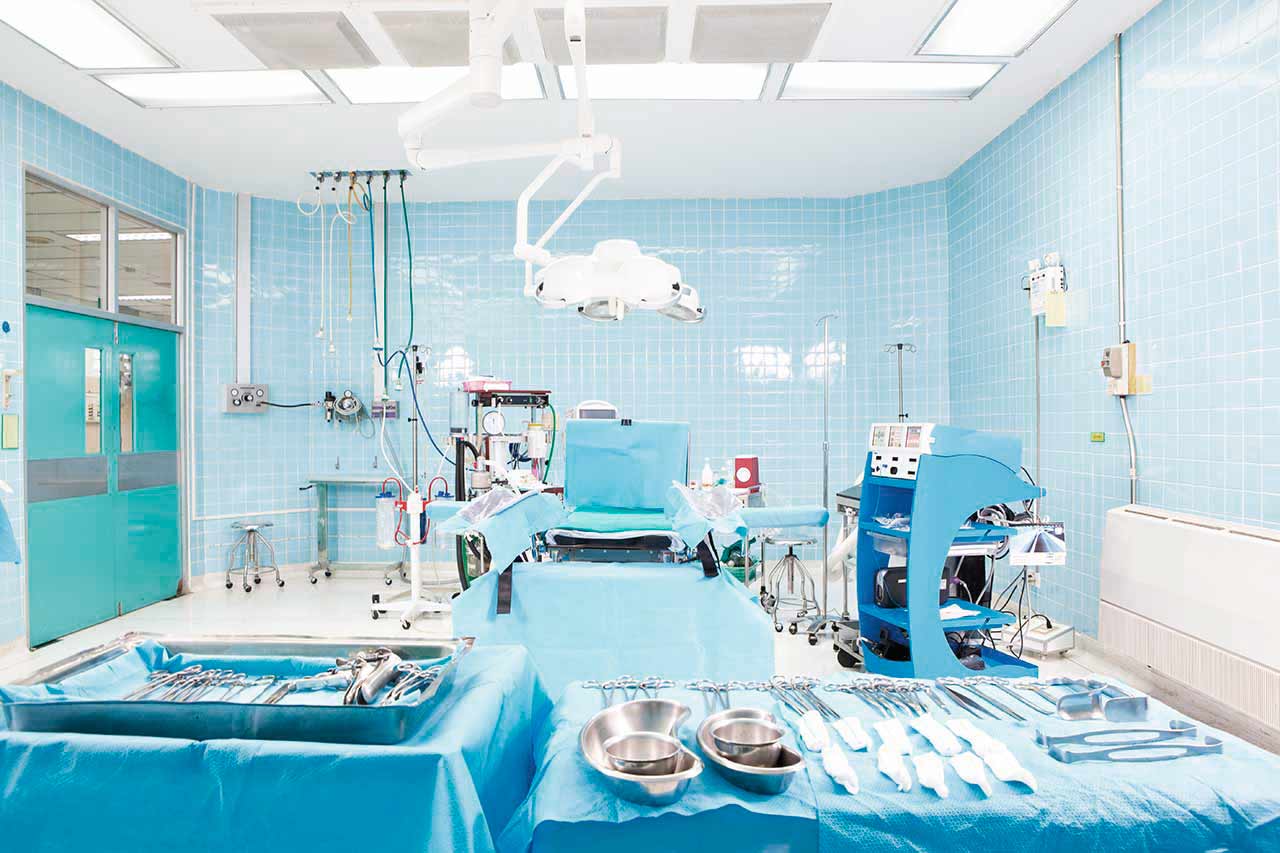
A distinctive feature of the University Hospital of Ludwig Maximilian University of Munich is its state-of-the-art infrastructure, offering high-precision diagnostic equipment that allows for detecting the slightest pathological alterations in the human body, convenient procedure rooms for a variety of outpatient medical procedures, as well as operating rooms with robot-assisted surgical systems and advanced tools for performing minimally invasive interventions that enable the quickest and easiest possible recovery in the postoperative period.
The hospital's excellent technical resources and highly professional medical staff are undoubtedly its pride and joy, but the facility also pays close attention to patient comfort and takes a compassionate approach to their situation. Doctors and nursing staff always show a friendly attitude when providing the necessary medical care. They inform patients in detail about upcoming diagnostic and therapeutic procedures, gladly answer any questions patients may have, and provide moral support throughout their treatment.
The University Hospital of Ludwig Maximilian University of Munich covers virtually all currently available medical fields with outstanding treatment outcomes. However, there are several units within the hospital that deserve special mention as they offer unique competencies and have received special recognition among similar facilities in Germany and beyond. These are the Comprehensive Cancer Center Munich, the Transplant Center, the German Center for Vertigo and Balance Disorders, and the Institute of Infectious Diseases and Tropical Medicine.
The University Hospital of Ludwig Maximilian University of Munich holds many prestigious quality certifications, including DIN EN ISO 9001, IQM and EndoCert,as well as certifications from the German Cancer Society (DKG) for the treatment of various cancers, the German Cardiac Society (DGK) and the German Society for Orthopaedics and Trauma Surgery (DGOU).
Taking all of the above into account, patients can expect to receive the best possible medical care in a friendly environment. With its innovations and exceptional experience, the hospital is rightly considered one of the most advanced and successful medical facilities, saving the lives of German citizens and patients from around the world every day.
Photo: (с) depositphotos
Accommodation in hospital
Patients rooms
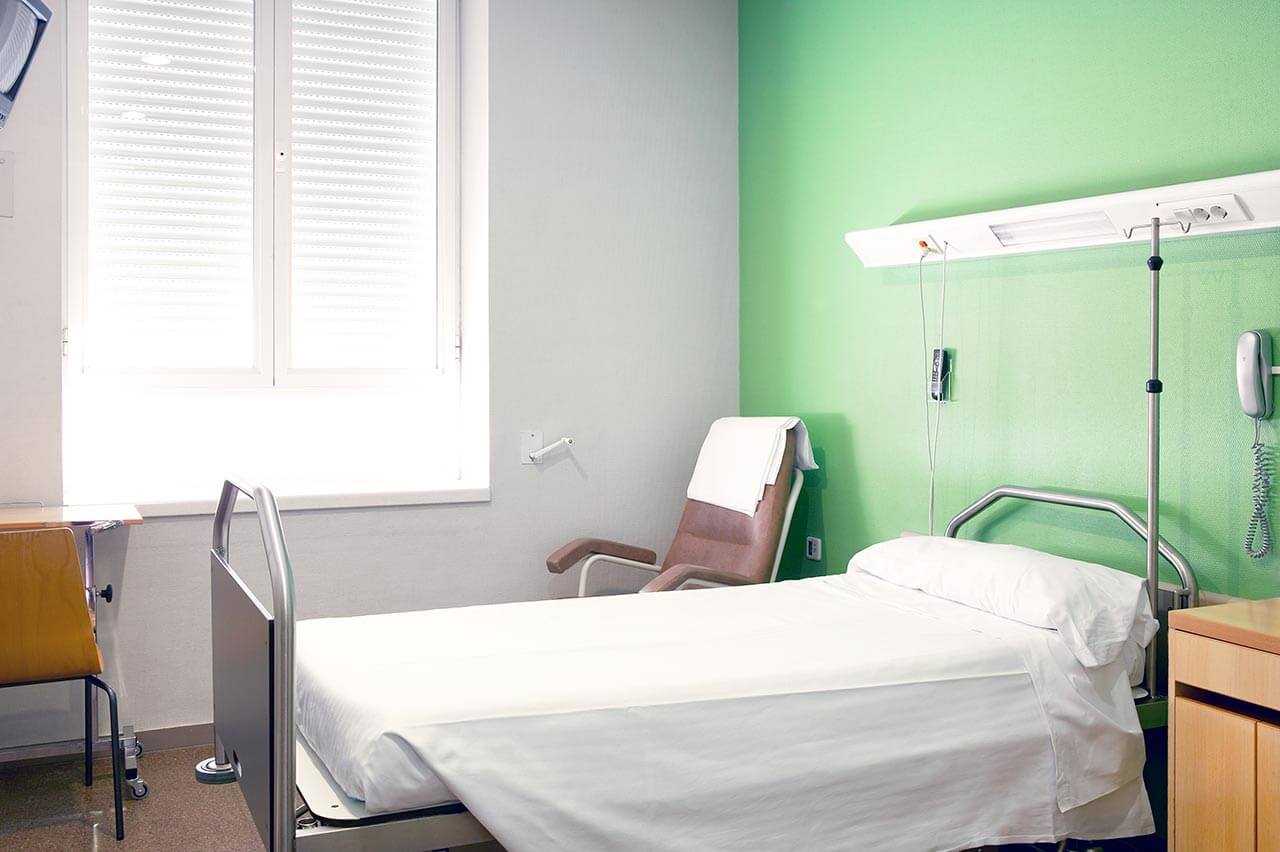
The patients of the University Hospital of Ludwig Maximilian University of Munich live in comfortable, spacious, single and double patient rooms with a modern design. Each room is equipped with an ensuite bathroom with a shower and toilet. The furnishing of a standard patient room includes a comfortable bed, the position of which can be adjusted using the remote control, a locker for storing personal belongings, a TV, and a telephone. Also, if desired, you can connect to the Internet. In addition, patients can opt for enhanced-comfort rooms, with a safe, a fridge, and upholstered furniture.
The hospital has an excellent infrastructure. The medical facility’s area houses a bank, ATMs, a hairdresser, shops with a wide range of food, drinks, newspapers, magazines, and personal hygiene items, play areas for children, and a beautiful garden for walking, etc.
Meals and Menus
The patient and his accompanying person are offered a daily choice of three menus, including a vegetarian one. If you are on a specific diet for any reason, you will be offered an individual menu. Please inform the medical staff about your dietary preferences prior to the treatment.
Further details
Standard rooms include:
Toilet
Shower
Wi-Fi
TV
Religion
Religious services are available upon request.
Accompanying person
Your accompanying person may stay with you in your room or at a hotel of your choice during the fixed program.
Hotel
You may stay at a hotel of your choice during an outpatient program. Our managers will help you to choose the best option.
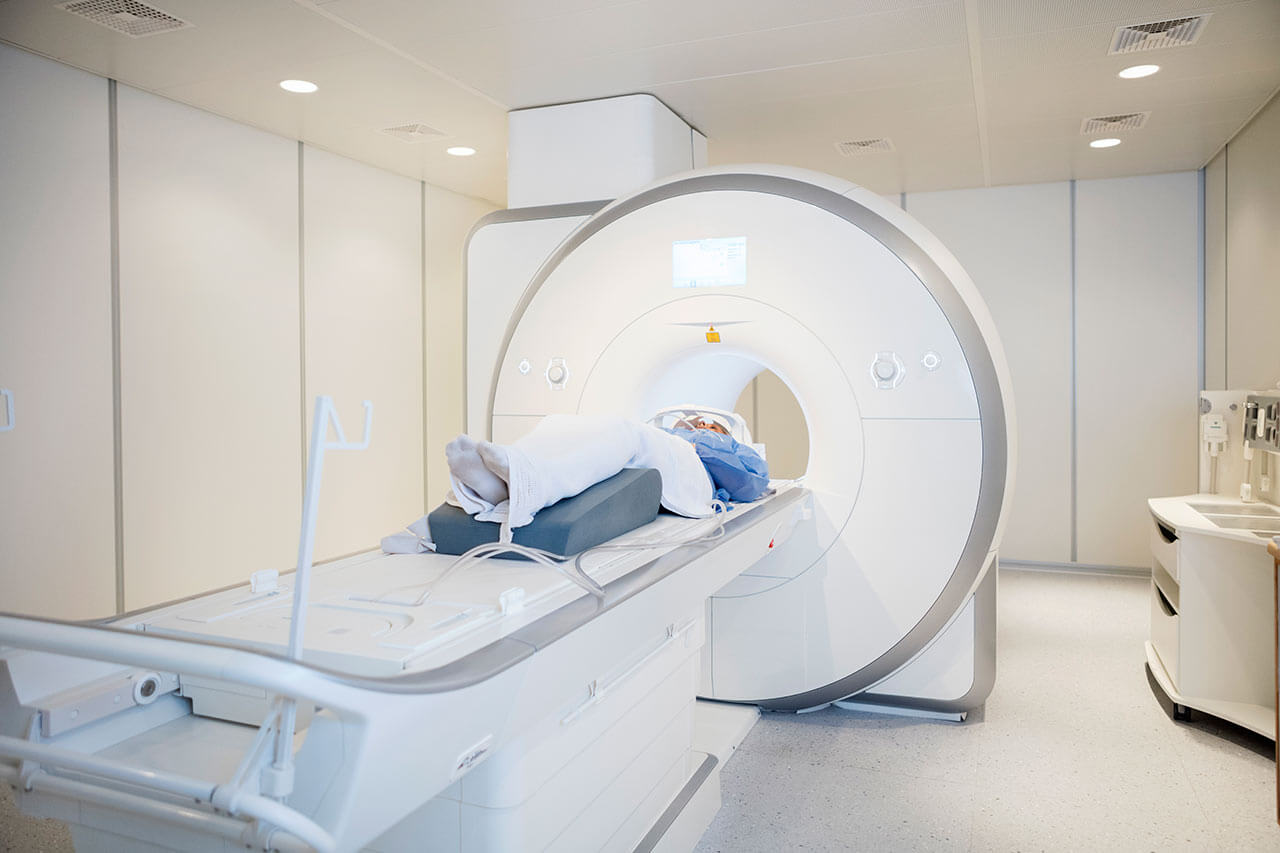
The hospital offers a full range of laboratory tests (general, hormonal, tests for infections, antibodies, tumor markers, etc.), genetic tests, various modifications of ultrasound scans, CT scans, MRI and PET/CT, angiography, myelography, biopsies, and other examinations. Treatment with medications, endoscopic and robotic operations, and stereotaxic interventions are carried out here, modern types of radiation therapy are also used. The hospital offers patients all the necessary therapeutic techniques.
- Allogeneic bone marrow transplantation
- Microsurgical transplantation of head and neck tissues
- Microsurgical resection of brain tumors with intraoperative fluorescence
- Minimally invasive treatment of spine pathologies
- Joint replacement with postoperative rehabilitation (fast track program)
Patients with benign and malignant neoplasms of various localizations, pathologies of arteries and veins, herniated discs, osteoporosis, congenital and acquired pathologies of the musculoskeletal system, benign and malignant pathologies of the mammary gland, and other pathologies.
- Interventional and diagnostic neuroradiology
- Vascular surgery
- Cardiac surgery
- Mammalogy
- Gastroenterology and hepatology
Over 1,700 highly qualified doctors work at the hospital.