
Female Infertility — Diagnostic Laparoscopy: treatment in the Best Hospitals of Germany
Treatment prices are regulated by national law of the corresponding countries, but can also include additional hospital coefficients. In order to receive the individual cost calculation, please send us the request and medical records.
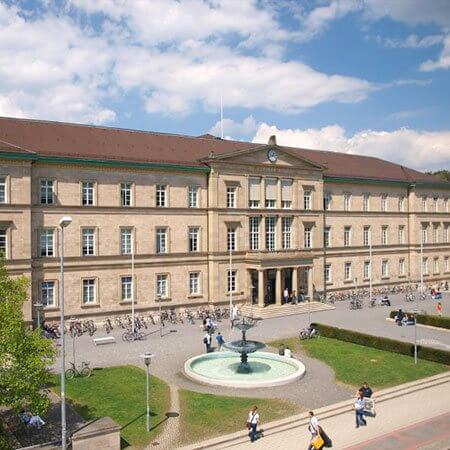
Department of Adult and Pediatric Gynecology, Mammology, Obstetrics
The FOCUS magazine highlights the Department of Adult and Pediatric Gynecology, Mammology, Obstetrics as one of the top medical facilities in Germany in its areas of specialization. Moreover, that is only part of the story – the renowned Newsweek magazine ranks the department as the fourth-best gynecology and obstetrics center in the world. The department's primary clinical focuses include general gynecology, gynecologic oncology, and breast cancer treatment. The spectrum also includes top-class obstetric services, ranging from comprehensive pregnancy management and childbirth to postpartum care. Another important area of the department's clinical activities is specialized consultations in pediatric and adolescent gynecology, with a strong emphasis on genital malformations. The department stands out for its excellent expertise in gynecologic surgery, addressing both benign and malignant conditions in this medical field. Many minor procedures, including laparoscopies, hysteroscopies, curettages, conizations, and laser therapies, can be performed on an outpatient basis, offering highly effective outcomes with short recovery times. It is worth noting that the department prefers minimally invasive and endoscopic surgical techniques. However, classical open surgery is performed with the best possible precision and safety whenever necessary. The department performs over 9,000 surgical interventions and 3,500 childbirths each year, earning it a high status as one of the best in the country. Without any doubt, this facility provides top-tier medical care, as evidenced by its 97% patient satisfaction rating and top positions in international rankings.



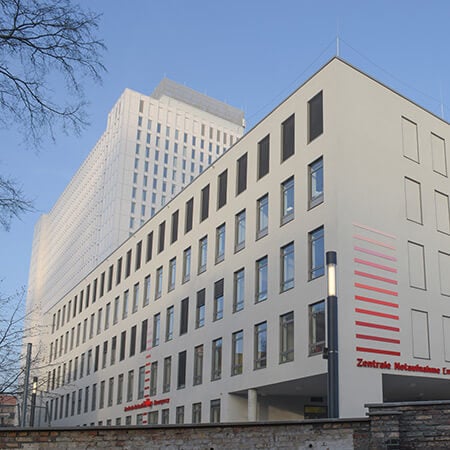
Department of Adult and Pediatric Gynecology, Mammology
The prestigious German Focus magazine positions the Department of Adult and Pediatric Gynecology, Mammology among the best facilities in the country, providing excellent healthcare services in its areas of specialization! The department delivers a comprehensive range of diagnostic and therapeutic services for women with diseases of the reproductive system and mammary glands. The department's clinical activities are primarily focused on gynecologic oncology and breast cancer treatment. These two medical areas are represented by highly specialized centers certified by the German Cancer Society (DKG) and recognized as among the leading facilities of their kind in Germany. The department also admits patients with a variety of benign gynecological diseases, with the most common among them being endometriosis, uterine fibroids, cervical dysplasia, urinary incontinence, and pelvic organ prolapse. The department is also actively developing pediatric gynecology with an emphasis on the surgical correction of congenital defects and treatment of infectious diseases, vaginal bleeding, labial adhesions, as well as ovarian cysts and tumors. A true treasure of the department is its highly professional team of gynecologists and breast specialists with many years of experience who make every effort to help women improve their health. A comprehensive diagnosis is always a must here, as its results help create personalized, effective treatment plans, which are crucial for cancer patients. Another strong point of the medical facility is access to the most advanced treatment options, including organ-sparing surgery, targeted therapies, immunotherapy, and locoregional procedures. All of these, combined with an excellent technical infrastructure and an understanding attitude toward patients, form a solid basis for the best possible medical care.



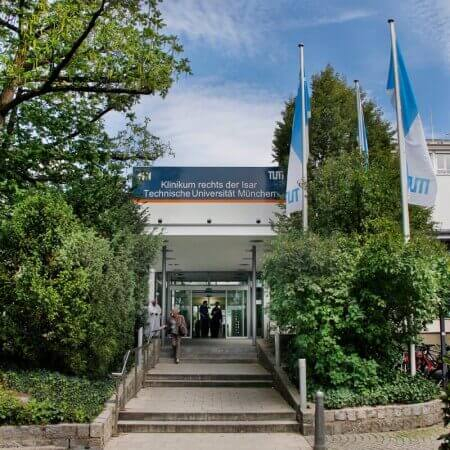
Department of Gynecology, Mammology and Obstetrics
The Department of Gynecology, Mammology and Obstetrics offers the full range of services in these fields, providing patients with the optimal treatment based on the very latest scientific advances and innovative technologies. The department's tasks include diagnostics and treatment of all gynecologic diseases and breast pathologies, as well as pregnancy management, childbirth and postnatal care for both mother and baby, elimination of fertility problems in women. The department has modern equipment for invasive and non-invasive diagnostics, three operating rooms equipped with state-of-the-art technology, especially in the field of minimally invasive and robot-assisted surgery, as well as special devices for microsurgery and fetal surgery. A competent medical team consisting of 18 senior physicians, 25 assistant physicians and medical specialists, obstetricians and specially trained nursing staff annually admits approximately 5,000 women for inpatient treatment and provides outpatient medical care for 14,000 patients. In addition, the department has four maternity rooms, in which about 2,000 babies are born annually.




Laparoscopic surgery is widely used in developed countries. Open surgery was almost completely replaced by laparoscopic one. Laparoscopy is less invasive. This surgical procedure is better tolerated, gives less complications and does not cause significant blood loss. It is more effective, since a laparoscope provides the doctor with a much better imaging of the intervention area. The diagnostic laparoscopy is often used in gynecology. It allows the doctor to determine some causes of infertility.
Why do doctors perform laparoscopy?
Laparoscopy is a surgical procedure, and therefore it is performed only in extreme cases, when it is really impossible to avoid this examination. Laparoscopy is very informative in the diagnostics of infertility, since it allows the doctor to examine the pelvic cavity from the inside. The doctor can detect the following pathologies using a laparoscope:
- endometrial foci;
- benign ovarian neoplasms;
- uterine fibroids;
- pelvic adhesions;
- other anatomical disorders leading to decreased fertility.
How is laparoscopy performed?
The operation is performed under general anesthesia. The doctor makes minimal incisions, through which a laparoscope and miniature but very long surgical instruments are inserted into the abdominal cavity. The doctor can control them remotely.
The gynecologist controls all his actions with the help of laparoscopic camera. It transmits the image to the monitor in real time mode.
During diagnostic laparoscopy, the doctor performs a revision of the pelvic organs. He examines the ovaries, fallopian tubes. The doctor often discovers adhesions. These connective tissues usually cause infertility, as they impair fallopian tube patency. Dissection of adhesions or other manipulations help to restore fertility.
If diagnostic laparoscopy is performed in infertility, in most cases it will be immediately transformed into the therapeutic one. The doctor performs the manipulations necessary to restore the reproductive function in woman. These may include:
- dissection of adhesions;
- reconstruction of fallopian tubes;
- cauterization or removal of endometrial foci;
- removal of benign ovarian formations;
- removal of uterine fibroids.
Results
In most cases, the result of a laparoscopy is the restoration of fertility in woman. She can get pregnant naturally, without the use of assisted reproductive technologies.
Laparoscopy is mostly performed due to tubal obstruction. This infertility factor is called tubal-peritoneal. Laparoscopy involves the dissection of adhesions and reconstruction of the fallopian. This operation is becoming more effective. It allows the doctor to restore the anatomical patency of the tubes in almost all patients. More than 30% of them get pregnant within 3 months after the procedure. About 70% of women get pregnant within 12 months.
Infertility persists in remaining 30% of cases. This occurs either due to the presence of additional factors, which impair fertility, or due to insufficient restoration of the tubal function. Although their anatomical patency is restored, the functioning may be impaired. The cause may be the destruction of fimbriae or the deterioration of peristalsis (movements of the muscle layer of the tube, which ensures the movement of the egg towards the uterus).
The results of surgical intervention can be both permanent and temporary. Sometimes adhesions occur repeatedly after some time. If endometrial foci were removed during laparoscopy, the results are almost always temporary. Without hormonal treatment, they occur again. Therefore, women after laparoscopy are recommended to get pregnant as soon as possible.
Benefits of laparoscopy in Germany
As of today, gynecology in Germany can no longer be imagined without laparoscopic interventions, which are performed for diagnostic and therapeutic purposes. The similar operations are already carried out around the world. Laparoscopy is performed even in countries with poorly developed medicine, including for the treatment of infertility.
For the patients who are not constrained in terms of finances, it is better to visit Germany in order to undergo this procedure. Laparoscopy has the following benefits in this country:
- Safety. An inexperienced doctor may make mistakes during laparoscopy. They lead to injury of the internal organs by surgical instruments. The complications can be quite serious. In the best Fertility Centers in Germany, laparoscopy is carried out by experienced specialists who are fluent in laparoscopic technique.
- Effectiveness. In most cases, the fertility in women will be restored due to state-of-the-art equipment and the use of the most modern types of operations in Germany. While the treatment in the clinics of developing countries is sometimes unsuccessful, the patient cannot get pregnant even after surgery.
- Comfort. Most patients find it important not only to have good diagnostic and treatment results, but they also want to benefit from the process itself. Modern medicine is becoming less and less uncomfortable. Foremost, this concerns such developed countries as Germany. In this country, you will be provided with good medical care, well-performed pain management during the postoperative period. The patient rooms have excellent conditions for the patients.
In Germany, you can not only undergo diagnostic laparoscopy, but also take advantage of other medical advances. The effective treatment methods of infertility, as well as the assisted reproductive technologies are used here. In the vast majority of cases, various treatment methods allow the patients to achieve a desired pregnancy even in the most seemingly hopeless cases.
Diagnostic laparoscopy in Germany with Booking Health
To undergo the diagnostic laparoscopy in Germany at one of the best German clinics, you can use the services of the Booking Health company. We will take care of all organizational issues, while you will just focus on your health. We provide the following benefits:
- Selection of the best Fertility Сenter, which specializes in the treatment of female infertility in Germany using laparoscopic surgery.
- Reduced cost of procedure in Germany due to the lack of coefficients for foreign patients.
- Establishment of communication with an attending physician.
- Booking an appointment for diagnostic laparoscopy in Germany at the most convenient dates for you.
- Preparation of the program taking into account the results of previous diagnostic procedures.
- Monitoring of the program at all its stages.
- Control of invoices and return of unspent funds.
- Communication with the hospital upon diagnostic laparoscopy completion.
- Buying and forwarding of medicines.
- Organization of additional examination or treatment.
The Booking Health company guarantees top-class service. We will book a hotel and airline tickets for you, provide a transfer from the airport to the Fertility Сenter and back.