{"translation_price":"50","translation_doc_price":"40","child_coefficient":"1.1","transfer_price":"2.00","transfer_price_vip":"5.00","constant_transfer_price_vip":350,"constant_transfer_price":150,"constant_transfer_distanse":60,"type":"treatment","program_full_story":"<ul>\n\t<li>Initial presentation in the clinic<\/li>\n\t<li>case history collection<\/li>\n\t<li>general clinical examination<\/li>\n\t<li>laboratory tests:\n\t<ul>\n\t\t<li>complete blood count<\/li>\n\t\t<li>general urine analysis<\/li>\n\t\t<li>biochemical analysis of blood<\/li>\n\t\t<li>TSH-basal, fT3, fT4<\/li>\n\t\t<li>tumor markers (thyroglobulin (TG),<br \/>\n\t\tTG antibodies (TgAb))<\/li>\n\t\t<li>indicators of inflammation<\/li>\n\t\t<li>indicators of blood coagulation<\/li>\n\t<\/ul>\n\t<\/li>\n\t<li>ultrasound scan of the thyroid gland<\/li>\n\t<li>thyroid scintigraphy<\/li>\n\t<li>radioiodine therapy<\/li>\n\t<li>symptomatic treatment<\/li>\n\t<li>cost of essential medicines<\/li>\n\t<li>nursing services<\/li>\n\t<li>stay in the hospital with full board in 2-bed room<\/li>\n\t<li>elaboration of further recommendations<\/li>\n<\/ul>\n<div class=\"program_how_program_going mt-4\"><h4>How program is carried out<\/h4><p style=\"text-align:justify\"><strong>During the first visit<\/strong>, the doctor will conduct a clinical examination and go through the results of the available diagnostic tests. After that, you will undergo the necessary additional examination, such as the assessment of liver and kidney function, ultrasound scan of the thyroid gland and lymph nodes of the neck, thyroid scintigraphy. This will allow your doctor to assess how effective radioiodine therapy will be and how well you will tolerate it. In addition, the doctor will calculate the dosage of the drug you need.<\/p>\n\n<p style=\"text-align:justify\"><strong>Radioiodine therapy with I-131<\/strong> includes oral administration of the drug. You will take 1 to 4 radioactive iodine capsules or drink about a teaspoon of liquid with radioactive iodine. You will take the drug in your ward, without visiting the manipulation room or operating room.<\/p>\n\n<p style=\"text-align:justify\"><strong>After taking radioactive iodine<\/strong>, you will stay in your ward for 24 to 48 hours. The next morning after the procedure, the dosimetrist will determine the amount of radiation in your body. If the amount is low, you will be allowed to leave your ward and will be discharged from the hospital. If the amount is high, then the dosimetric control will continue for another day, until a low amount of radiation in your body is detected.<\/p>\n\n<p style=\"text-align:justify\">The isotope I-131 can accumulate not only in the thyroid gland, but also partially in the salivary glands. This can cause dry mouth. To get rid of this side effect, you will dissolve sour candies, as this stimulates the work of salivary glands.<\/p>\n\n<p style=\"text-align:justify\">The drug is quickly excreted by the kidneys, and after 48 hours you will no longer pose a danger to others. After the procedure, you should drink at least 1 glass of water per hour and visit the toilet regularly. This will allow you to quickly remove radioactive iodine from the body. Food can be usual, without excess iodine in the diet.<\/p>\n\n<p style=\"text-align:justify\">During these 48 hours, you can read, use a mobile phone, tablet or computer. All these devices will not be a source of radiation in the future.<\/p>\n\n<p style=\"text-align:justify\"><strong>Control examination<\/strong> includes scintigraphy, which is performed 7-10 days after radioiodine therapy. Based on the results of the examination, the doctor will determine how well the cells of the thyroid gland (or cancer metastases) have accumulated radioactive iodine. In a few weeks after the procedure, you will have a control blood test for thyroid hormones. In the future, you will visit an endocrinologist regularly.<\/p>\n<\/div><div class=\"program_required_documents mt-4\"><h4>Required documents<\/h4><ul>\n\t<li style=\"text-align: justify;\">Medical records<\/li>\n\t<li style=\"text-align: justify;\">MRI\/CT scan (not older than 3 months)<\/li>\n\t<li style=\"text-align: justify;\">Biopsy results (if available)<\/li>\n<\/ul>\n<\/div>","program_full_story_crm":"<ul>\n\t<li>Initial presentation in the clinic<\/li>\n\t<li>case history collection<\/li>\n\t<li>general clinical examination<\/li>\n\t<li>laboratory tests:\n\t<ul>\n\t\t<li>complete blood count<\/li>\n\t\t<li>general urine analysis<\/li>\n\t\t<li>biochemical analysis of blood<\/li>\n\t\t<li>TSH-basal, fT3, fT4<\/li>\n\t\t<li>tumor markers (thyroglobulin (TG),<br \/>\n\t\tTG antibodies (TgAb))<\/li>\n\t\t<li>indicators of inflammation<\/li>\n\t\t<li>indicators of blood coagulation<\/li>\n\t<\/ul>\n\t<\/li>\n\t<li>ultrasound scan of the thyroid gland<\/li>\n\t<li>thyroid scintigraphy<\/li>\n\t<li>radioiodine therapy<\/li>\n\t<li>symptomatic treatment<\/li>\n\t<li>cost of essential medicines<\/li>\n\t<li>nursing services<\/li>\n\t<li>stay in the hospital with full board in 2-bed room<\/li>\n\t<li>elaboration of further recommendations<\/li>\n<\/ul>\n<div class=\"program_how_program_going mt-4\"><h4>How program is carried out<\/h4><p style=\"text-align:justify\"><strong>During the first visit<\/strong>, the doctor will conduct a clinical examination and go through the results of the available diagnostic tests. After that, you will undergo the necessary additional examination, such as the assessment of liver and kidney function, ultrasound scan of the thyroid gland and lymph nodes of the neck, thyroid scintigraphy. This will allow your doctor to assess how effective radioiodine therapy will be and how well you will tolerate it. In addition, the doctor will calculate the dosage of the drug you need.<\/p>\n\n<p style=\"text-align:justify\"><strong>Radioiodine therapy with I-131<\/strong> includes oral administration of the drug. You will take 1 to 4 radioactive iodine capsules or drink about a teaspoon of liquid with radioactive iodine. You will take the drug in your ward, without visiting the manipulation room or operating room.<\/p>\n\n<p style=\"text-align:justify\"><strong>After taking radioactive iodine<\/strong>, you will stay in your ward for 24 to 48 hours. The next morning after the procedure, the dosimetrist will determine the amount of radiation in your body. If the amount is low, you will be allowed to leave your ward and will be discharged from the hospital. If the amount is high, then the dosimetric control will continue for another day, until a low amount of radiation in your body is detected.<\/p>\n\n<p style=\"text-align:justify\">The isotope I-131 can accumulate not only in the thyroid gland, but also partially in the salivary glands. This can cause dry mouth. To get rid of this side effect, you will dissolve sour candies, as this stimulates the work of salivary glands.<\/p>\n\n<p style=\"text-align:justify\">The drug is quickly excreted by the kidneys, and after 48 hours you will no longer pose a danger to others. After the procedure, you should drink at least 1 glass of water per hour and visit the toilet regularly. This will allow you to quickly remove radioactive iodine from the body. Food can be usual, without excess iodine in the diet.<\/p>\n\n<p style=\"text-align:justify\">During these 48 hours, you can read, use a mobile phone, tablet or computer. All these devices will not be a source of radiation in the future.<\/p>\n\n<p style=\"text-align:justify\"><strong>Control examination<\/strong> includes scintigraphy, which is performed 7-10 days after radioiodine therapy. Based on the results of the examination, the doctor will determine how well the cells of the thyroid gland (or cancer metastases) have accumulated radioactive iodine. In a few weeks after the procedure, you will have a control blood test for thyroid hormones. In the future, you will visit an endocrinologist regularly.<\/p>\n<\/div>","is_ambulant":"0","bh_fee":"0","only_for_children":"2","no_service":"0","with_prepayment":"1","show_calculator":"1","paket_type":"1","btn_type":"2","clinic_icon":"60056be4d6ece.jpg","city":"Duisburg","clinic_site":"https:\/\/www.sana-duisburg.de\/","department_recommend":"0","country":"Germany","country_id":"1","clinic_name":"Sana Hospital Duisburg","cinic_name":"Sana Hospital Duisburg","department_id":"1784","duration":"5","direction":"Nuclear Medicine","min_duration":0,"clinic_id":"14","paketPrice":12000,"paket":"<ul>\n <li>Interpreter up to 25 hours<\/li>\n <li>Translation up to 10 pages<\/li>\n <li>Visa support<\/li>\n\n<\/ul>","title":"Treatment of thyroid cancer with radioiodine therapy","price":{"val":16166.6,"type":"val"},"price_surcharge":0,"price_surcharge_clear":0,"extra_service_clinic":[{"id":"need_to_use_head_doctor","title":"Treatment by leading experts","type":"val","val":"2351.71","req":0},{"id":"1_person_room","title":" Single room (whole period)","parent":"duration","type":"count_val","val":"176.00"},{"id":"2_person_room","title":" double room (whole period)","parent":"duration","type":"count_val","val":"95.00"},{"id":"attendant_place","title":"Accommodation for the accompanying person ","parent":"duration","type":"count_val","val":"90.00"}],"extra_service":[],"translation_hours":"0","translation_doc_count":null,"roads":[{"id":"4","distance":"22","airport_title":"Duesseldorf"},{"id":"25","distance":"71","airport_title":"Dortmund Airport"},{"id":"7","distance":"73","airport_title":"Cologne-Bonn"}],"pakets":[],"lang":{"day":"Day","days":"days","ambulatory":"Outpatient","stationaryProgram":"Inpatient"}}
Treatment of thyroid cancer with radioiodine therapy in Sana Hospital Duisburg
stay in the hospital with full board in 2-bed room
elaboration of further recommendations
How program is carried out
During the first visit, the doctor will conduct a clinical examination and go through the results of the available diagnostic tests. After that, you will undergo the necessary additional examination, such as the assessment of liver and kidney function, ultrasound scan of the thyroid gland and lymph nodes of the neck, thyroid scintigraphy. This will allow your doctor to assess how effective radioiodine therapy will be and how well you will tolerate it. In addition, the doctor will calculate the dosage of the drug you need.
Radioiodine therapy with I-131 includes oral administration of the drug. You will take 1 to 4 radioactive iodine capsules or drink about a teaspoon of liquid with radioactive iodine. You will take the drug in your ward, without visiting the manipulation room or operating room.
After taking radioactive iodine, you will stay in your ward for 24 to 48 hours. The next morning after the procedure, the dosimetrist will determine the amount of radiation in your body. If the amount is low, you will be allowed to leave your ward and will be discharged from the hospital. If the amount is high, then the dosimetric control will continue for another day, until a low amount of radiation in your body is detected.
The isotope I-131 can accumulate not only in the thyroid gland, but also partially in the salivary glands. This can cause dry mouth. To get rid of this side effect, you will dissolve sour candies, as this stimulates the work of salivary glands.
The drug is quickly excreted by the kidneys, and after 48 hours you will no longer pose a danger to others. After the procedure, you should drink at least 1 glass of water per hour and visit the toilet regularly. This will allow you to quickly remove radioactive iodine from the body. Food can be usual, without excess iodine in the diet.
During these 48 hours, you can read, use a mobile phone, tablet or computer. All these devices will not be a source of radiation in the future.
Control examination includes scintigraphy, which is performed 7-10 days after radioiodine therapy. Based on the results of the examination, the doctor will determine how well the cells of the thyroid gland (or cancer metastases) have accumulated radioactive iodine. In a few weeks after the procedure, you will have a control blood test for thyroid hormones. In the future, you will visit an endocrinologist regularly.
Required documents
Medical records
MRI/CT scan (not older than 3 months)
Biopsy results (if available)
Service
Price from:
Type of program :
Price for 1 day:
Expected duration of the program:
The minimum duration of the program:
Select
You may also book:
Hospital directly:
Saving:
BookingHealth Price from:
About the department
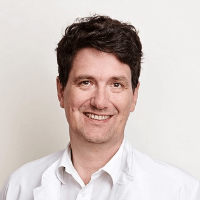
The Department of Radiation Therapy, Radiation Oncology and Nuclear Medicine at the Sana Hospital Duisburg, headed by Dr. med. Andreas Kaiser, provides treatment of both benign and malignant tumors, as well as the treatment of changes in the tissues by means of radiation therapy. Radiation therapy for the treatment of tumors is usually used in combination with surgery and/or chemotherapy.
The department has state-of-the-art medical technology, for example, two linear accelerators that allow for an accurate exposure with the involvement of high energy X-ray radiation and electrons. In cooperation with oncologists and surgeons, the specialists of the department make an optimal combination of treatment options.
The main focuses of the Department of Radiation Therapy, Radiation Oncology and Nuclear Medicine are:
Therapy for malignant tumors is usually combined with surgical intervention and/or chemotherapy, e.g. tumors of the breast, uterine, testicles, lung, pharynx, thyroid, rectum, anal canal and lymphomas
Therapy for benign tumors is usually combined with surgery, e.g. pituitary tumors, vascular malformations and benign tumors of the thymus, in case of which the treatment is primarily aimed at the reduction of their size
Palliative care for common malignant tumors and metastases in other organs, especially in brain and bones
Treatment of inflammations and excessive tissue growth, e.g. scars, joint inflammations, ossification in muscles, some eye diseases and vascular occlusions
Treatment of tumors in children with the use of special methods combined with chemotherapy
Treatment within scientific research aimed at the improvement of treatments, e.g. in case of testicular, brain tumors, lymphomas, bone metastases, tumors in the lungs and esophagus
Photo of the doctor: (c) Sana Kliniken Duisburg
About hospital
The Sana Hospital Duisburg is a maximum care medical center with 678 beds and 17 specialized departments. With the very latest innovations and high quality patient care, the clinic works for the benefit of a person and their health. The hospital ranks among the leading clinics in the region. In 2013, the hospital treated 21,403 inpatients, 1,149 partially inpatients and 51,751 outpatients.
The hospital is the maximum care center, since almost all disciplines are represented here as independent departments. The departments specialize in the diagnosis and treatment of both common pathologies and specific diseases or groups of patients. The hospital provides its services for patients of all age groups, starting from the birth in the Department of Obstetrics, Pediatric and Adolescent Medicine, then in the departments for adults up to the treatment of elderly patients in the Department of Geriatrics. The hospital has a unique medical competence and medical centers with special equipment in order to ensure an optimal and multidisciplinary treatment.
The Hospital Duisburg is an academic teaching hospital at the University of Duisburg-Essen with the maximum care (Level 1) Perinatal Center, as well as the Neuro Center with a special focus in the field of oncology. The interdisciplinary Emergency Department, two Intensive Care Units and an Intermediate Care Station offer their services as well. In addition, the hospital has an interregional Stroke Unit with 8 monitored beds, the Unit for Early Neurological Rehabilitation (Level B) with 30 inpatient beds and the accredited Sleep Laboratory with 4 beds.
All activities of the hospital are focused on the patient with their worries and fears; great attention is paid to the patient’s life situation and history. All actions and efforts of the employees of the hospital are made to improve a personal health of each patient. The success rate of the hospital is manifested by satisfaction of both patients and their relatives.
Photo: (c) depositphotos
Accommodation in hospital
Patients rooms
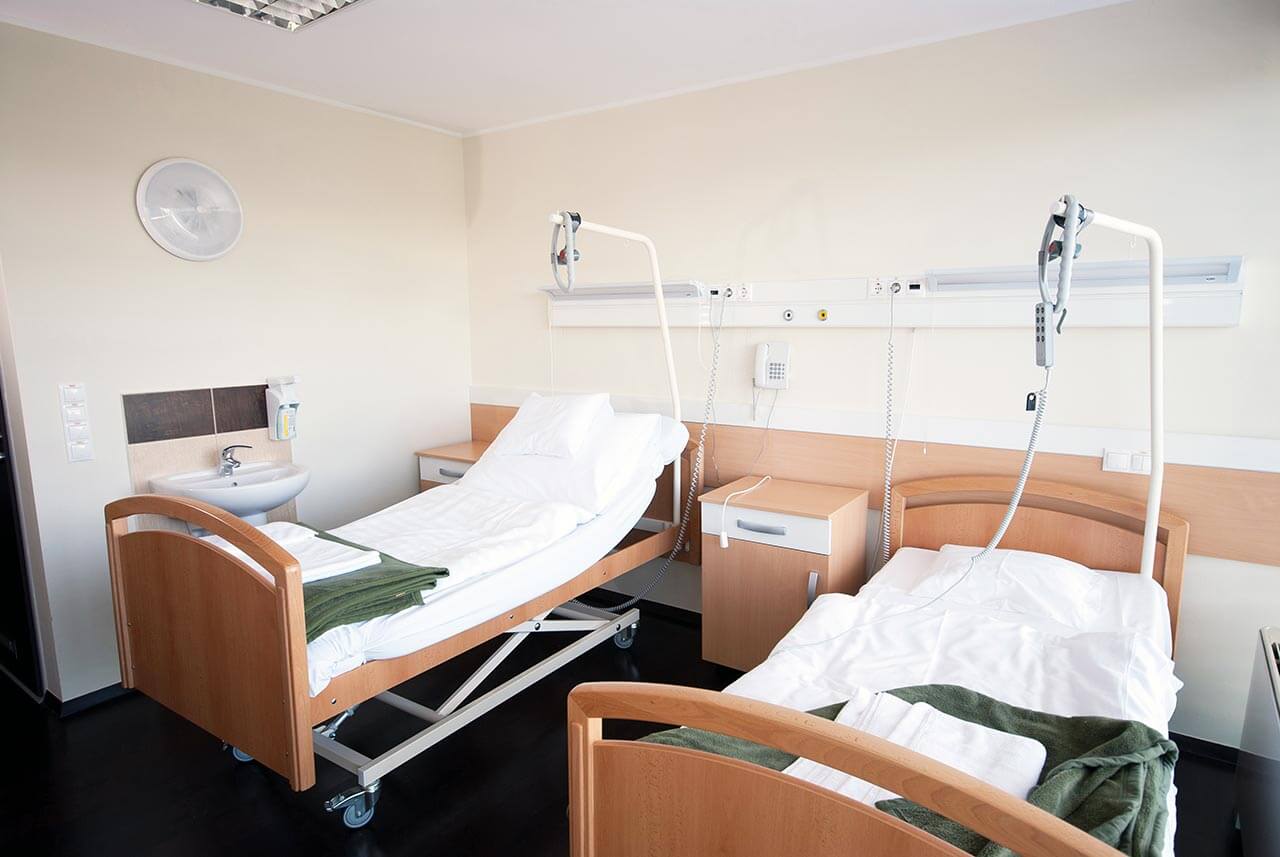
The rooms in the Sana Clinic, Duisburg, meet the strict German standards. The essential safety equipment can be found in each patient room. There are also private bathrooms in all rooms. There are also the electric beds that can be adjusted according to the patient’s needs and habits. The orthopaedic mattresses on the beds provide adequate support for the spine during sleep. You can also use various devices in the room such as a laptop, unless you disturb the other patient in the room. Wi-Fi connection can be provided upon request. The clinic offers single and double rooms. If you choose a single room, an accompanying person will be able to stay with you. A double room is shared with a patient of the same gender. The enhanced comfort rooms are equipped with a safety box, a fridge and upholstered furniture.
Meals and Menus
The patient and the accompanying person are offered a daily choice of three menus. If you are on a specific diet for any reason, you will be offered an individual menu. Please inform the medical staff about your dietary preferences prior to the treatment.
Further details
Standard rooms include:
Toilet
Shower
Wi-Fi
TV
Religion
Christian priests are available for the patients at any time. Representatives of other religions may be requested at any time.
Accompanying person
Your companion may stay with you in your room or at a hotel of your choice during the fixed program.
Hotel
You may stay at the hotel during the outpatient program. Our employees will support you for selecting the best option.
Select your currency:
Your guarantee
One year of support after the treatment
Insurance to cover unforeseen expenses arising from complications during and 48 months after treatment (coverage up to 200,000 €)
Reduced costs by 40-70% (contracts with Hospitals)
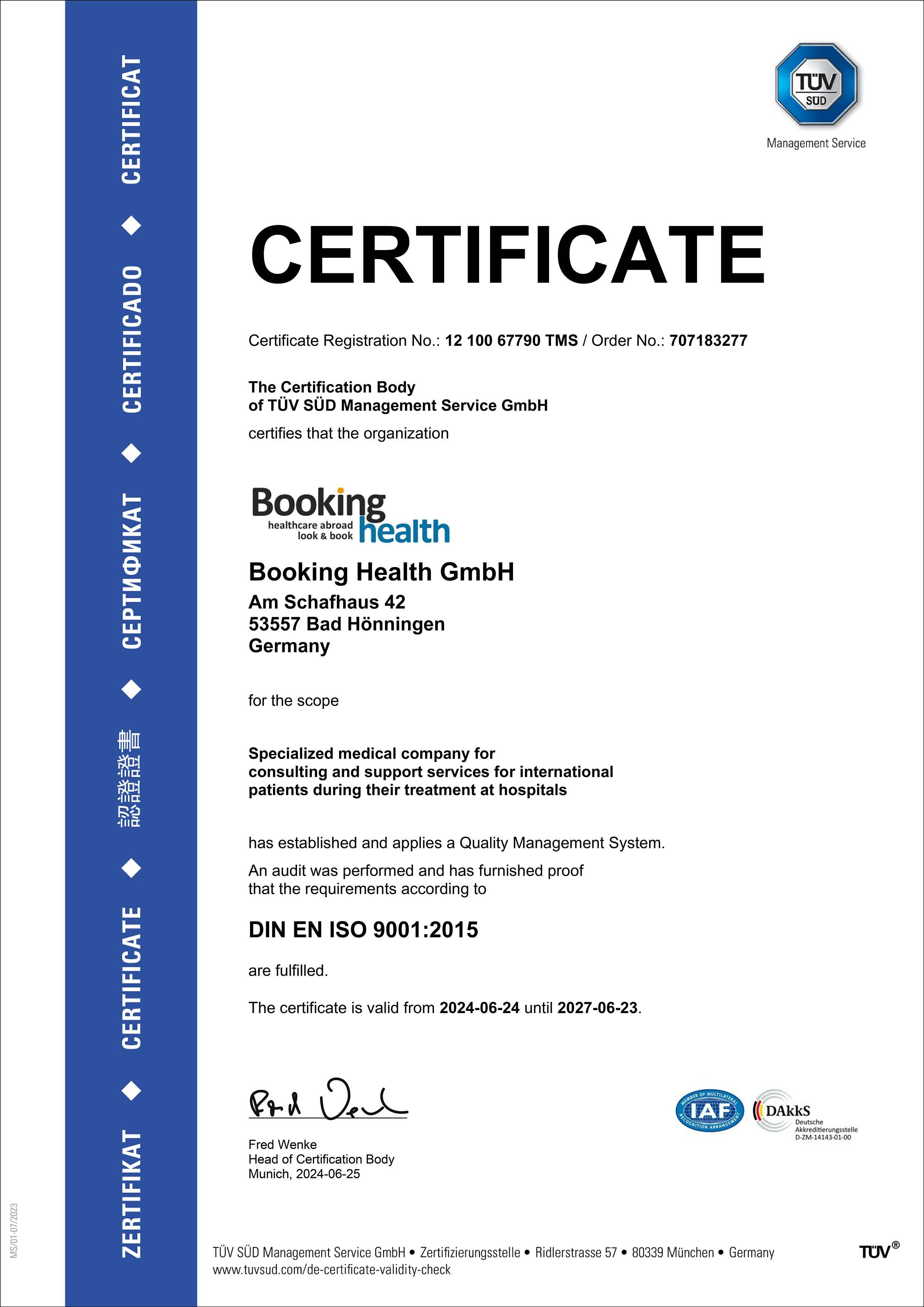
In addition, we are the only TÜV-certified company with an ISO 9001:2015 certificate

 BookingHealth Price from: