Diagnosis of erectile dysfunction (impotence) in University Hospital Frankfurt am Main
University Hospital Frankfurt am Main
Frankfurt am Main, Germany


 BookingHealth Price from:
The FOCUS magazine ranks the Department of Urology at the University Hospital Frankfurt am Main among Germany’s leading medical facilities specializing in prostate cancer treatment! The department provides a comprehensive range of advanced diagnostic procedures and treatment options for patients with diseases of the urinary tract and male reproductive organs. Its key areas of specialization include the treatment of prostate cancer and benign prostatic hyperplasia (BPH). Great importance is also placed on medical care for both male and female patients with kidney cancer and bladder cancer, as well as urinary stone disease. The range of services also includes non-surgical and surgical treatments for erectile dysfunction in men. The department's urology team has extensive experience in radical prostatectomy and has performed more than 1,500 such procedures since 2017. More than 95% of radical prostatectomies are performed with the use of the da Vinci surgical system, reflecting the department's in-depth expertise in this field. The department also employs advanced PSMA-guided surgery for prostate cancer treatment, enabling surgeons to detect and remove cancer-affected lymph nodes in real time during the operation. The medical team follows current clinical guidelines and is committed to providing personalized medical care in a patient-friendly environment.
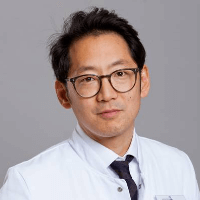
The department is headed by Prof. Dr. med. Felix Kyoung-Hwan Chun. He has more than two decades of clinical experience gained at leading university hospitals in Germany. The doctor is known for his expertise in prostate cancer treatment, laser therapy for benign prostatic hyperplasia, and urethral reconstructive surgery. Prof. Chun also has extensive experience in robot-assisted surgery using the da Vinci surgical system, including radical prostatectomy and other urologic procedures. Prof. Chun has authored or co-authored hundreds of scientific publications in print and online.
The department operates a specialized Uro-Oncology Center certified by the German Cancer Society (DKG), which reflects its professional expertise and medical care standards. This center provides diagnostic and therapeutic services for patients with prostate, kidney, bladder, testicular, and penile cancers. The medical team consists of urologists, oncologists, radiologists, pathologists, and radiation oncologists, who collaborate closely to develop an appropriate treatment plan for each patient. A key component of this process is the interdisciplinary tumor board, where each patient's case is reviewed collectively before the start of the therapeutic process. This approach contributes to personalized care, which takes into account the specifics of each clinical situation. Surgical treatment incorporates state-of-the-art technologies, including the da Vinci robotic surgical system, which enables minimally invasive tumor removal while aiming to preserve organ function whenever oncologically appropriate. Systemic treatment options include hormone therapy, chemotherapy, targeted therapy, and immunotherapy, with each approach selected individually based on the type of tumor, its stage, and other relevant individual factors. Radiation therapy is also provided when clinically indicated.
The department's medical team also specializes in the treatment of benign urological diseases. One of the most common is benign prostatic hyperplasia (BPH), also known as prostate adenoma, which mostly affects men over the age of 50. BPH involves enlargement of the prostate gland, which can compress the urethra and obstruct the flow of urine. As the condition progresses, it may lead to incomplete bladder emptying and, in severe cases, acute or chronic urinary retention. If left untreated, BPH may cause severe complications such as backflow of the urine toward the kidneys, blood in the urine, bladder stone formation, and others. In the early stages of prostate adenoma, the department's physicians generally use medication. In more advanced cases, or when symptoms persist and complications develop, surgery may be necessary.
The department's urology team performs transurethral minimally invasive procedures, requiring no skin incisions. Following a comprehensive diagnostic assessment, the most appropriate treatment is selected according to each patient's clinical condition and individual needs. For many patients with BPH, the department offers laser enucleation of the prostate, which represents an established treatment method for this condition in modern urology. With approximately 100 procedures performed annually, the department has extensive experience in this field. Laser enucleation is a minimally invasive technique that can provide effective and long-lasting results. However, due to the technical requirements for this treatment, it is performed at only a limited number of clinics. Although laser enucleation was originally developed to treat benign prostatic hyperplasia, it is now also used to relieve urinary obstruction in prostate cancer patients. The procedure is performed under either spinal or general anesthesia, with an average hospital stay of three days.
Other advanced minimally invasive treatments for prostate adenoma offered in the department include the Rezum procedure (also known as water vapour therapy), the iTIND procedure, and prostatic artery embolization (PAE), which is performed in close collaboration with radiologists. These techniques offer alternative approaches to relieving lower urinary tract symptoms associated with BPH, with the choice of treatment depending on the patient's clinical condition and individual needs.
The treatment of urinary stones is another area of expertise in the department. Urinary stone disease is one of the most common conditions encountered in urological practice. Urinary stones vary widely in location, size, and composition, with the majority found in the kidneys and ureters. Their size ranges from tiny crystals to stones measuring several centimeters. They can remain asymptomatic for extended periods before with severe pain known as renal colic. Treatment depends on the size, location, and characteristics of the stones, as well as the patient's clinical condition. While some stones can be managed conservatively with medication and observation, others require interventional treatment. The department offers a range of treatment options, including extracorporeal shock wave lithotripsy (ESWL), rigid and flexible ureterorenoscopy (URS), and percutaneous nephrolithotomy (PCNL).
The department's key areas of expertise include:
Prof. Dr. med. Felix Kyoung-Hwan Chun is Head of the Department of Urology at the University Hospital Frankfurt am Main. Previously, he served as a Senior Physician in the Department of Urology at the University Medical Center Hamburg-Eppendorf (UKE).
Prof. Chun completed his medical studies in Göttingen and Freiburg before undertaking his specialist training in urology with a focus on uro-oncology and prostate cancer treatment at the University Medical Center Hamburg-Eppendorf (UKE). He also completed his research fellowship in Montreal, Canada. In 2009, he completed his habilitation, and in 2014, he was appointed Adjunct Professor (apl. Professor) of Urology at the University of Hamburg.
Prof. Chun's key areas of expertise include urologic oncology, especially prostate cancer treatment, laser surgery for benign prostatic hyperplasia, and urethral reconstructive surgery. He also has extensive experience in minimally invasive urologic surgery, including robot-assisted procedures using the advanced da Vinci surgical system.
Photo of the doctor: (c) Universitätsklinikum Frankfurt
Sources:
FOCUS, an internationally respected magazine, has consistently ranked the University Hospital Frankfurt am Main among the best hospitals in Germany!
The foundation of the hospital dates back to 1914. Since then, it has developed into a well-known German medical facility, whose clinical activities are based on the combination of rich traditions in medicine and scientific innovations. Like other leading German university hospitals, the University Hospital Frankfurt am Main is committed to providing world-class medical care through the implementation of state-of-the-art advancements for the benefit of patients, including those from abroad. The hospital offers many unique and highly effective therapies, which allow it to achieve remarkable treatment results and offer hope to patients even in the most complex cases.
The hospital runs 33 specialized departments and 23 research institutes, all equipped with the necessary technology and staffed by qualified specialists to provide the most effective medical care for every patient. The hospital has 1,593 beds for comfortable inpatient care. The University Hospital Frankfurt am Main annually provides its medical services to more than 50,000 inpatients and about 500,000 outpatients with conditions of varying complexity. These figures alone speak volumes about the medical facility's exceptional reputation among patients.
The University Hospital Frankfurt am Main leads in many medical fields, with neurology, neurosurgery, oncology, and cardiology being its top priorities. This medical facility also achieves outstanding results in organ and bone marrow transplantation, which are life-saving treatments for many patients with severe diseases.
Overall, this medical facility is a strong player in both German and European healthcare. The hospital's medical staff make every effort to help patients recover using the most advanced therapies currently available, and they excel at their task. The University Hospital Frankfurt am Main offers not only first-rate medical care, but also patient-centered service in a comfortable environment.
Photo: (c) depositphotos
The patients of the University Hospital Frankfurt am Main live in comfortable rooms made in modern design and meeting the highest standards of European medicine. Each room is equipped with an ensuite bathroom with a toilet and a shower. The standard room includes a comfortable, automatically adjustable bed, a bedside table, a wardrobe, a table and chairs for receiving visitors and a TV. If desired, patients can use Wi-Fi. The patients can also stay in the enhanced-comfort rooms.
The patient and his accompanying person have a daily choice of three menus. If for any reason you do not eat all the food, you will be offered an individual menu. Please inform the medical staff about your dietary preferences prior to the treatment.
Standard rooms include:
Religious services are available upon request.
During the inpatient program, an accompanying person may stay with you in a patient room or in a hotel of your choice.
During the outpatient program, you may stay in a hotel of your choice. Managers will help you choose the most suitable options.