{"translation_price":"50","translation_doc_price":"40","child_coefficient":"1.1","transfer_price":"2.00","transfer_price_vip":"5.00","constant_transfer_price_vip":350,"constant_transfer_price":150,"constant_transfer_distanse":60,"type":"diagnostic","program_full_story":"<ul>\n\t<li>Initial presentation in the clinic<\/li>\n\t<li>clinical history taking<\/li>\n\t<li>review of medical records<\/li>\n\t<li>physical examination<\/li>\n\t<li>laboratory tests:\n\t<ul>\n\t\t<li>complete blood count<\/li>\n\t\t<li>general urine analysis<\/li>\n\t\t<li>biochemical analysis of blood<\/li>\n\t\t<li>inflammation markers (CRP, ESR)<\/li>\n\t\t<li>blood coagulation analysis (aPTT, PT, INR)<\/li>\n\t\t<li>hormone test (estradiol, progesterone, prolactin, DHEA-s, FSH, LH)<\/li>\n\t<\/ul>\n\t<\/li>\n\t<li>gynecological examination.<\/li>\n\t<li>ultrasound examination: pelvis, abdomen, thyroid gland, breasts<\/li>\n\t<li>nursing services<\/li>\n\t<li>consultation of related specialists<\/li>\n\t<li>treatment by chief physician and all leading experts<\/li>\n\t<li>explanation of individual treatment plan<\/li>\n<\/ul>\n<div class=\"program_required_documents mt-4\"><h4>Required documents<\/h4><ul>\n\t<li style=\"text-align: justify;\">Medical records<\/li>\n<\/ul>\n<\/div>","program_full_story_crm":"<ul>\n\t<li>Initial presentation in the clinic<\/li>\n\t<li>clinical history taking<\/li>\n\t<li>review of medical records<\/li>\n\t<li>physical examination<\/li>\n\t<li>laboratory tests:\n\t<ul>\n\t\t<li>complete blood count<\/li>\n\t\t<li>general urine analysis<\/li>\n\t\t<li>biochemical analysis of blood<\/li>\n\t\t<li>inflammation markers (CRP, ESR)<\/li>\n\t\t<li>blood coagulation analysis (aPTT, PT, INR)<\/li>\n\t\t<li>hormone test (estradiol, progesterone, prolactin, DHEA-s, FSH, LH)<\/li>\n\t<\/ul>\n\t<\/li>\n\t<li>gynecological examination.<\/li>\n\t<li>ultrasound examination: pelvis, abdomen, thyroid gland, breasts<\/li>\n\t<li>nursing services<\/li>\n\t<li>consultation of related specialists<\/li>\n\t<li>treatment by chief physician and all leading experts<\/li>\n\t<li>explanation of individual treatment plan<\/li>\n<\/ul>\n","is_ambulant":"1","bh_fee":0,"only_for_children":"0","no_service":"0","with_prepayment":"1","show_calculator":"1","paket_type":"1","btn_type":"2","clinic_icon":"60018b76e5d59.jpg","city":"Frankfurt am Main","clinic_site":"http:\/\/www.kgu.de","department_recommend":"1","country":"Germany","country_id":"1","clinic_name":"University Hospital Frankfurt am Main","cinic_name":"University Hospital Frankfurt am Main","department_id":"1644","duration":"5","direction":"Endocrinology","min_duration":0,"clinic_id":"256","paketPrice":1400,"paket":"<ul>\n <li> Interpreter up to 4 hours<\/li>\n <li>Translation up to 4 pages<\/li>\n <li>Visa support<\/li>\n<\/ul>","title":"Diagnosis of hormonal disorder in women during sexual maturation","price":{"val":"0.00","type":"val"},"price_surcharge":0,"price_surcharge_clear":0,"extra_service_clinic":[],"extra_service":[],"translation_hours":"0","translation_doc_count":null,"roads":[{"id":"6","distance":"10","airport_title":"Frankfurt a.M."},{"id":"19","distance":"218","airport_title":"Stuttgart"},{"id":"4","distance":"430","airport_title":"Duesseldorf"}],"pakets":[],"lang":{"day":"Day","days":"days","ambulatory":"Outpatient","stationaryProgram":"Inpatient"}}
Diagnosis of hormonal disorder in women during sexual maturation in University Hospital Frankfurt am Main
treatment by chief physician and all leading experts
explanation of individual treatment plan
Required documents
Medical records
Service
Price from:
Type of program :
Price for 1 day:
Expected duration of the program:
The minimum duration of the program:
Select
You may also book:
Hospital directly:
Saving:
BookingHealth Price from:
About the department
The Department of Pediatric and Adolescent Medicine at the University Hospital Frankfurt am Main offers the full range of diagnostics and treatment of various diseases in children and adolescents. Structurally, the department is divided into sections, which specialize in particular medical fields. The department is headed by Prof. Dr. med. Thomas Klingebiel.
The experienced medical team of the department offers all services in neonatology (certification of the Level I Perinatal Center), neuropediatrics, pediatric allergology, pulmonology, oncology, hematology, hemostaseology and cardiology. The best experts of pediatric medicine are gathered under one roof, which, in combination with innovative and classical effective treatment methods allows to restore the health of young patients and to guarantee the normal development of the young body.
The main clinical focuses of the department include:
Neonatology
Medical care for seriously ill newborns and extremely premature babies
Pediatric neurology
Diagnostics and treatment of epilepsy
Diagnostics and treatment of metabolic diseases affecting the nervous system
Diagnostics and treatment of neuromuscular diseases (myopathies, peripheral nerve diseases)
Diagnostics and treatment of congenital malformations of the nervous system (spina bifida, hydrocephalus, neurofibromatosis)
Diagnostics and treatment of developmental disorders (delayed psychomotor and speech development, cerebral palsy)
Neuro-oncology (diagnostics and treatment of brain tumors)
Diagnostics and treatment of injuries of the nervous system (traumatic brain injuries, spinal cord injuries, peripheral nerve injuries)
Diagnostics and treatment of inflammatory diseases of the nervous system (meningitis, encephalitis, multiple sclerosis)
Diagnostics and treatment of neuropsychological disorders
Pediatric endocrinology and diabetology
Diagnostics and treatment of diabetes mellitus in childhood
Diagnostics and treatment of growth disorders (for example, short stature)
Diagnostics and treatment of thyroid diseases (for example, congenital hypothyroidism)
Diagnostics and treatment of puberty disorders (for example, premature puberty)
Diagnostics and treatment of puberty disorders (for example, chromosomal disorders)
Diagnostics and treatment of adrenal gland diseases (for example, adrenogenital syndrome)
Diagnostics and treatment of pituitary diseases (for example, pituitary failure)
Diagnostics and treatment of bone metabolism disorders (for example, osteoporosis)
Diagnostics and treatment of lipid metabolism disorders (for example, high cholesterol)
Diagnostics and treatment of rare and syndromal disorders accompanied by hormonal disorders (for example, Prader-Willi syndrome)
Pediatric allergology, pulmonology, including the treatment of cystic fibrosis
Lung function test in children of all age groups
Determination of lung clearance index
Allergy skin tests (prick test) and determination of allergy markers in the blood (specific IgE)
Provocative allergy tests (food, conjunctival, nasal and pulmonary)
Determination of FeNO in exhaled air (from the lungs and nose)
Cold allergy tests
Sweat test
Bronchoscopy with bronchoalveolar lavage
Imaging diagnostics (thoracic X-ray examination, CT, high-resolution CT and MRI of the lungs)
Diagnostics and treatment of food allergies
Diagnostics and treatment of severe types of bronchial asthma
Diagnostics and treatment of cystic fibrosis
Diagnostics and treatment of bronchiolitis obliterans
Pediatric oncology, hematology and hemostaseology
Diagnostics and treatment of all hematological and oncological diseases in children and adolescents (congenital and acquired hematopoietic defects, congenital and acquired blood-clotting disorders, immunodeficiencies, malignant systemic diseases and solid tumors)
Pediatric cardiology
Non-invasive diagnostics
ECG
Echocardiography
Transesophageal echocardiography
Long-term ECG recording
24-hour blood pressure monitoring
Control of pacemakers and defibrillators of various manufacturers
Stress ECG (ergometry on a bicycle and a treadmill)
Spiroergometry (on a bicycle and a treadmill)
Tilt test
Interventional diagnostics and therapy
Diagnostic cardiac catheterization, including coronary angiography and biopsy
Renal artery angiography
Balloon valvuloplasty and angioplasty
Interventional closure of patent arterial duct
Interventional closure of atrial and ventricular septal defects
Other medical services
Curriculum vitae
Study of Medicine at the Universities of Marburg and Lübeck.
1980 Doctorate.
1980 Research Associate/Physician at the Institute of Pathology and at the Department of Pediatrics, University of Tuebingen.
1992 Habilitation in Pediatrics at the University of Tuebingen.
Since 2000 C4 Professor and Head of the Department of Pediatric and Adolescent Medicine at the University Hospital Frankfurt am Main.
Specialization
1988 Board certification in Pediatrics.
2006 Specialization in Pediatric Hematology and Oncology, Medical Association of Hessen, Frankfurt.
Teaching Activities
Since 2007 Vice-Dean of the Faculty of Medicine, Goethe University Frankfurt.
Membership in Scientific Societies
2006 - 2012 Chairman of the Society of Pediatric Oncology and Hematology.
Awards and Prizes
Van Bekkum Award of the European Society for Blood and Marrow Transplantation (EBMT).
2014 Rober Pfleger Research Prize.
Prize for Excellent Teaching of the Faculty of Medicine, University of Frankfurt.
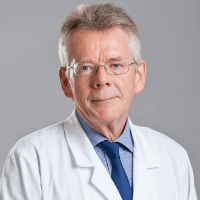
Photo of the doctor: (c) Universitätsklinikum Frankfurt
About hospital
FOCUS, an internationally respected magazine, has consistently ranked the University Hospital Frankfurt am Main among the best hospitals in Germany!
The foundation of the hospital dates back to 1914. Since then, it has developed into a well-known German medical facility, whose clinical activities are based on the combination of rich traditions in medicine and scientific innovations. Like other leading German university hospitals, the University Hospital Frankfurt am Main is committed to providing world-class medical care through the implementation of state-of-the-art advancements for the benefit of patients, including those from abroad. The hospital offers many unique and highly effective therapies, which allow it to achieve remarkable treatment results and offer hope to patients even in the most complex cases.
The hospital runs 33 specialized departments and 23 research institutes, all equipped with the necessary technology and staffed by qualified specialists to provide the most effective medical care for every patient. The hospital has 1,593 beds for comfortable inpatient care. The University Hospital Frankfurt am Main annually provides its medical services to more than 50,000 inpatients and about 500,000 outpatients with conditions of varying complexity. These figures alone speak volumes about the medical facility's exceptional reputation among patients.
The University Hospital Frankfurt am Main leads in many medical fields, with neurology, neurosurgery, oncology, and cardiology being its top priorities. This medical facility also achieves outstanding results in organ and bone marrow transplantation, which are life-saving treatments for many patients with severe diseases.
Overall, this medical facility is a strong player in both German and European healthcare. The hospital's medical staff make every effort to help patients recover using the most advanced therapies currently available, and they excel at their task. The University Hospital Frankfurt am Main offers not only first-rate medical care, but also patient-centered service in a comfortable environment.
Photo: (c) depositphotos
Accommodation in hospital
Patients rooms
The patients of the University Hospital Frankfurt am Main live in comfortable rooms made in modern design and meeting the highest standards of European medicine. Each room is equipped with an ensuite bathroom with a toilet and a shower. The standard room includes a comfortable, automatically adjustable bed, a bedside table, a wardrobe, a table and chairs for receiving visitors and a TV. If desired, patients can use Wi-Fi. The patients can also stay in the enhanced-comfort rooms.
Meals and Menus
The patient and his accompanying person have a daily choice of three menus. If for any reason you do not eat all the food, you will be offered an individual menu. Please inform the medical staff about your dietary preferences prior to the treatment.
Further details
Standard rooms include:
Toilet
Shower
Wi-Fi
TV
Religion
Religious services are available upon request.
Accompanying person
During the inpatient program, an accompanying person may stay with you in a patient room or in a hotel of your choice.
Hotel
During the outpatient program, you may stay in a hotel of your choice. Managers will help you choose the most suitable options.
Select your currency:
Your guarantee
We are the only TÜV-certified company with an ISO 9001:2015 certificate
thank you for reaching out! One of our medical advisors is currently reviewing your details. You can expect a call from us within one business day to discuss your request.
Note: The incoming call will appear as a German number or your local area code. This call is entirely free of charge.
Booking Health guarantees:
Expert Placement
We use rigorous statistical analysis to ensure you are treated at the best-rated facility for your specific diagnosis.
Total Cost Protection
No hidden fees or unexpected bills. We provide a fixed price guarantee, backed by insurance that covers any additional complications.
12-Month Extended Care
Your recovery is our priority. Benefit from a full year of direct medical support following your procedure.


 BookingHealth Price from: