




Optic Nerve Atrophy (ONA) is a progressive ophthalmological disease in which the optic nerve – responsible for passing visual information from the eye to the brain – undergoes degeneration. The damage to this nerve leads to progressive loss of vision and, in complex cases, to complete blindness. ONA is a final stage of various pathologies rather than the disease itself. These conditions are: glaucoma, optic neuritis, ischemia, trauma, inflammation, or inherited disorders like Leber's hereditary optic neuropathy. [1]
According to the Global Burden of Disease Study [2], vision impairment affects over 1.2 billion people worldwide. The population of England and Wales reports that optic atrophy accounts for approximately 14% of new-onset blindness cases among working-age adults. [3] Due to the fact that ONA often can't be reversed, the impact of this condition on quality of life is significant.
The use of traditional treatment options can slow the progression of the disease or help with managing symptoms, but it rarely leads to vision restoration. Thanks to advances in medical research and regenerative medicine, there is a new treatment for optic nerve atrophy called stem cell therapy. When compared to standard therapies, the stem cell therapy is aimed at targeting nerve repair and function restoration, which leads to improved vision abilities. [4]
If you or your loved one has been diagnosed with ONA, do not lose hope. Recovery – especially partial visual restoration and improved function – is now possible. Early intervention and access to advanced treatments may transform what was once a life-altering diagnosis into a manageable condition.
Understanding Optic Nerve Atrophy
As mentioned above, ONA is characterised by degeneration of the optic nerve fibers, which is commonly caused by damage to the retinal ganglion cell axons. This process disrupts the transmission of neuron signals from the retina to the brain. This degeneration results in permanent nerve damage and vision loss. [1]
Types of Optic Atrophy
ONA is categorised based on its causes [1]:
- Primary optic atrophy – It develops without any prior swelling of the optic nerve, and often is associated with hereditary diseases or trauma.
- Secondary optic atrophy – Develops after optic disc swelling caused by inflammation (e.g., optic neuritis), increased intracranial pressure, or ischemia.
- Consecutive optic atrophy – Can be developed due to retinal diseases like retinitis pigmentosa.
- Acute causes – trauma or ischemic events can lead to degeneration of the optic nerve and require emergency evaluation.
Symptoms of Optic Nerve Atrophy
The main symptoms of ONA are [1]:
- Blurred vision and reduced sharpness
- During the fundoscopic exam, the optic disc appears pale
- Impaired color vision
- Appearance of visual defects, central or peripheral
Diagnostic Tools for Optic Nerve Atrophy
It is important to make a diagnosis quickly to help save the vision, and it typically involves [1]:
- Optical Coherence Tomography (OCT) – used to measure nerve fiber thickness
- Visual Field Testing – detects blind spots or visual field constriction
- Visual Evoked Potentials (VEP) – show whether the functional integrity of the optic nerve pathways is damaged.
The diagnostic picture those three tools produce — nerve fiber thickness on OCT, field constriction pattern, and VEP latency — is also the baseline against which stem cell therapy outcomes are measured. For international patients, getting that baseline documented in a format that German specialists can interpret and act on before the first consultation is a clinical precondition, not a formality.
Booking Health prepares and forwards this diagnostic record as part of its standard case management, ensuring that the treating team at the Frankfurt clinic arrives at the consultation with the patient's current functional status already characterized — which is what makes the first appointment a treatment planning conversation rather than a repeat diagnostic workup.
CHECK IF A BETTER SOLUTION EXISTS FOR YOUWhat Is Stem Cell Therapy For Optic Nerve Atrophy?
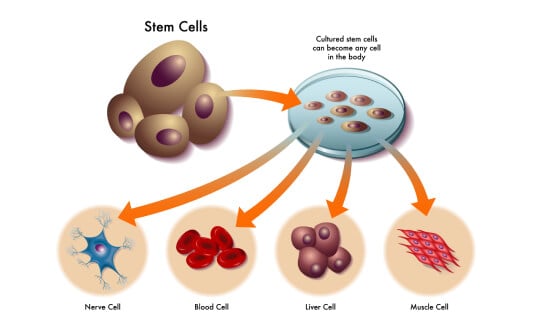
Stem cell therapy helps with the repair and regeneration of damaged optic nerve tissue by using the body’s own cells in the healing process. The stem cells used can be autologous (from the patient's own body) or allogeneic (donor-derived). These are a special type of cells that are not differentiated into a specific type of tissue. That’s why they can reduce inflammation, stimulate repair processes, and support mitochondrial function. This makes them an innovative and effective approach in eye atrophy treatment. [4]
According to Dr. Siebenhüner, a pioneer in the field of stem cell therapy with over 40 years of medical experience, "Tissues that have lost their normal functions can be restored with stem cells." It can not only replace damaged cells, but also boost and reactivate the patient's own underperforming neurons, significantly improving neurological functions – including vision in some patients.
When receiving treatment, patients with ONA get a stem cell injection in the area surrounding the optic nerve. These cells, aided by magnetic guidance, migrate to areas of injury or inflammation. There, they start the neuroprotective and regenerative processes, which lead to increased vision and slowed degeneration.
The types of stem cells that are used in treating optic nerve conditions are [4]:
- Mesenchymal Stem Cells (MSCs) can be found in fat, bone marrow, or in childhood from the umbilical cord.
- Neural Stem Cells (NSCs) are the originators of neurons and glial cells.
- Umbilical Cord Stem Cells are recognized for their significant plasticity and low rejection rate.
The choice between autologous and allogeneic stem cells — and between MSCs sourced from fat, bone marrow, or umbilical cord — is not made by default; it is determined by the patient's age, underlying cause of ONA, and whether any contraindications to the preferred extraction site exist.
A patient with diabetic ONA and limited bone marrow yield presents a different source selection calculus than one with trauma-induced atrophy and no complicating systemic conditions.
Booking Health's case review assesses these variables before the treatment program is finalized — because the cell source and preparation method shape both the quality of the regenerative material and the likelihood of a meaningful visual response.
GET A SECOND OPINION FOR MY CASEHow Stem Cell Therapy Works for Optic Nerve Damage
Stem cell therapy offers a pathway for patients with chronic or progressive optic nerve damage, particularly those who still retain partial vision. This advanced form of treatment is primarily aimed at neuroprotection, immune modulation, and neural repair – goals that traditional medications cannot achieve. [4]
Patients who can benefit from stem cell therapy for optic nerve atrophy treatment include those with partial vision loss, chronic optic nerve atrophy, and changes due to glaucoma, ischemia, trauma, or inherited conditions [4].
There are a few ways of stem cell administration for optic nerve damage, which include [4]:
- Retrobulbar injection (administered into the retrobulbar space to reach the optic nerve directly)
- Intravenous infusion (systemic use for immunomodulatory and anti-inflammatory effects)
- Intrathecal injection (delivered into the cerebrospinal fluid, to have an effect on the whole nervous system)
Stem cells start to migrate directly into the damaged tissue when administered into the body. Their effects include [4]:
- Immunomodulation – interaction with innate and adaptive immune pathways
- Anti-inflammatory – secrete the factors that promote a favorable healing environment
- Neural regeneration – stimulating the growth of axons and glial cells
When we look at scientific research, there are promising results. A 2024 meta-analysis study [4] shows the MSC therapy significantly improves mean visual acuity (LogMAR score from 0.90 to 0.65, p = 0.001), with many patients showing gains within six months. Additionally, the 2019 study [5] involving patients with suprachoroidal implantation of adipose-derived MSCs reported consistent improvements in visual acuity, visual field, and mfERG at month 6 in all patients. This shows that stem cells can help with slow or even reverse vision deterioration, especially in patients whose optic nerve retains partial functionality when used early.
That "used early" qualification carries a direct clinical implication: the window in which stem cell therapy can produce meaningful regenerative results — while sufficient viable axons remain to respond to neuroprotective signaling — narrows as the disease progresses. A patient who spends months navigating international referrals independently may arrive at the Frankfurt clinic at a stage where the regenerative potential has already diminished.
Booking Health's response within 24 hours of an inquiry — followed by coordinated diagnostic forwarding and priority appointment scheduling — is not a customer service metric; it reflects the clinical reality that in a progressive degenerative condition, the speed of access to treatment is itself a treatment variable.
What to Expect: Benefits of Stem Cell Treatment for ONA
Stem cell therapy is a modern and transformative option for patients seeking optic atrophy treatment. Some of the benefits are [4, 5]:
- Stop the vision loss the progression by protecting the remaining healthy nerve fibres
- Better color perception and central vision that patients report within 3-6 months post-treatment
- Restoration of the optic nerve fibres, promotion of survival of damaged axons
- Significant increase in the quality of life due to improved mobility, better daily independence, and the possibility of reading
For these patients even partial vision recovery is a life-changing event. This limits their dependence on caregivers, increases their confidence in navigating their environment, and allows them to resume work or hobbies previously abandoned due to vision impairment [4, 5].
Stem cell therapy can’t provide a total cure, but it has the possibility to regenerate some function in cases that are often considered untreatable. ONA diagnosis is a significant challenge for the patient; it heavily disrupts their daily living. Stem cell therapy helps these patients by providing a new approach for treating eye atrophy and long-term neuroregeneration.
Potential Limitations and Side Effects
Stem cell therapy for ONA is considered a safe treatment, but it is important to know its limitations and risks. This treatment of optic atrophy is not appropriate for patients who have total vision loss, because if optic nerve axons are completely dead, they cannot regenerate.
Potential risks include:
- Infection site of the injection
- Allergic response (more common with allogeneic transplants)
- Inflammation in the location of the procedure
- Lack of guaranteed outcomes, as not all patients respond to treatment
Despite these risks, it is considered that stem cell injections are a safe treatment. Case reports indicate that most patients tolerate the procedure well, particularly when their own cells are used [4, 5]. But it is important to note that stem cell therapy for ONA is still considered new in many countries and is not a part of standard treatment approaches.
The ineligibility criterion — total vision loss, where no viable axons remain — is clinically meaningful in a way that is not always apparent from a patient's home country diagnosis. "No further recovery likely" from a local ophthalmologist does not always mean complete axonal death; it sometimes means the available local treatment options have been exhausted. OCT fiber thickness measurements and VEP functional assessments can reveal residual nerve activity that standard clinical assessment misses.
Booking Health's medical team reviews the patient's existing diagnostic record specifically to distinguish between these two situations — because a patient told they have no options may still have viable axons, and therefore may still be a candidate for therapy that their home system cannot offer.
BOOK CONSULTATIONComparison Between Stem Cells and Traditional Treatments
When choosing a treatment for optic atrophy, it is important to compare traditional approaches with the regenerative potential of stem cell therapy. Standard therapies can insignificantly slow progression or manage symptoms, but stem cell therapy targets the root cause: nerve damage.
Stem Cells vs. Traditional Treatments
* Treatment prices are approximate and may vary depending on the clinic, the patient's medical condition, the number of injections required, and the complexity of the diagnostic program.
| Parameter | Stem Cell Therapy | Traditional Treatment |
|---|---|---|
| Mechanism | Regeneration | Symptom management |
| Target | Nerve repair | Pressure control, antioxidants |
| Vision Restoration | Possible (partial cases) | Unlikely |
| Duration of Effect | Long-term | Temporary |
| Cost (avg.)* | From €20,790 | €3,000-€10,000 |
As evident, stem cell therapy requires a larger upfront investment. However, it may offer a longer-lasting functional outcome, especially in early to moderate stages of optic nerve degeneration.
The cost range in that table reflects genuine variability driven by the number of injections required, the diagnostic program, and whether the patient's case demands additional supportive treatment alongside the stem cell protocol. That variability is precisely why a published starting price can mislead a self-paying patient planning a budget around a round number.
Booking Health provides a fully itemized treatment cost breakdown before any commitment is made — specific to the patient's case, not based on the general program starting point — and includes within its coordination the medical visa invitation, transfers, and translation support that international patients would otherwise organize separately and pay for additionally.
Get full treatment coordination supportSofia's Experience with Stem Cell Therapy for ONA
A young woman, Sofia, was diagnosed with ONA, which was caused by diabetes mellitus. Her left eye was affected, and she faced progressive vision loss. With time, this process significantly affected her daily life, and she almost lost her independence. Conventional treatments failed to improve her condition, and her doctors told her that no further recovery was likely. She made a decision to fight for her vision and began the search for modern treatment for optic nerve damage. Sofia, with the help of Booking Health, found an option – optic nerve atrophy stem cell treatment.
She was consulted by leading specialists in the field and developed a personalized treatment plan in Germany that included MSCs administered retrobulbarly (around the eye) and intravenously. After three months, she started to notice better light sensitivity and peripheral vision. The ophthalmologist confirmed that the optic nerve became more sensitive and stable than before receiving the treatment.
"I became more confident and happy. Now I can go out alone, recognize people's faces again, and I don't feel helpless anymore," she stated.
What impressed Sofia the most was the high professionalism of the German medical team. She noticed the comfort of the clinic environment. With the help of Booking Health, she was provided assistance in everything – her medical visa, travel tickets, and appointment scheduling.
Sofia also noticed that the procedure was comfortable and painless. She experienced no significant side effects and only mild, transient fatigue. Today, she insists that others not surrender to their diagnosis:
"Don't be afraid. Fight for your health. I'm living proof that even after vision loss, improvement is possible."
VIDEO
Stem Cell Therapy:
Sofia's success story with Stem Cell Therapy for Optic Nerve Atrophy
Stem Cell Therapy
BOOK CONSULTATION
Where to Get Treatment and What It Costs
ONA diagnosis can feel devastating and hard to believe. When your vision decreases, and doctors say, "There is nothing more we can do," it can feel like the end. But, even when options are limited, there is always hope – especially nowadays, when medicine is constantly developing new options.
Innovation continues to push boundaries: innovative therapies, advanced imaging tools, and regenerative medicine are changing what is possible. Vitamins, corticosteroids, and antihypertensive medications have been used for decades but have not shown significant improvement; instead, they only partially manage symptoms rather than restore function. For a lot of patients, they simply do nothing.
That is when stem cell therapy comes into the picture. This advanced treatment gives new possibilities for optic nerve regeneration. It requires a short hospital stay and does not involve a lifetime of pills. In many patients, it requires only a few injections with minimal side effects, aiming to protect and regenerate the damaged optic nerve.
Innovative treatments, such as stem cell therapy, are available at leading German clinics, including the Clinic of Advanced Biological Medicine in Frankfurt am Main. It can be reached through Booking Health, a medical tourism operator, which works with international patients. The cost of treatment for optic nerve atrophy with stem cells usually begins at €20,790, and highly depends on the clinic, number of stem cell injections, and diagnostic tools that are used.
When receiving treatment with the help of Booking Health, these prices include not only the therapy itself but also modern diagnostics tool, medical transfers, and translation support. This allows for a stress-free experience for international patients who seek high-quality care and modern treatment.
Stem cell therapy may not provide a complete cure, but it is a life-changing procedure for patients with no hope. It is the only tool to preserve, protect, and improve vision in conditions like ONA. If you are considering stem cell therapy for ONA in Germany, Booking Health offers full support and the best hospital care possible.
A Medical Journey: Every Step of the Way With Booking Health
Finding the best treatment strategy for your clinical situation is a challenging task. Being already exhausted from multiple treatment sessions, having consulted numerous specialists, and having tried various therapeutic interventions, you may be lost in all the information given by the doctors. In such a situation, it is easy to choose a first-hand option or to follow standardized therapeutic protocols with a long list of adverse effects instead of selecting highly specialized innovative treatment options.
To make an informed choice and get a personalized cancer management plan, which will be tailored to your specific clinical situation, consult medical experts at Booking Health. Being at the forefront of offering the latest medical innovations for already 12 years, Booking Health possesses solid expertise in creating complex cancer management programs in each case. As a reputable company, Booking Health offers personalized optic nerve atrophy treatment plans with direct clinic booking and full support at every stage, from organizational processes to assistance during treatment.
We provide:
- Assessment and analysis of medical reports
- Development of the medical care program
- Selection of a suitable treatment location
- Preparation of medical documents and forwarding to a suitable clinic
- Preparatory consultations with clinicians for the development of medical care programs
- Expert advice during the hospital stay
- Follow-up care after the patient returns to their native country after completing the medical care program
- Taking care of formalities as part of the preparation for the medical care program
- Coordination and organization of the patient's stay in a foreign country
- Assistance with visas and tickets
- A personal coordinator and interpreter with 24/7 support
- Transparent budgeting with no hidden costs
Health is an invaluable aspect of our lives. Delegating management of something so fragile yet precious should be done only to experts with proven experience and a reputation. Booking Health is a trustworthy partner who assists you on the way of pursuing stronger health and a better quality of life. Contact our medical consultant to learn more about the possibilities of personalized treatment with innovative methods for optic nerve atrophy with leading specialists in this field.
Booking Health holds ISO 9001 quality certification, reflecting well-established processes and strict quality control at every stage of the treatment journey — not just at the initial consultation, but throughout.

Stem Cell Therapy: Patient Stories with Booking Health







Frequently Asked Questions About Stem Cell Therapy for Optic Nerve Atrophy (ONA)
Optic nerve atrophy is a disease in which, due to degeneration of the optic nerve, the passing of the information from the eye to the brain becomes disrupted. This leads to vision loss over time. It can begin from trauma, glaucoma, ischemia, inflammation, or genetic disorders.
In some cases, yes, stem cell therapy may significantly improve optic nerve function, but if the patient is having total blindness, it cannot be reversed.
Stem cells help in building new connections between neurons, reduce inflammation, and restore function.
Yes, the therapy is generally well tolerated, especially if patients’ own stem cells are used. Mild side effects like inflammation in the injection site or mild general weakness can occur.
Mesenchymal stem cells (MSCs), neural stem cells (NSCs), and umbilical cord cells are used for optic nerve treatment.
Recent studies indicate that patients with chronic ONA experience improvements in vision after stem cell therapy over a period of 6 months.
First results may appear within 2-3 months, with continued improvement for up to 6 months. Nerve fibers require some time to develop.
Stem cells are aimed at stimulating optic nerve restoration and reducing further destruction, but full vision restoration is rare.
If you are early in the disease and experienced a partial vision loss and have no comorbidities, you are a good candidate. However, patients with advanced disease are candidates as well.
Usually, the risks are minimal and include injection-site irritation and immune reactions (if not the patient's own cells are used). It is considered a safe treatment when performed in specialized settings.
The cost of treatment for optic nerve atrophy starts at €20,790, and depends on the healthcare facility and supporting conditions.
Top clinics in Germany, such as the Clinic of Advanced Biological Medicine Frankfurt am Main, are providing patients with stem cell therapies. You can access these treatments through Booking Health’s programs for international patients.
Choose treatment abroad and you will be sure to get the best results!
Sources
01. National Library of Medicine. Optic Atrophy. https://www.ncbi.nlm.nih.gov/books/NBK559130/
02. Lancet Regional Health – Americas. National Sex- and Age-Specific Burden of Blindness and Vision Impairment by Cause in Mexico in 2019: A Secondary Analysis of the Global Burden of Disease Study 2019. https://www.thelancet.com/journals/lanam/article/PIIS2667-193X(23)00126-6/fulltext
03. BMJ Open. A Comparison of the Causes of Blindness Certifications in England and Wales in Working Age Adults (16-64 years), 1999-2000 with 2009-2010. https://bmjopen.bmj.com/content/4/2/e004015
04. BMC Ophthalmology. Evaluating the Impact of Mesenchymal Stem Cell Therapy on Visual Acuity and Retinal Nerve Fiber Layer Thickness in Optic Neuropathy Patients: A Comprehensive Systematic Review and Meta-Analysis. https://bmcophthalmol.biomedcentral.com/articles/10.1186/s12886-024-03588-2
05. International Ophthalmology. Six-Month Results of Suprachoroidal Adipose Tissue-Derived Mesenchymal Stem Cell Implantation in Patients with Optic Atrophy: A Phase 1/2 Study. https://link.springer.com/article/10.1007/s10792-019-01141-5
Read:
01. Stem cell treatment in Germany
02. Stem cell treatment for optic nerve atrophy in Germany
03. Artificial Retina Implant Could Restore Vision to Millions