Leading Hospitals in Germany for High-Quality Medical Care
Start therapy in a top hospital within 48 hours — fixed price, all paperwork handled
100 000+ patients advised in 10 years
Save 40–70 % on total costs
Personal coordinator 24/7 in your language
Here you will find most technologically advanced hospitals in Germany
The selection of doctors and clinics is based on annual qualification reports. The main selection criterion is the number of operations or procedures performed. It takes into account experience, reputation in the medical society, the availability of quality certificates, and high specialization in a certain field.

According to Focus magazine, the University Hospital Heidelberg ranks among the top five hospitals in Germany! The hospital is one of the most advanced and reputable medical institutions not only in Germany, but throughout Europe. There are more than 43 specialized departments and 13 medical institutes, which cover all fields of modern medicine. A distinctive feature of the hospital is the presence of unique therapeutic methods for the treatment of complex and rare clinical cases.
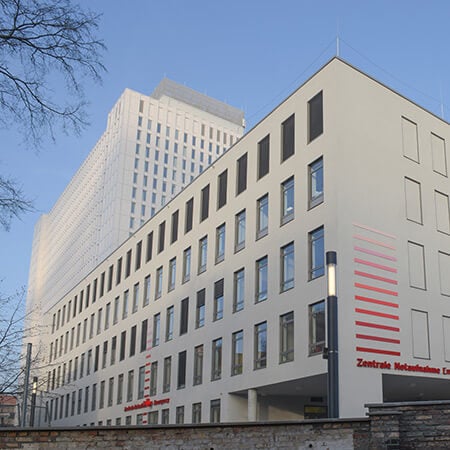
According to the reputable Focus magazine, the Charite University Hospital Berlin ranks 1st among the best healthcare facilities in Germany! The hospital is one of the largest and leading university medical complexes in Europe, and also consistently holds leading positions in the international medical arena. The Charite operates on the basis of the Faculty of Medicine of the Free University of Berlin and the Humboldt University of Berlin. Patients are offered modern diagnostics and treatment with the very latest methods, many of which were developed by professors and scientists of the medical complex. More than half of all German Nobel Prize winners in medicine and physiology, such as Emil von Behring, Robert Koch, and Paul Ehrlich, studied and worked at the Charite University Hospital Berlin. The medical complex includes more than 100 specialized departments and institutes, which helps to ensure that patients receive care in all existing medical specialties. The hospital has exceptional experience in treating complex clinical cases.
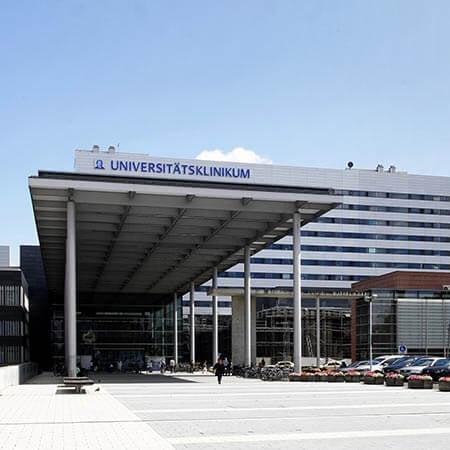
According to the reputable Focus magazine, the University Hospital Frankfurt am Main ranks among the top German medical facilities! The hospital was founded in 1914 and today is a well-known German medical facility, which combines rich traditions and scientific innovations. A medical team of more than 6,500 employees cares about the health of patients around the clock, ensuring them with the highest standards of medical care and best possible safety.

Germany attracts hundreds of thousands of international patients annually – they seek superior medical care beyond available in their home countries [1]. With exceptional healthcare system – it ranks among the most efficient around the world – Germany offers highly qualified specialists and cutting-edge treatments. The government's commitment to excellence is evident: it invests over 300 billion euros annually in medical services. That exceeds 11% of GDP [2].
Why Germany Stands Out for International Medical Care
Germany's healthcare system consistently ranks among the top-5 globally for clinical research and medical innovation [3]. The country leads Europe in human life expectancy and health indicators – an important evidence.
German hospitals receive generous funding from the government, which is really important, as it allows healthcare facilities to employ world-class specialists and implement the latest techniques. This combination of high quality standards and medical research creates an environment for receiving optimal treatment outcomes even in the most complex cases.
The German medical approach emphasizes minimally invasive techniques and organ-sparing operations whenever possible [4]. Hospitals routinely employ laparoscopic, endoscopic, and thoracoscopic procedures to reduce operational risks and facilitate faster patient recovery.
How Germany's Healthcare System Works: What Patients Need to Know
Germany operates a dual healthcare system combining public statutory insurance (covering about 85% of residents) with private insurance options [5]. For international patients, this structure creates opportunities to access both public university hospitals and private medical centers.
The system maintains strict quality control through:
Standardized care protocols across all medical departments
Regular certification processes by medical societies
External audits which means compliance with international standards
Continuous professional development requirements – to confirm medical staff qualifications
Private Germany clinics often provide more personalized service and shorter waiting times. University hospitals excel in complex cases that require complex, research-based treatments. Both types of healthcare facilities maintain high medical standards. The primary difference is in comfort and administrative flexibility.
Understanding Different Hospital Types
University Hospitals – are Germany's medical research powerhouses. They combine patient care with cutting-edge clinical trials. These institutions can offer access to experimental treatments not widely available yet.
Specialized Clinics choose to focus on specific medical fields rather than cover all medical issues. They often achieve superior outcomes for their specialty conditions.
General Hospitals – these provide comprehensive care across multiple medical disciplines. This approach is for patients who need coordinated treatment involving several health specialties.
Private Medical Centers, in addition, offer premium accommodations and personalized service.
Rehabilitation and Preventive Medicine Clinics specialize in health recovery programs and health maintenance. Here, one can also find comprehensive check-up programs.
Germany's Leading Medical Centers
Hospital
Location
Key Specialties
Annual Patients
1
University Hospital LMU Munich
Munich
Oncology, Cardiology, Neurosurgery
500,000+
2
University Hospital Rechts der Isar Munich
Munich
Transplantation Medicine, Cancer Treatment
315,000+
3
University Hospital RWTH Aachen
Aachen
Advanced Diagnostics, Research in Medicine
50,000+ inpatients
4
University Hospital Essen
Essen
Oncology, Transplantation Medicine, Cardiology
245,000+
5
Asklepios Hospital Barmbek Hamburg
Hamburg
Emergency Care, Cancer Treatment
110,000+
University Hospital LMU Munich is one of Europe's largest medical facilities – it includes 29 departments and 53 interdisciplinary centers. It manages complex cases in all fields of medicine. Just to imagine the medical possibilities scale: over 1,800 doctors and 3,300 nursing staff do their work here.
University Hospital Rechts der Isar Munich gained really international recognition for performing the world's first successful double arm transplantation above the elbow. That happened as early as 2008. The facility combines proven traditional approaches with innovative surgical techniques.
University Hospital RWTH Aachen is famous due to the use of advanced diagnostic capabilities and non-stop research activities. It is the maximum care and a university medical facility that has over 60 departments with more than 940 doctors.
University Hospital Essen is the one where the renowned West German Cancer Center is located. As for cancer treatment, Germany offers University Hospital Essen as the most comprehensive cancer facility, alongside leading transplantation programs for all vital organs.
Asklepios Hospital Barmbek Hamburg ranks among the top-3 worldwide medical tourism destinations – according to the Medical Travel Quality Alliance.
What Services and Support International Patients Can Expect
Making an appointment with German doctors, international patients receive access to treatments and clinical trials that are not available in many countries. Important to note that Germany's survival rates consistently rank among world's the highest ones. Medical facilities here provide comprehensive care packages: programs include primary procedures, postoperative care, rehabilitation, long-term follow-up, etc. These often make treatment more cost-effective than care in the native country.
Specialized medical tourism provider Booking Health simplifies access to any desired German hospital. Booking Health team handles administrative complexities and ensures patients receive world-class medical care during their treatment journey.
Booking Health essential support services include:
Professional medical interpreters and document translation
Visa assistance and airport transfer coordination
Direct hospital communication and appointment scheduling
Transparent pricing with complication insurance up to €200,000
Ongoing care coordination with home country physicians
Treatment Costs in Germany
Treatment Type
Price Range
Treatment of Prostate Cancer by Lutetium 177-PSMA (LU-177)
Costs may vary depending on treatment complexity / hospital type / required duration of care etc. Private medical centers typically charge premiums for extra comfort. As for university hospitals, Germany provides clinical excellence at competitive pricing.
How to Select the Right German Clinic for Your Condition
Choosing the optimal hospital in Germany starts from careful consideration of your specific medical condition, then proceeds to finding info about hospital German terminology and procedures, etc. University hospitals are often chosen for the treatment of rare diseases. As for specialized clinics, Germany offers expertise in particular medical fields.
Here we list the most important factors for you to consider:
Available treatment technologies, clinical trial access
Additionally: location preferences and accommodation options
Medical tourism provider Booking Health offers expert guidance in hospital selection among over 250 certified German medical facilities. Booking Health’s work includes evaluation services and matching patients with the most suitable clinics in Germany based on medical history, treatment requirements, and individual factors.
Next Steps for International Patients
Germany's healthcare system offers world-class medical care and rigorous quality standards, which is really worth trying. German hospitals provide everything necessary for optimal outcomes for people seeking surgical procedures, innovative cancer treatments, diagnostic evaluations, etc.
The next step is to connect with professionals who can navigate the medical tourism in Germany. Booking Health offers support during treatment in Germany for foreigners, including medical evaluation, hospital selection, making appointments, visa assistance, ongoing care coordination, etc.
Contact Booking Health to start your medical treatment in Germany. Booking Health team will assess your medical needs within 24 hours and guide you toward the list of hospitals in Germany. They ensure transparent pricing and confidence throughout your medical journey.
FAQ – Leading German Hospitals
What are the best hospitals in Germany?
University Hospitals LMU Munich, Rechts der Isar Munich, and RWTH Aachen – are the best hospitals in Germany as according to independent ratings. However, other medical centers can also be superior for specific medical conditions – thus the hospital is chosen individually.
How does the healthcare system in Germany work?
The healthcare system in Germany includes university, municipal and private facilities. It combines public insurance, which covers approximately 85% of residents, with private insurance. A patient can also visit any hospital – university, private, etc. – as a self-payer.
Are there private hospitals in Germany?
Yes, German healthcare has such an option. Private hospitals in Germany offer premium accommodations and service. As an additional benefit, they often have shorter waiting times.
Can foreigners get treatment in German hospitals?
Beyond all doubt, international patients can undergo treatment in Germany – at university hospitals and private medical centers. Medical tourism in Germany attracts hundreds of thousands of patients seeking medical care.
What specialties are German hospitals known for?
German clinics are known for their specialties in numerous medical spheres. Here, patients can find desired care in oncology, cardiology, or neurosurgery, advanced diagnostics, etc. Germany also offers medical second opinion for complex cases.
How much does treatment in Germany cost?
The cost of treatment in Germany varies significantly by complexity. To look at some numbers, prostate cancer treatment in Germany ranges €22,700-€43,900, hip replacement costs €13,200-€30,200 – all depending on hospital type.
What is the difference between university and general hospitals?
University hospitals in Germany combine scientific and educational activities, medical practice. Here, doctors handle complex cases and offer experimental treatments. General hospitals provide comprehensive care across multiple disciplines but typically do not teach students etc. Both types of clinics maintain high medical standards.
Do German hospitals accept international insurance?
German clinics work with international insurance; as a rule, private hospitals offer more flexible payment options. Medical tourism facilitators help arrange transparent pricing with insurance coverage.
Why choose Germany for complex surgeries?
Germany's investment of over 300 billion euros annually in medical services guarantees availability of novel equipment and skilled surgeons. The healthcare system in Germany consistently ranks among the top-5 for medical innovation.
How to book treatment in a German hospital?
Booking Health simplifies access to German medical facilities. They provide comprehensive support: medical evaluation, hospital selection, and visa assistance for the treatment in Germany.
Authors:
This article was edited by medical experts, board-certified doctors Dr. Nadezhda Ivanisova, and Dr. Vadim Zhiliuk. For the treatment of the conditions referred to in the article, you must consult a doctor; the information in the article is not intended for self-medication!
Our editorial policy, which details our commitment to accuracy and transparency, is available here. Click this link to review our policies.
[4] L Keuchel, F Beske. Minimally invasive surgery in the Federal Republic of Germany. Health Policy. 1993 Jan;23(1-2):49-65. doi: 10.1016/0168-8510(93)90006-b. [DOI][PubMed]