



Amyotrophic lateral sclerosis (ALS) remains one of the most challenging neurological diseases, requiring innovative treatment approaches. German clinics hold leading positions in the development and implementation of advanced cell therapy methods, offering ALS patients scientifically-based treatment protocols with proven effectiveness. In Germany, stem cell treatment for ALS is becoming increasingly sought after due to the special attention that German medicine pays to developing new methods and ensuring their safety and long-term effectiveness.
German Technologies in ALS Treatment – Stem Cell Therapy
Germany has historically been one of the world leaders in regenerative medicine and the treatment of neurodegenerative diseases. A key feature of German doctors' work is strict adherence to international GMP standards when working with stem cells. This means complete control of all stages of cellular material production: from collection to administration to the patient.
- Strict adherence to international GMP (Good Manufacturing Practice) protocols when working with stem cells
- Use of the latest equipment for cultivation and storage of cellular material
- Continuous monitoring using modern diagnostic methods
- Integration of cell therapy with other treatment methods
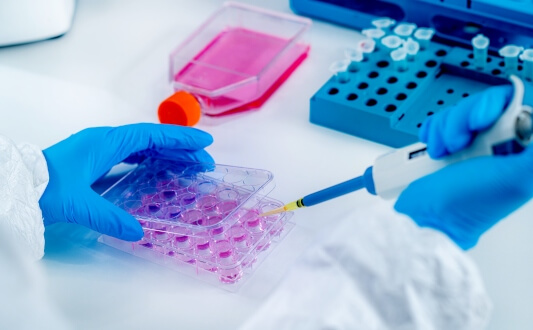
German laboratories operate under a multi-level quality control system. Each stage of work with cells is documented, and all manipulations are conducted in facilities of various cleanliness classes. Special attention is paid to sterility: the air in laboratories undergoes multi-stage purification, and personnel work in special suits that protect cellular material from contamination.
An important advantage of German clinics is the use of automated cell cultivation systems. This equipment creates ideal conditions for the growth and reproduction of stem cells, controlling temperature, CO2 levels, pH, and other parameters. This allows for obtaining cellular material of the highest quality with maximum therapeutic activity.
ALS progresses at different rates in different patients — and that rate of progression is the clinical variable that most directly affects when treatment should begin and what protocol intensity is appropriate. A patient in early-stage ALS with preserved respiratory function is not in the same therapeutic position as one with rapidly declining ALSFRS-R scores and compromised bulbar function.
Booking Health's medical team reviews each incoming case against these parameters before recommending a German center or protocol, because the same stem cell approach that slows progression in a correctly staged patient may be applied too late — or at insufficient intensity — in one whose disease trajectory was not assessed before travel was organized.
CHECK IF A BETTER SOLUTION EXISTS FOR YOUInnovative Methods of Obtaining Stem Cells for ALS Treatment
A real breakthrough in cell therapy has been the development of a 3D-organoid system for obtaining stem cells. Stem cell treatment for ALS in Germany has gained new significance thanks to this innovative technology. It solves one of the key problems – obtaining a sufficient quantity of specialized stem cells.
The 3D-organoid system is a special environment for cell cultivation that mimics the natural microenvironment of stem cells in the body. In such an environment, cells not only actively multiply but also maintain their most important properties – the ability to differentiate and regenerative potential. According to recent studies, stem cells obtained using this technology demonstrate higher therapeutic activity compared to cells grown by traditional methods.
- Ability to obtain large quantities of specialized stem cells
- High purity of cell population
- Standardized production process
- Improved characteristics of the obtained cells
- Possibility of long-term storage without loss of properties
Of particular value is the ability to cultivate cells for a long time without losing their properties. This allows for the creation of banks of cellular material and the conducting of treatment courses at optimal times. Additionally, the technology enables obtaining large populations of homogeneous cells, which increases the predictability of treatment results.
Results of Clinical Studies of Stem Cells for ALS Treatment in Germany
The effectiveness of German protocols for treating amyotrophic lateral sclerosis is confirmed by the results of large-scale research. Of particular note is a recent study, "Phase 2 Trial of Repeated Intrathecal Autologous Adipose-derived MSCs in ALS," which involved 57 ALS patients.
During the study, treatment effectiveness was evaluated using the ALSFRS-R scale, which allows for objectively assessing patients' functional capabilities. Before treatment, all participants showed a typical rapid decline in scores on this scale, which is characteristic of ALS. After beginning stem cell therapy, a significant portion of patients showed a slowing in disease progression.
Benefits for Patients
Especially important is that in 21 patients (37% of participants), the rate of decline in ALSFRS-R scores decreased by at least 25%. This indicates a substantial slowing of disease progression. Moreover, the positive effect persisted throughout the entire observation period – up to 12 months after treatment initiation.
Results of Stem Cell Therapy for ALS Patients
| Indicator | Therapy Result | What It Means for the Patient |
|---|---|---|
| Slowing of disease progression | In 37% of patients, the disease developed 25% slower | More time with self-care ability and communication with loved ones |
| Improvement in respiratory function | 28% of patients reported improved breathing | Fewer breathing problems, improved sleep quality, reduced fatigue |
| Duration of effect | Up to 12 months after the treatment course | Long-term improvement in quality of life |
German researchers also conducted a detailed analysis of biomarkers in patients with various responses to therapy. This allowed for identifying factors affecting treatment effectiveness and developing a system for predicting therapy results. Now doctors can more accurately determine which patients will respond most effectively to treatment and adjust the therapy protocol accordingly.
The 37% figure — patients in whom progression slowed by at least 25% — describes an outcome in a specific, protocol-defined population receiving repeated intrathecal autologous adipose-derived MSCs. ,/p>
A patient whose disease has already significantly compromised respiratory function, or whose adipose-derived cell yield is reduced by prior treatment or low body fat, may fall outside the conditions that produced these results.
Booking Health's pre-treatment case review assesses current ALSFRS-R trajectory, respiratory status, and cellular material viability before the German protocol is recommended — identifying whether a specific patient's profile places them within the population the study describes, and which of the German centers has the documented protocol depth to address their current disease stage.
FIND THE RIGHT SPECIALIST FOR MY CASEExperience of Practicing Specialists
Statistical data is perfectly complemented by the real experience of doctors who help ALS patients daily. Dr. Michael Stehling – founder of the ANOVA Institute for Regenerative Medicine and a student of Nobel laureate Peter Mansfield — shares his observations. In this interview, Dr. Stehling discusses the actual results of stem cell treatment and the successes his patients achieve.
VIDEO
Stem cell therapy for
amyotrophic lateral sclerosis -
Prof. Stehling
Radiology, regenerative medicine
BOOK CONSULTATION
Features of ALS Treatment with Stem Cells in German Clinics
The German approach to ALS treatment is based on a deep understanding of disease pathogenesis and the mechanisms of action of various therapy methods. Treatment is founded on the principle of multimodality – simultaneous impact on various links in the pathological process.
The comprehensive treatment program includes:
- Cell therapy using various types of stem cells
- Modern neuroprotection methods
- Gene therapy
- Specialized neurorehabilitation
- Respiratory support when necessary
- Alternative treatment options, as indicated

EXPERT
Dr. med. Gerhard Siebenhüner
Dr. Gerhard Siebenhüner has been practicing medicine for more than 40 years, and since 2005, he and his team have been focusing on stem cell treatments.
BOOK CONSULTATIONGerman specialists use an innovative system for monitoring patients' condition, which allows for promptly evaluating treatment effectiveness and adjusting therapy if necessary. Assessment is conducted on several parameters:
- Dynamics of indicators on the ALSFRS-R scale
- Changes in the level of specific biomarkers
- Results of instrumental studies
- Subjective assessment of quality of life by the patient
The cost of stem cell therapies for ALS in German clinics starts from €20,790.00. That starting cost reflects the base protocol — and for a disease that progresses at the rate ALS does, the more consequential financial question is what the total program costs for a patient's specific disease stage, required number of intrathecal administrations, and any concurrent neuroprotection or respiratory support.
Booking Health provides a fully itemized budget specific to the patient's program before any commitment is made, with no foreign patient surcharge applied above the institutional rate.
Complication insurance covering up to €200,000 is included, and unspent funds are returned after treatment completion.
CONTACT USStem Cell Therapy Success: Real Patient Experiences with Booking Health
How to Undergo ALS Treatment with Stem Cells According to German Protocols
ALS stem cell treatment in Europe has reached its highest level specifically in German clinics, where the healthcare system provides ALS patients with access to the most modern treatments.
Key advantages of German clinics include:
- Specialized centers for ALS treatment
- Multidisciplinary approach to therapy
- High standards of medical care
- Modern technical equipment
- Experienced medical personnel
- Comfortable conditions for patients
Organization of ALS Treatment With Stem Cells in Germany
To organize treatment in Germany, patients can use Booking Health services.
The Booking Health team guarantees:
- Preparation of medical documentation in German
- Obtaining an invitation from the clinic
- Organization of accommodation
- Coordination of all treatment stages
- Subsequent follow-up
For ALS patients specifically, the organizational dimension of treatment carries a clinical weight it does not carry for most other conditions — because the disease actively narrows the window of functional capacity within which travel and treatment are feasible. A patient who can still travel independently today may not be able to in three months. Booking Health handles documentation preparation, clinic invitation, visa support, accommodation, and transfer coordination in parallel rather than sequentially, compressing the timeline between decision and first appointment to within 48 hours where urgency requires it. The personal coordinator and on-site interpreter are present throughout — and post-treatment follow-up coordination, maintained for up to 12 months, ensures that ALSFRS-R monitoring data from the patient's home country reaches the German treating team so that any indication for a repeat treatment cycle is acted on rather than missed.
Stem cell ALS treatment in Germany provides access to modern therapy methods based on scientific research and confirmed by clinical results. A comprehensive approach, the use of innovative technologies, and high standards of medical care allow for achieving the best results in treating this complex disease.
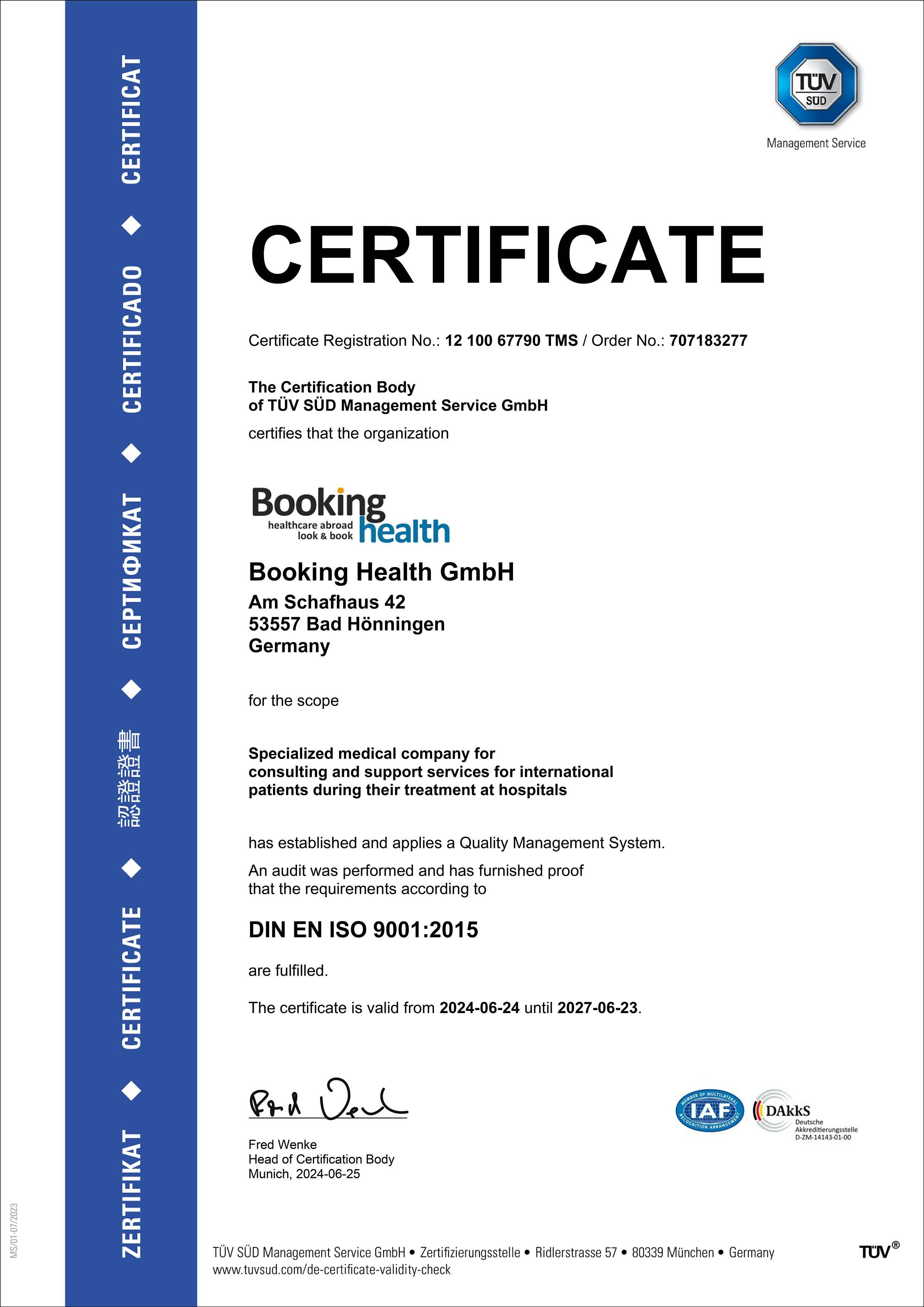
Booking Health holds ISO 9001 quality certification, reflecting well-established processes and strict quality control at every stage of the treatment journey — not just at the initial consultation, but throughout.

Choose treatment abroad and you will be sure to get the best results!
Sources:
01. Lauren Frawley, Noam Tomer Taylor, Olivia Sivills et al. Stem Cell Therapy for the Treatment of Amyotrophic Lateral Sclerosis: Comparison of the Efficacy of Mesenchymal Stem Cells, Neural Stem Cells, and Induced Pluripotent Stem Cells. Biomedicines. 2024 Dec 27;13(1):35. doi: 10.3390/biomedicines13010035. [DOI] [PMC free article]
02. Sai Zhang, Johnathan Cooper-Knock, Annika K Weimer et al. Genome-wide Identification of the Genetic Basis of Amyotrophic Lateral Sclerosis. Neuron. 2022 Jan 18;110(6):992–1008.e11. doi: 10.1016/j.neuron.2021.12.019. [DOI] [PMC free article]
03. Hongmei Du, Zijun Huo, Yanchun Chenr et al. Induced Pluripotent Stem Cells and Their Applications in Amyotrophic Lateral Sclerosis. Cells. 2023 Mar 22;12(6):971. doi: 10.3390/cells12060971. [DOI] [PMC free article]
Read:
01. Groundbreaking ways of ALS treatment
02. What are the benefits of treating neurological disorders in Germany?
03. Peculiarities of neurological rehabilitation in the best German rehabilitation centers