The reality drives the urgent need for novel and more effective astrocytoma treatments. Astrocytoma group of neoplasms includes relatively slow-growing grades I–III and grade IV – glioblastoma, mentioned among the most lethal cancers. In the U.S., gliomas strike roughly 6 per 100,000 people annually [1]. That is, each year, about 25,400 malignant brain or spinal astrocytoma are diagnosed – and roughly 18,760 people do not survive them.
The clinical distinction between astrocytoma and glioblastoma matters. Glioblastoma progresses rapidly; low-grade astrocytomas, including astrocytoma grade 2, follow a slower course – yet demand monitoring, since transformation into aggressive forms remains a risk.
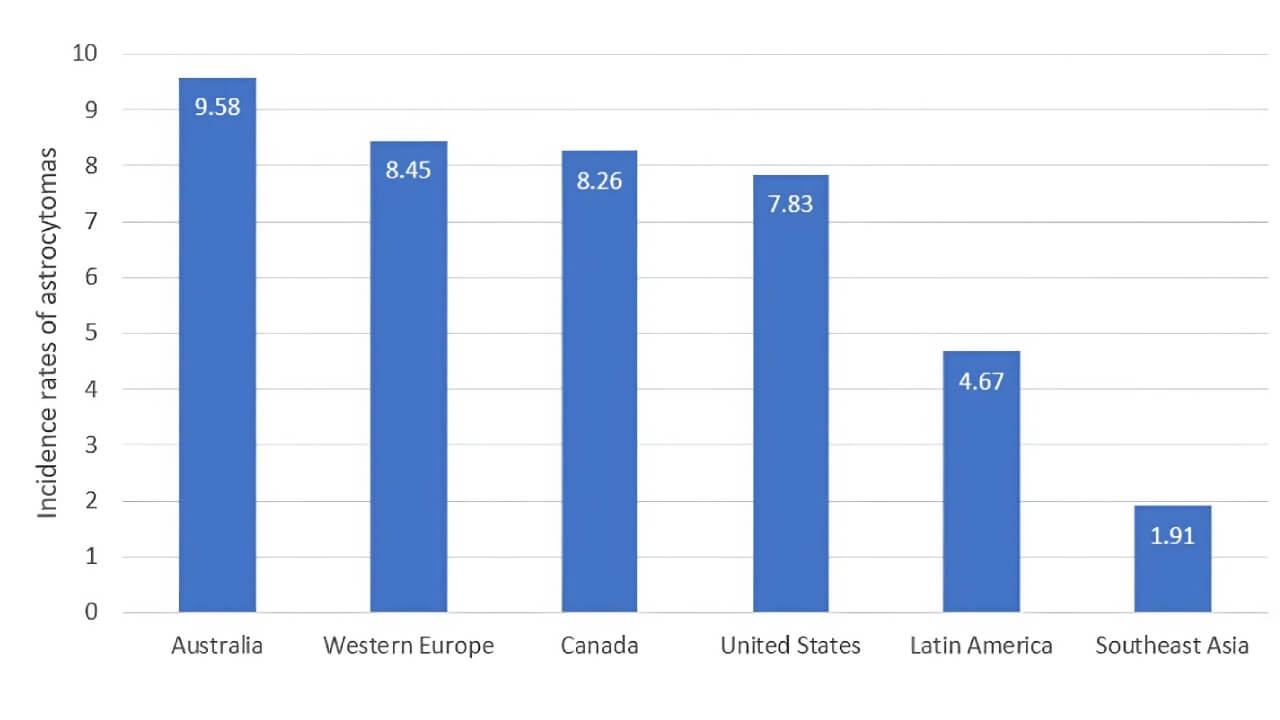
The age-adjusted incidence rates of astrocytomas per 100,000 in adult populations (> 40 years old) around the world [2]
Standard Treatment Approaches: Surgery, Proton Therapy & Radiation
Treatment plan for astrocytoma of the brain typically involves a combination: surgery and radiation-based methods. These reduce tumor burden and delay progression – though vary in precision, side effects, and long-term outcomes.
Advanced Neurosurgical Techniques in Astrocytoma Management
Modern neurosurgery bears little resemblance to what it was two decades ago. Large incisions, high neurological risk, weeks of recovery – those assumptions no longer hold. Today's techniques reach tumors once considered untouchable, and they do so with far greater precision.
Endoscopic endonasal surgery (EES) approaches the tumor through the nasal passages entirely – no craniotomy, no brain retraction. For midline and skull base astrocytomas, this means dramatically reduced recovery time, fewer postoperative complications, and no visible scarring. Patients with tumors near the optic nerve or pituitary region often regain normal function with striking speed.
Not every case suits EES, of course. Another option is keyhole craniotomy – smaller, strategically positioned openings that access the tumor with surrounding structures largely intact. Clinical advantages are less blood loss, shorter hospital stays, lower infection rates versus conventional open surgery. Precision without the collateral cost.
And then there are tumors positioned against the brain's most critical zones – language centers, motor pathways. How do surgeons operate there without causing the very damage they're trying to prevent? Awake brain mapping solves that problem. Patients are sedated but conscious and perform tasks in real time while surgeons detect and protect the eloquent cortex during brain tissue resection. Quality-of-life outcomes have significantly improved as a result. It is now the gold standard for surgery in functional brain zones – and rightly so.
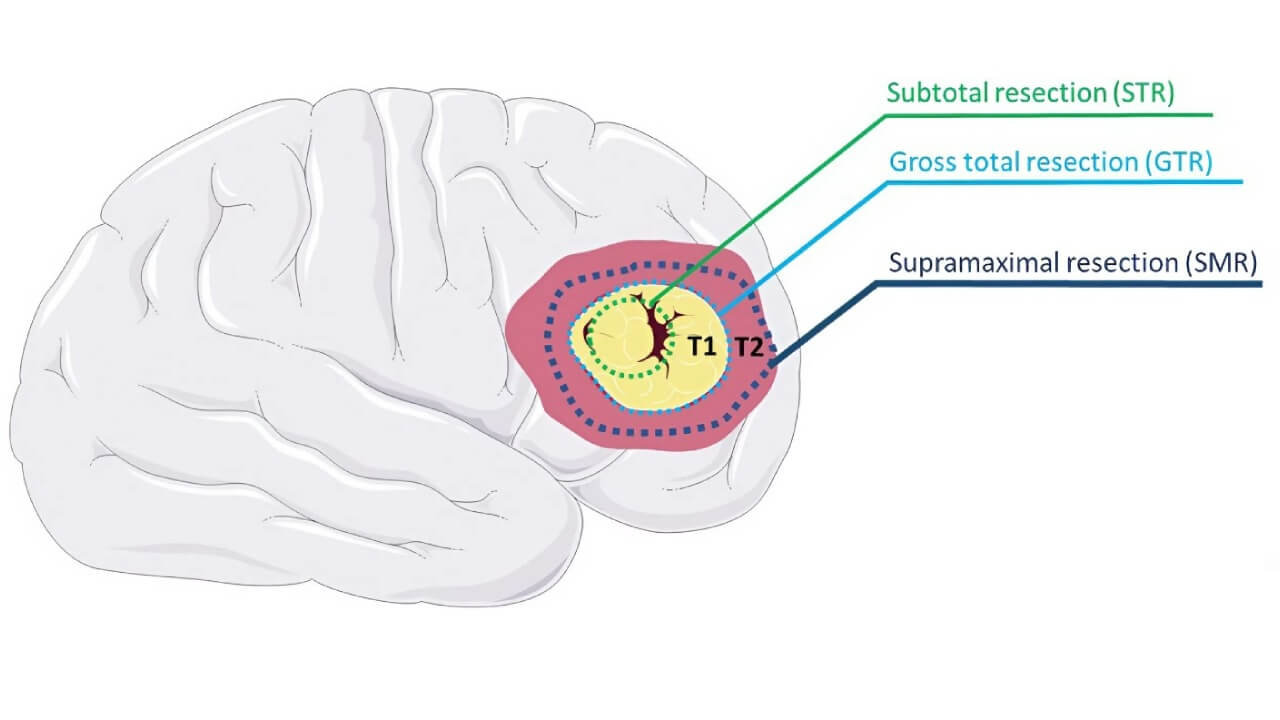
The illustration below summarizes current surgical strategies, matched to tumor location and grade. These options expand the treatment landscape for patients with both low- and high-grade astrocytomas.
Update for astrocytomas: medical and surgical management considerations [2]
The surgical technique most appropriate for a specific astrocytoma depends on tumor location, grade, proximity to eloquent cortex, and the surgeon's annual caseload with that specific approach. A center performing high volumes of awake craniotomies develops intraoperative mapping precision that cannot be replicated at lower-volume institutions.
Booking Health evaluates annual caseload for the relevant neurosurgical procedure — not institutional reputation in general — when matching patients to German and European centers, because volume and expertise for a specific technique are two different things.
Proton beam therapy exploits a fundamental principle of physics: positively charged particles release most of their energy precisely at the tumor site – the Bragg peak – then stop. No significant exit dose. No unnecessary radiation scattering through healthy tissue beyond the target.
The evidence behind this precision is compelling. A systematic review covering over 800 glioma patients across grades II–IV found survival rates comparable to conventional radiotherapy – with notable advantages in protecting cognitive- and neuro-sensitive regions [3]. Dosimetric comparisons with VMAT and 3D-CRT revealed mean dose reductions of up to 99% in the contralateral hippocampus [4]. For patients facing long-term neurocognitive consequences, that number is significant.
Precision Radiation Therapy in Brain Astrocytoma
Radiation remains foundational to astrocytoma treatment – particularly following surgical resection. Its role: targeting residual tumor cells that surgery cannot safely reach and slowing disease progression. Standard protocols typically deliver 50–60 Gy across daily sessions over approximately six weeks.
The results, when radiation integrates into a multimodal regimen, can be striking. One large investigation reported a doubling of two-year survival when radiation combined with systemic therapy – compared to radiation alone [5].
Modern delivery systems – Intensity-Modulated Radiation Therapy (IMRT) and Volumetric-Modulated Arc Therapy (VMAT) – sculpt the dose to match the tumor's precise three-dimensional shape, sparing adjacent critical structures and reducing the cognitive toll that radiation has historically carried. Better targeting. Fewer consequences. More life preserved.
Reprogramming Immunity: How Dendritic Cell Therapy Is Shaping the Future of Brain Tumor Care
What if the powerful weapon against brain tumors was already inside the body? Dendritic cell therapy operates on exactly that premise – harnessing the immune system's own architecture to identify, target, and eliminate astrocytoma cells with a precision that conventional treatments simply cannot match. Highly personalized, mechanistically elegant, and carrying a far gentler side-effect profile than standard therapies, it represents one of the most compelling shifts in neuro-oncology today.
How It Works
Dendritic cells are the immune system's educators. Their core function: presenting antigens to T-cells, effectively instructing the body's defenses on what to destroy. This mechanism – and its profound implications for medicine – earned Canadian immunologist Ralph M. Steinman the 2011 Nobel Prize in Physiology or Medicine [6].
The process is deeply personal. A patient's immune cells are collected, loaded with tumor-specific antigens in the laboratory, then reintroduced into the body. After the activation reprogrammed dendritic cells can cross the blood-brain barrier – a boundary many drugs never breach – and direct the immune system against astrocytoma cells with high specificity.
Targeted. Adaptive. Entirely the patient's own biology, turned against the tumor.
Why This Matters in The Treatment of Astrocytoma Brain Tumor
Radiation and chemotherapy don't make difference. Healthy tissue and cancerous tissue absorb the damage together – a fundamental limitation that becomes especially consequential inside the brain. Dendritic cell therapy overcomes this issue and confines the immune response to malignant cells alone.
The advantages are numerous:
Selective targeting.
Immune response can evolve as the tumor mutates, reducing the risk of relapse and immune memory enables ongoing, lifelong, surveillance against cancer cell regrowth.
Lower toxicity.
Blood-brain barrier access.
If you’re looking into astrocytoma treatment options, this innovative immunotherapy for astrocytoma may offer new hope – especially when conventional approaches are limited.
Clinical Evidence and Use Cases in Brain Astrocytoma
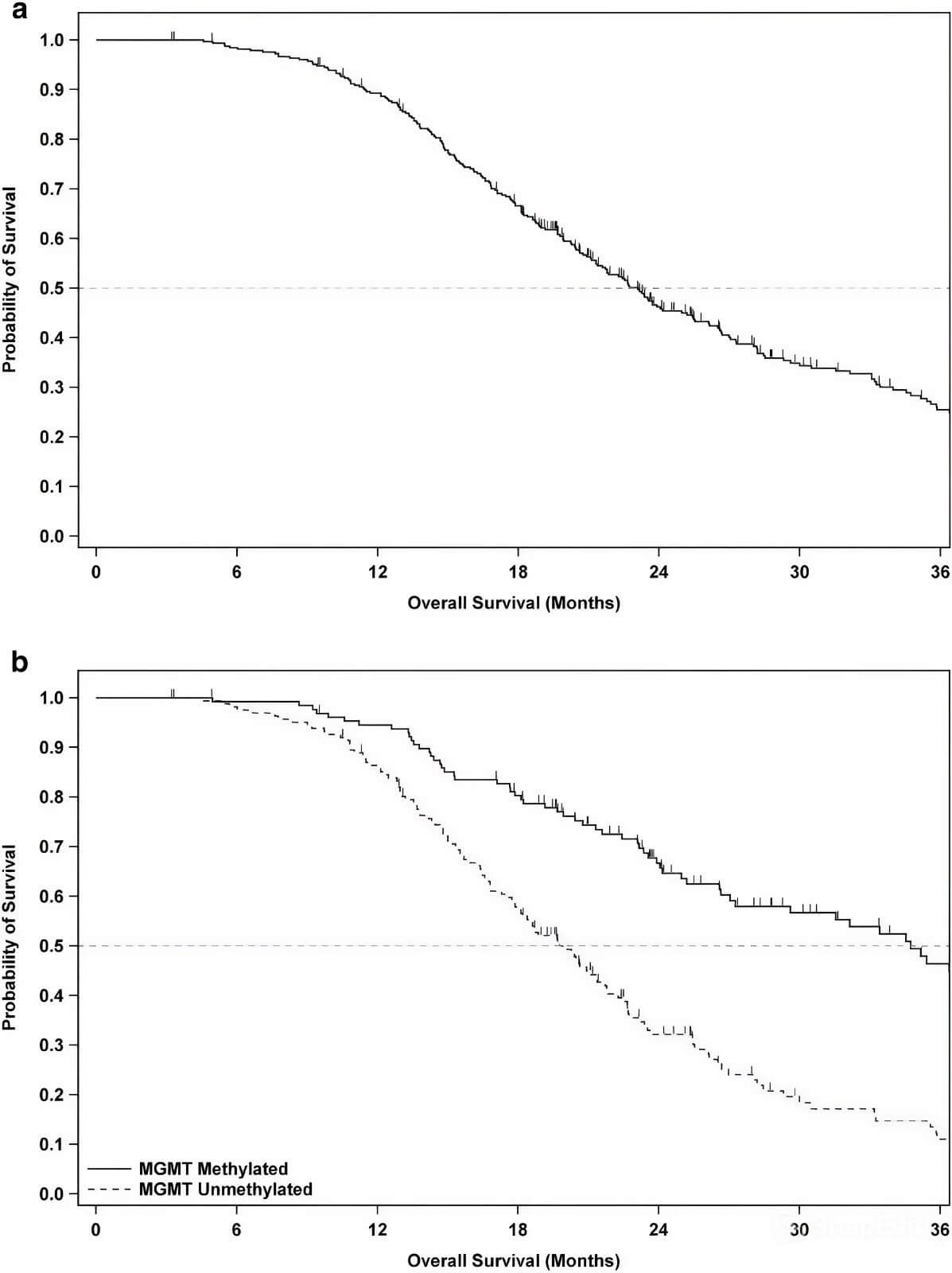
Recent Phase III studies have shown encouraging results. One large-scale trial involving over 300 glioblastoma patients found that adding dendritic cell vaccination to standard care extended median overall survival and significantly improved five-year survival rates – from 5.7% to over 13% [7]. Side effects were minimal and mostly limited to mild flu-like symptoms.
Overall survival curves for patients in the intent-to-treat population [7]
This approach is now being considered across different stages of astrocytoma, including:
After surgical resection, to target remaining tumor cells.
As part of multimodal regimens, complementing radiation and other systemic therapies.
In recurrent or inoperable astrocytoma brain tumors, where other options may be limited.
It’s especially valuable in patients seeking new glioma treatments that go beyond conventional methods.
The survival improvement from 5.7% to over 13% at five years was achieved in patients treated within the biological window that follows surgical resection. For international patients, that window is measured in weeks from surgery.
Booking Health coordinates documentation preparation, clinic scheduling, visa support, and travel simultaneously rather than sequentially — so that the gap between resection and the first DC vaccination session is determined by the patient's recovery, not by administrative queue times.
New Treatments for Brain Astrocytoma: Interventional Radiology Techniques
For patients with astrocytomas in surgically risky areas, minimally invasive procedures guided by imaging offer a safe effective alternative. Interventional radiology is an essential part of the modern neuro-oncology. Its methods help reduce surgical complications and enhance local tumor control. Let’s take a closer look at different options.
Laser Interstitial Thermal Therapy (LITT) for Brain Astrocytoma
LITT uses focused laser energy. It ablates tumor tissue from within and is guided in real-time by magnetic resonance imaging. The method offers several important clinical benefits:
Accesses the tumor through a small skull opening with minimal disruption to surrounding tissue
Uses real-time MRI to guide heat delivery, ensuring precise control of thermal damage
Preserves healthy brain structures while effectively destroying tumor cells
Particularly suitable for small tumors and patients who cannot undergo conventional surgery
May temporarily open the blood–brain barrier, improving the delivery of subsequent treatments
This approach has shown favorable survival outcomes in selected patients – with deep-seated or recurrent gliomas. [8]
Electrochemotherapy for Brain Astrocytoma
Different problem, different tool. Electrochemotherapy doesn't destroy tissue thermally – it exploits electric pulses to momentarily increase cancer cell membrane permeability, allowing chemotherapeutic agents to penetrate tumor cells up to 300 times more efficiently than standard delivery [9]. Effects remain confined strictly to the treated region. The procedure can be completed in a single session, even intraoperatively when circumstances allow – making it particularly valuable for tumors in eloquent or surgically complex areas.
VIDEO
Prof. Kovács: How Electrochemotherapy Became the Gold Standard for Hard-to-Reach Tumors
Then there's the question of blood supply. Highly vascular astrocytomas feed on it – and embolization attacks that dependency directly, cutting off tumor-feeding arteries before surgery even begins. Angiography first identifies and maps those vessels with precision; embolic materials – particles, glues, or coils – then travel through microcatheters to seal them off. The procedure is typically performed 24–48 hours before resection, allowing maximum effect to take hold.
The surgical payoff is significant [10]. Less intraoperative bleeding means surgeons can work more thoroughly and more safely, achieving more complete tumor removal with reduced risk to surrounding structures – particularly valuable when the lesion sits near critical brain regions. Well-established in neurosurgical planning and continuously refined through newer embolic agents and advanced imaging guidance, embolization remains one of the most strategically important preparatory steps in complex astrocytoma surgery.
The 24–48 hour window between embolization and resection is a logistical constraint that requires the neuroradiologist, the neurosurgeon, and the operating room to be coordinated around the same patient timeline. For international patients, that coordination must extend to their accommodation, transport, and family arrangements during the procedure days.
Booking Health's personal coordinator manages the full sequence — ensuring that the clinical timeline the surgical team requires is not disrupted by logistical gaps on the patient's side.
Conventional and New Treatment for Astrocytoma Brain Tumors
Treatment Approach
Response Rate
Survival Benefit
Side Effects
Treatment Duration
Treatment Cost Range (Europe)
Surgery
60-80% (early stages of glioblastoma) 20-30% (advanced)
Foundation for other treatments
Pain, infection risk, and recovery time
One-time procedure
€25,000 - €50,000
Conventional Radiation
40-60% (early) 15-20% (advanced)
Part of the standard protocol
Fatigue, skin irritation, cognitive effects
6 weeks (daily sessions)
€28,000 - €42,000
Proton Therapy
50-70% (early) 15-25% (advanced)
Similar to conventional radiation with reduced side effects
Mild to moderate
6 weeks (daily sessions)
€56,900 - €90,500
Dendritic Cell Therapy
85-95% (early) 60-80% (advanced)
Potential for long-term survival benefit
Minimal (primarily flu-like symptoms)
One-time procedure with lasting effects
€20,000 - €38,000
Electrochemotherapy
~70% complete response in studies
9-14 months median survival improvement
Localized effects, minimal systemic impact
Single session
€30,000 - €45,000 per treatment course
Laser Interstitial Thermal Therapy
Best for tumors under 11cc
~11.5 months for recurrent disease
Minimal
One-time procedure
Part of the surgical costs
From Diagnosis to Recovery in Brain Astrocytoma
Marco was 42, an architect from northern Italy, and wasn't worried at first. Memory lapses, occasional confusion – easy to dismiss. But the symptoms escalated: visual disturbances, speech hesitation. A brain MRI delivered the answer no one wanted. A low-grade astrocytoma, left temporal lobe, positioned precisely where language and memory converge.
Italian specialists offered standard resection and radiotherapy. The tumor's location made that a significant gamble. His family began looking elsewhere – searching for a center that paired genuine medical innovation with something equally important: a personalized approach to the person behind the diagnosis.
Through Booking Health, they reached the astrocytoma treatment Germany offers: a specialized neuro-oncology clinic. The multidisciplinary team didn't offer a protocol. They built a plan – one centered on dendritic cell therapy, an advanced immunotherapy designed to retrain Marco's own immune system to recognize and eliminate cancer cells. Careful tumor resection using intraoperative mapping preserved cognitive function throughout. A series of dendritic cell vaccinations, developed from his own tumor antigens and white blood cells, followed. Adjunctive proton beam radiation and personalized rehabilitation completed the pathway.
Follow-up with MRIs showed no recurrence (over 18 months). So, Marco regained full independence, even returned to his profession, and reported no significant neurological deficits. "We chose a center that didn't just know how to treat low-grade astrocytoma in adults," he said. "They treated me as a person." That distinction matters more than it seems.
Marco's case carried a specific clinical precondition that made the outcome possible: the tumor's left temporal location — adjacent to language and memory centers — required a center with documented high caseload in awake craniotomy with cortical mapping, not simply a neurosurgery department with general glioma experience.
Booking Health matched his case to that specific surgical capability before recommending a center. The personalized treatment plan followed from that matching.
The distinction Marco described — being treated as a person — began with the clinical determination that the right center for his tumor's location had been identified.
Hope in Cancer Treatment: Patient Success with Booking Health
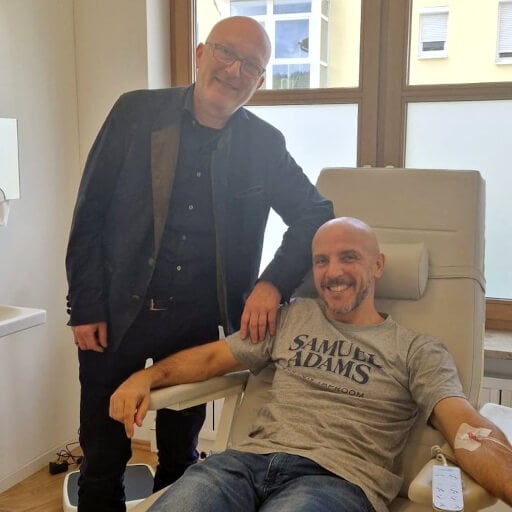
Ronald John C. (Canada), May 2026
Justin Russell F. (USA), April 2026
Joy F. (United Kingdom), January 2026
Jean N. (USA), October 2025
Kristijan I. (Croatia), July 2025
Elaine Alexandra W. (United Kingdom), July 2025
Deborah S. (United Kingdom), May 2025
Anthony H. (United Kingdom), April 2025
Olena K. (Canada), December 2024
Rodrigo Z. (Brazil), March 2024
Advanced-Stage Astrocytoma: Standard Treatment Fails — Innovation Offers New Hope
A late-stage brain tumor diagnosis can feel like a door closing. Rounds of treatment, limited response, narrowing options – for patients with astrocytoma grade 4, the sense that the disease has moved beyond reach is understandable. Fortunately, modern medicine doesn't stop where conventional protocols do.
Traditional approaches play a role. But they are no longer the only path, the landscape has shifted. For high-grade astrocytoma, personalized strategies – targeted therapy, precision RT, immunological methods – produce differences in outcome, often with a gentler side-effect profile than standard high-dose regimens. What determines the right approach is no longer the diagnosis alone: genetic mutations, prior therapy response, and overall health all shape the most effective course.
Leading clinics abroad now offer comprehensive, individualized treatment plans for astrocytoma and glioblastoma treatment – and through Booking Health, patients can access these programs directly, without delays or unnecessary intermediaries. Even at stage 4 astrocytoma, meaningful decisions remain available.
This isn't about false hope. It's about knowing where to look – and moving before time runs out.
Where can I undergo the treatment of brain astrocytoma?
Among foreign hospitals, the best success rates in the treatment of brain astrocytoma are demonstrated by:
University Hospital HM Monteprincipe Madrid, Spain
University Hospital for Neurosurgery Salzburg, Austria
University Hospital of Ludwig Maximilian University of Munich
Helios Hospital Berlin-Buch
Schön Clinic Rendsburg
University Hospital Regensburg
University Hospital HM Monteprincipe Madrid, Spain
Excellence in neuro-oncology defines this ISO-certified facility. StealthStation™ ENT Navigation System – the only one in Spain – enables doctors to map complex tumor territories with unprecedented accuracy during surgical treatment of astrocytoma. Also, the University Hospital HM Monteprincipe houses Clara Campal Comprehensive Oncology Center, psycho-oncology support is available here.
First private hospital in Madrid certified as a university center (2007), it combines research vigor with clinical outcomes. For example, from 11,890 surgeries performed in 2022 alone – for 99.37% low-trauma approaches were used. Neurosurgery team uses intraoperative neuromonitoring and fluorescence-guided techniques. Elekta Versa HD and Novalis accelerators deliver stereotactic radiosurgery and preserve eloquent brain regions. Da Vinci Xi robotic systems are already a usual tool for minimally invasive resections.
University Hospital for Neurosurgery Salzburg, Austria
Specialization drives results here: this neurosurgical center focuses on central and peripheral nervous system pathologies – brain tumors, spinal cord lesions, vascular malformations. The hospital collaborates with Paracelsus Medical Private University.
What distinguishes University Hospital for Neurosurgery Salzburg during astrocytoma grade 4 treatment? Complete integration between diagnostic imaging (PET-CT, MRI) and operating rooms. University affiliation ensures access to experimental protocols. Located in Austria's biomedical hub, patients benefit from comprehensive pre- and postoperative care. Structured follow-up extends through recovery phases.
University Hospital of Ludwig Maximilian University of Munich
Two centuries of medical heritage converge with tomorrow's technology here during brain tumor astrocytoma treatment in Germany. Part of the Gliome Competence Center Network and German Cancer Aid initiatives, LMU Munich houses one of only three MR-Linac systems in Germany – real-time MRI during radiation eliminates guesswork. This is a way to spare healthy tissue while destroying tumor. And awake craniotomy with cortical mapping preserves language and motor function.
Focus magazine consistently ranks it among Germany's elite. The Comprehensive Cancer Center Munich has interdisciplinary teams with neurosurgeons, radiation oncologists, neurologists, molecular pathologists, and other related professionals. Stereotactic brachytherapy with I-125 seeds targets gliomas where conventional approaches fail. Annual surgical volume exceeds 2,500 procedures across brain and spine.
Helios Hospital Berlin-Buch
Century-old foundation, modern execution of diffuse astrocytoma treatment in Germany: Berlin-Buch pioneered oncology treatment in Germany and maintains leadership through certified Brain Tumor Center status. Dr. Yu-Mi Ryang's neurosurgery department specializes in glioma microsurgery – 90% of interventions use endovascular techniques.
What makes Berlin-Buch exceptional? Over 5,000 operations logged by department leadership, including 1,500+ brain tumor resections. State-of-the-art navigation systems eliminate millimeter-level errors. Oncology Center certification by German Cancer Society (3 times).
Interdisciplinary tumor boards are held here weekly – oncologists, radiation therapists, pathologists synchronize treatment plans. And as the Academic hospital of Charité Medical Complex, it combines clinical practice with research infrastructure.
Schön Clinic Rendsburg
Schön Clinic Rendsburg provides neuro-oncology care for complex astrocytomas with neuronavigation precision. It combines academic knowledge with patient-centered work for astrocytoma grade 3 treatment in Germany – as teaching hospital of Christian-Albrechts-University Kiel. Joint efforts of neurosurgery, radiology, and neuroimaging teams create the best diagnostic-to-treatment pathways.
Surgeons also employ functional mapping to maximize tumor removal and preserve neurological integrity the same time. Participation in trials offers access to emerging therapies.
Neurorehabilitation – often overlooked elsewhere – is integral component here. Patients recovering from brain surgery undergo specialized physical therapy, cognitive retraining, occupational support.
University Hospital Regensburg
Regensburg's neurosurgery department applies cutting-edge neuronavigation and functional brain mapping (MRI spectroscopy and diffusion tensor imaging) during each intervention – these are techniques that transformed glioma outcomes across Europe. And the subsequent molecular genetic analysis of tumor specimens guides personalized therapy selection. Biopsies and intraoperative material analyzed within the hospital accelerate further treatment decisions.
Research focus on glioma cell invasion mechanisms leads to modification and improvement of surgical approaches. And university integration ensures doctors bring latest protocols to operating rooms.
Active research participation; molecular genetic tumor analysis on-site
University hospital with research integration
Booking Health maps each patient's tumor location, grade, prior treatment history, and functional priorities to the institution whose documented capabilities most directly address their specific case.
Cost of treatment for astrocytoma
The prices in hospitals listed on the Booking Health website are relatively low. As a rule, you can save up to 30-40% of the usual treatment price by booking the medical program for astrocytoma brain cancer treatment in Germany here.
With Booking Health, you can book the brain astrocytoma treatment at an affordable price. The cost of treatment varies in different countries. The astrocytoma treatment cost in Germany goes as follows:
Cost of stereotactic biopsy for diagnosticsvaries from14,600 EUR to 23,900 EUR
Cost of treatment with MRI-guided laser ablationvaries from58,300 EUR to 75,100 EUR
Cost of surgical complete or partial resection of astrocytomavaries from19,200 EUR to 33,100 EUR
Those figures reflect institutional pricing before the foreign patient surcharge that German and European hospitals apply to self-referred international cases.
Booking Health's direct contracts eliminate that surcharge, so patients pay the resident-equivalent rate. A fully itemized budget for the specific program is confirmed before any commitment is made, and complication insurance covering up to €200,000 is included as standard.
A Medical Journey: Every Step of the Way With Booking Health
Finding the best treatment strategy for your clinical situation is a challenging task. Being already exhausted from multiple treatment sessions, having consulted numerous specialists, and having tried various therapeutic interventions, you may be lost in all the information given by the doctors. In such a situation, it is easy to choose a first-hand option or to follow standardized therapeutic protocols with a long list of adverse effects instead of selecting highly specialized innovative treatment options.
To make an informed choice and get a personalized cancer management plan, which will be tailored to your specific clinical situation, consult medical experts at Booking Health. Being at the forefront of offering the latest medical innovations for already 12 years, Booking Health possesses solid expertise in creating complex cancer management programs in each individual case. As a reputable company, Booking Health offers personalized astrocytomas treatment plans with direct clinic booking and full support at every stage, from organizational processes to assistance during treatment.
We provide:
Assessment and analysis of medical reports
Development of the medical care program
Selection of a suitable treatment location
Preparation of medical documents and forwarding to a suitable clinic
Preparatory consultations with clinicians for the development of medical care programs
Expert advice during the hospital stay
Follow-up care after the patient returns to their native country after completing the medical care program
Taking care of formalities as part of the preparation for the medical care program
Coordination and organization of the patient's stay in a foreign country
Assistance with visas and tickets
A personal coordinator and interpreter with 24/7 support
Transparent budgeting with no hidden costs
Health is an invaluable aspect of our lives. Delegating management of something so fragile yet precious should be done only to experts with proven experience and a reputation. Booking Health is a trustworthy partner who assists you on the way of pursuing stronger health and a better quality of life. Contact our medical consultant to learn more about the possibilities of personalized treatment with innovative methods for astrocytomas with leading specialists in this field.
Frequently Asked Questions About Brain Astrocytoma
What is an astrocytoma?
Astrocytoma is a tumor of astrocytes in the CNS affecting adults and pediatric patients. It impacts brain function depending on location (brainstem, spinal). Diagnosis involves MRI and biopsy with neuro-oncology specialists guiding treatment.
Is astrocytoma cancerous or benign?
Astrocytomas can be benign (low-grade) or malignant (high-grade). MRI and biopsy determine the tumor type. Treatment often includes surgery, radiotherapy, and chemotherapy, depending on the malignancy.
What are the symptoms of a brain astrocytoma?
Symptoms include headaches, seizures, blurred vision, and neurological deficits. Tumors near the brainstem may affect vital functions. Diagnosis uses MRI and CT, with neurologists monitoring progression.
What are the different grades of astrocytoma?
Grades range from I (pilocytic, benign) to IV (glioblastoma, malignant). Grading affects prognosis and therapy options like surgery, radiotherapy, or chemotherapy.
What is anaplastic astrocytoma?
Anaplastic astrocytoma is a high-grade, malignant CNS tumor requiring surgery, radiotherapy, and chemotherapy. Tumor board discussions guide targeted therapy and monitoring for recurrence.
What is pilocytic astrocytoma?
Pilocytic astrocytoma is a benign, low-grade tumor mostly found in pediatric patients. Surgical resection leads to good recovery and prognosis. MRI and biopsy confirm the diagnosis.
What causes astrocytoma?
Causes include genetic mutations and environmental factors like radiation. Diagnosis and therapy planning involve neurologists, neurosurgery, and oncology specialists.
How long can you live with astrocytoma?
Survival depends on tumor grade and treatment. Low-grade astrocytomas may allow long life with monitoring; high-grade types have shorter survival despite surgery, radiotherapy, and chemotherapy.
What is the life expectancy of someone with astrocytoma?
Life expectancy varies: low-grade patients often live 10+ years; high-grade median survival is under 2 years. Early diagnosis and multimodal treatment improve quality of life.
How to diagnose astrocytoma?
Diagnosis includes MRI, CT, and biopsy to assess tumor type and grade. Neurologists and neuro-oncology teams evaluate symptoms like seizures and blurred vision.
Can astrocytoma be cured?
Low-grade astrocytomas can often be cured or controlled long-term by surgery and monitoring. High-grade tumors require aggressive therapy; cure is rare, but treatment improves survival.
How to treat astrocytoma in 2026?
Treatment includes craniotomy, resection, radiotherapy, chemotherapy, and immunotherapy. Tumor boards tailor targeted therapy to patient needs to improve prognosis and recovery.
Is surgery always required for astrocytoma?
Surgery is usually needed for biopsy and tumor removal, but may be limited by tumor location or patient condition. In some cases, monitoring or non-surgical therapy is used.
What is the prognosis for grade 4 astrocytoma?
Grade 4 astrocytoma (glioblastoma) has a poor prognosis with a median survival of about 12-18 months despite surgery, radiotherapy, and chemotherapy.
What is the difference between astrocytoma and glioblastoma?
Glioblastoma is a grade 4 astrocytoma, highly malignant and aggressive. While all glioblastomas are astrocytomas, not all astrocytomas are glioblastomas.
What is the survival rate for astrocytoma patients?
Survival depends on grade: low-grade astrocytomas show 5-year survival over 70%, high-grade below 20%. Early diagnosis and comprehensive oncology care are vital.
Are there new treatments for astrocytoma in 2026?
Yes, dendritic cell therapy is emerging alongside traditional surgery, radiotherapy, and chemotherapy, aiming to improve survival and reduce recurrence.
Can I find a treatment for astrocytoma in Germany?
Germany offers advanced neuro-oncology care with experts in neurosurgery, radiotherapy, and chemotherapy, plus access to innovative immunotherapy options.
How to find best specialists for astrocytoma treatment?
Look for multidisciplinary teams including neurologists, neurosurgeons, and oncologists. Medical coordinator Booking Health helps find top specialists and personalized treatment plans.
What are the main treatment options for astrocytoma?
Astrocytoma treatment can combine surgery (keyhole or endoscopic), proton or radiation therapy, and innovative methods such as dendritic cell therapy, electrochemotherapy (ECT), and laser interstitial thermal therapy (LITT). Typically, the choice depends on tumor grade and location.
How much does astrocytoma treatment cost?
In Europe, astrocytoma treatment prices range from €20,000 to €90,500: surgery €25,000-€50,000, proton therapy €56,900-€90,500, dendritic cell therapy €20,000-€38,000, and ECT €30,000-€45,000. In particular, Germany offers high-quality care at moderate prices, while Great Britain tends to be more expensive. In contrast to Europe, countries, such as Australia, often provide limited access to advanced therapies (e.g., dendritic cell or proton therapy). Even when available, the cost can be several times higher than in European clinics.
What are the response rates for astrocytoma treatment?
Results of astrocytoma treatment can vary by method and tumor grade. To be specific, surgery can achieve 60-80% response in early stages and 20-30% in advanced ones. In turn, proton therapy can reach 50-70%, dendritic cell therapy up to 95% (early) and 80% (advanced), and ECT about 70%.
What side effects can occur during astrocytoma treatment?
During astrocytoma treatment, radiation may cause fatigue and cognitive changes. On the other hand, proton therapy can help minimize these risks. In turn, dendritic cell therapy usually causes mild flu-like symptoms, while ECT and LITT have short-term, localized effects.
How long does astrocytoma treatment take?
As astrocytoma treatment approaches, surgery and LITT are one-time procedures. In turn, proton and radiation therapy typically last six weeks. On the other hand, dendritic cell therapy and ECT are completed in a single session.
What are the survival benefits of modern astrocytoma treatment?
New astrocytoma treatments have improved patient outcomes. For example, the addition of dendritic cell therapy can more than double five-year survival, ECT can extend median survival by 9-14 months, and proton therapy can help preserve brain function and long-term quality of life.
What is the best treatment option for brain astrocytoma?
The best treatment option for brain astrocytoma focuses on innovative, minimally invasive techniques, that provide advantages over standard therapy. In Germany advanced options include laser interstitial thermal therapy (LITT), electrochemotherapy and tumor embolization (which allow targeted tumor control while preserving healthy brain tissue).
Which hospital is the best for brain astrocytoma treatment?
The best hospitals for brain astrocytoma treatment are specialized neuro-oncology centers experienced in innovative procedures. In Germany such hospitals offer access to laser interstitial thermal therapy (LITT), electrochemotherapy and embolization (supported by multidisciplinary teams and advanced intraoperative technologies).
What country is the best for brain astrocytoma treatment?
Germany is considered one of the best countries for brain astrocytoma treatment due to its leadership in innovative neuro-oncology. German centers actively apply advanced offering effective alternatives to conventional treatment strategies.
Choose treatment abroad and you will for sure get the best results!
Authors:
This article was edited by medical experts, board-certified doctors Dr. Nadezhda Ivanisova, and Dr. Yana Dmytryshyn. For the treatment of the conditions referred to in the article, you must consult a doctor; the information in the article is not intended for self-medication!
Our editorial policy, which details our commitment to accuracy and transparency, is available here. Click this link to review our policies.
03. Nicolas Goliot, Selim Mohssine, Dinu Stefan et al. Proton therapy for adult-type diffuse glioma: A systematic review. Crit Rev Oncol Hematol. 2024 Dec:204:104501. doi: 10.1016/j.critrevonc.2024.104501. Epub 2024 Sep 7.[DOI][PubMed]
04. S Adeberg, S B Harrabi, N Bougatf et al. Intensity-modulated proton therapy, volumetric-modulated arc therapy, and 3D conformal radiotherapy in anaplastic astrocytoma and glioblastoma : A dosimetric comparison. Strahlenther Onkol. 2016 Nov;192(11):770-779. doi: 10.1007/s00066-016-1007-7. Epub 2016 Jun 22.[DOI][PubMed]
05. Luluel Khan, Hany Soliman, Arjun Sahgal, James Perry, Wei Xu, May N Tsao. External beam radiation dose escalation for high grade glioma. Cochrane Database Syst Rev. 2020 May 21;2020(5):CD011475. doi: 10.1002/14651858.CD011475.pub3.[DOI][PMC free article]
08. John F de Groot, Albert H Kim, Sujit Prabhu et al. Efficacy of laser interstitial thermal therapy (LITT) for newly diagnosed and recurrent IDH wild-type glioblastoma. Neuro-Oncology Advances, Volume 4, Issue 1, January-December 2022, vdac040. doi: 10.1093/noajnl/vdac040.[DOI]
09. Birgit Agerholm-Larsen, Helle K. Iversen, Per Ibsen et al. Preclinical Validation of Electrochemotherapy as an Effective Treatment for Brain Tumors. Cancer Res (2011) 71 (11): 3753–3762. doi: 10.1158/0008-5472.CAN-11-0451.[DOI]
thank you for reaching out! One of our medical advisors is currently reviewing your details. You can expect a call from us within one business day to discuss your request.
Note: The incoming call will appear as a German number or your local area code. This call is entirely free of charge.
Booking Health guarantees:
Expert Placement
We use rigorous statistical analysis to ensure you are treated at the best-rated facility for your specific diagnosis.
Total Cost Protection
No hidden fees or unexpected bills. We provide a fixed price guarantee, backed by insurance that covers any additional complications.
12-Month Extended Care
Your recovery is our priority. Benefit from a full year of direct medical support following your procedure.