




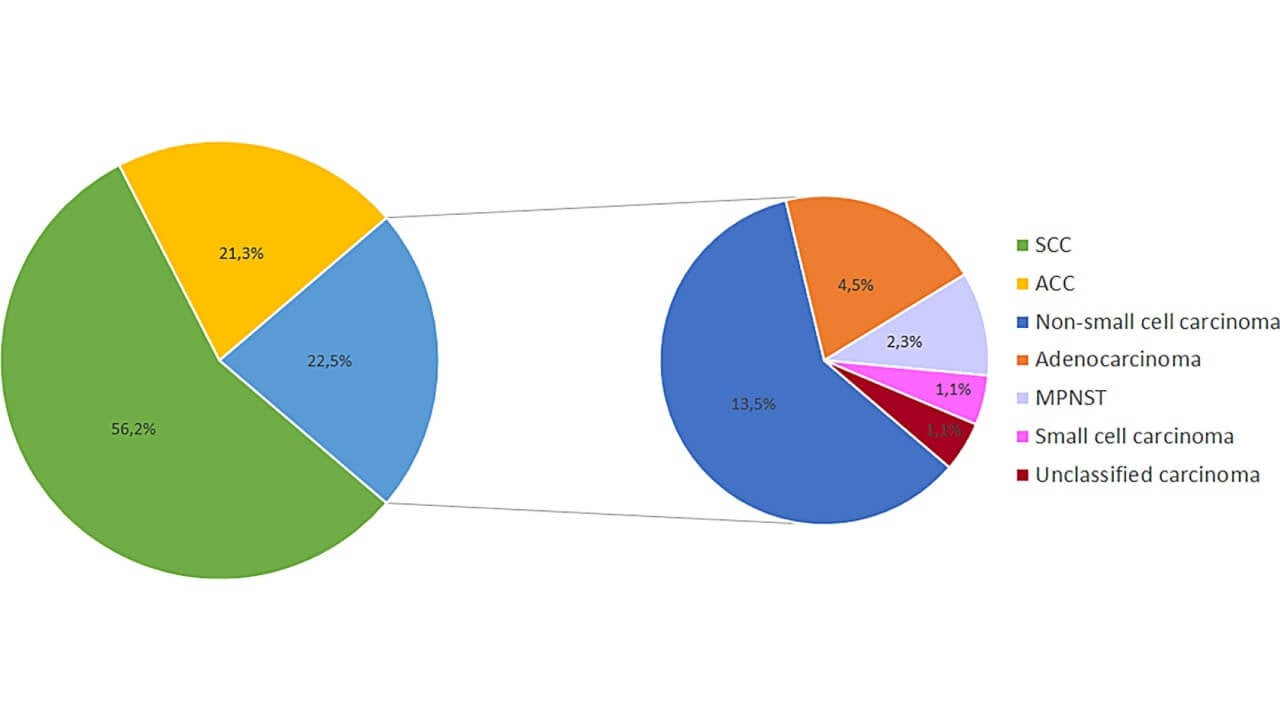
Central airway tumors can be considered part of the spectrum of diseases related to head and neck cancer due to the anatomical and clinical proximity to the airways. Primary tracheal tumors (a type of airway cancer) are rare, but in adults they are usually cancerous, accounting for about 0.2% of all malignant tumors [1]. The estimated incidence of tracheal cancer is about 0.1 per 100,000 population per year. Primary tracheal tumors in adults are almost always malignant (up to 90%), whereas in children they are malignant in only about 10-30% of cases. Tracheal tumor growth near the trachea can put pressure on the larynx voice box, causing hoarseness or loss of voice. Squamous cell carcinoma of the trachea is the most common malignant histological type of tracheal tumor in adults. Adenoid cystic carcinoma of the trachea is usually characterized by slow growth, but has a tendency to local infiltrative spread [2].
What is tracheal cancer?
Malignant primary tracheal tumors are typical for adults (up to 90% of neoplasms), whereas in children they are up to 10-30% of neoplasms. Squamous cell cancer is the most common type of tracheal cancer and is usually seen in patients with a history of smoking.
The next most common type of primary malignant tracheal and bronchial tumor is adenoid cystic carcinoma. Bronchoscopy with biopsy and histological verification of tumor tissue is crucial in the diagnosis of squamous cell carcinoma of the trachea. Immunohistochemical markers allow differentiation of squamous cells from other types of airway tumor cells.
Much less common types of tracheal and bronchial tumors are carcinoid tumors, which originate from neuroendocrine cells, can produce hormones, and have an atypical clinical course. In isolated cases, adenocarcinoma and multiple papilloma tumors have been described, which also belong to the spectrum of tracheal and bronchial tumors. Choosing a specialized oncology center for tracheal carcinoma is critically important, as this rare disease requires a high level of expertise, accurate diagnosis, and individualized treatment [3].
Why is treatment choice critical in tracheal cancer?
Treatment tactics for squamous cell carcinoma of the trachea are determined by the stage of the disease, the degree of airway involvement, and the patient's general condition. Unlike squamous cell carcinoma, some trachea tumors have slower growth and a less aggressive clinical course. The choice of how to treat tracheal cancer is crucial, since traditional standard treatment methods are often accompanied by a verification of tumor tissue, high risk of respiratory failure, the need for airway stenting or tracheostomy formation, as well as a significant deterioration in the patient's quality of life. Such consequences can limit daily activity, communication and social adaptation. In this regard, the modern approach to treat tracheal cancer is increasingly shifting towards personalized, organ-preserving strategies that allow achieving oncological control of the disease with maximum preservation of respiratory function and functional independence of the patient. For example, external beam radiation allows you to precisely direct the radiation dose to the tumor with minimal damage to surrounding tissues.
Standard treatment approaches for tracheal cancer
Surgery
It is the method of choice for malignant tracheal tumors, provided they are resectable. The feasibility of the operation is assessed using CT and bronchoscopy. Tracheal resection is not possible in all patients and depends on individual factors, so treatment should be carried out in specialized centers. Surgery is the main method for localized tracheal carcinoid tumors [4].
Radiation therapy
Radiation oncologists play a key role in planning and delivering radiation therapy for cancerous tracheal tumors. It is used as an adjunct after surgery for locally advanced disease or when there are questionable surgical resection margins, as well as the main method in inoperable patients. It plays an important role in squamous cell carcinoma and adenoid cystic carcinoma of the trachea. External beam radiation is often used as a primary or adjuvant treatment for trachea cancer (especially unresectable tumors) [5].
Chemotherapy and chemoradiotherapy
It has no clearly defined role due to limited data, but is used mainly in combination with radiotherapy for unresectable forms or advanced disease. Chemoradiotherapy is used mainly in patients with unresectable tracheal tumors or in cases where surgical treatment is not possible due to the extent of the disease or the general condition of the patient. Treatment tactics for carcinoid tumors are determined by the size of the tumor, the extent to which cancer has spread, and the presence of metastases [6].
Innovative treatment options for tracheal cancer
Dendritic cell therapy
Dendritic cell therapy for tracheal cancer is an immunotherapeutic approach aimed at activating the patient's own immune system to recognize and destroy cancer cells. The method is based on the use of dendritic cells – key cells of the immune response, the discovery of which was awarded the Nobel Prize in 2011, which emphasizes their fundamental importance in oncoimmunology [7].
In this video, Professor Gansauge, head of the clinic specializing in innovative dendritic cell therapy, shares his vision of the role of dendritic cells in oncology, in particular in complex and rare malignant tumors such as cancer of the trachea. When can dendritic cells be most effective? Can they be combined with chemotherapy and radiation therapy? And what is the future of personalized immunotherapy in oncology – you will learn about this and much more in an exclusive interview with the professor.
Prof. Frank Gansauge's Revolutionary Approach: Combining Classical Treatments and Dendritic Cell Therapy
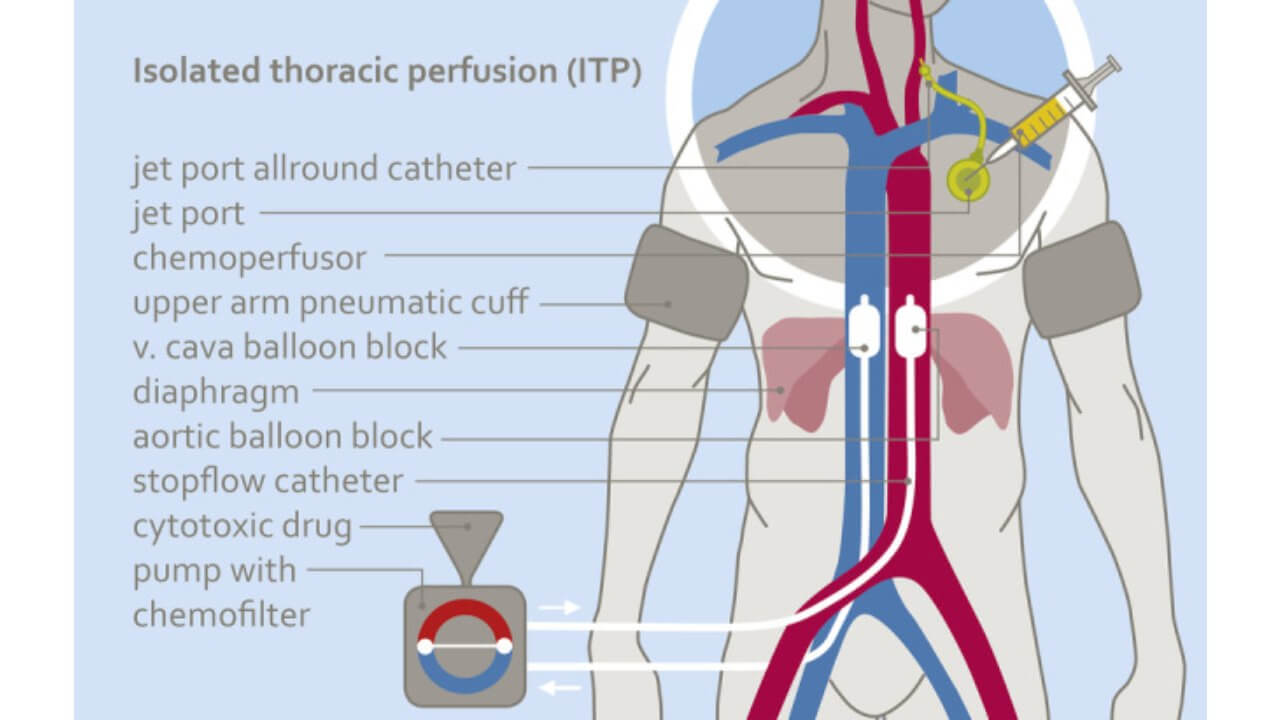
Regional chemotherapy
Regional chemotherapy tracheal cancer treatment is considered a specialized approach aimed at delivering chemotherapy directly to the tumor site or regional blood supply. This strategy allows for high local drug concentrations in the tumor while minimizing systemic toxicity.
As part of scientific research, Karl R. Aigner and colleagues conducted a retrospective analysis in which the medical records of 97 cancer patients who received short-term intra-arterial infusion chemotherapy were examined. The results obtained emphasize the potential of this approach as an organ-sparing and personalized option for patients with respiratory tract tumors, particularly in difficult clinical situations when standard therapy is limited or accompanied by a significant decrease in quality of life, which is of particular importance in the context of tracheal cancer treatment [8].
Electrochemotherapy
Electrochemotherapy for tracheal cancer is a local minimally invasive treatment method that combines the administration of chemotherapy drugs with the use of short electrical pulses. The electrical pulses temporarily increase the permeability of cell membranes (electroporation), which allows for a significant increase in the delivery of the drug directly to tumor cells with minimal systemic burden.
Electrochemotherapy tracheal cancer treatment is a local technique that is based on the combination of short-term exposure to electrical pulses that temporarily make cell membranes permeable, with the administration of chemotherapeutic drugs. Due to these advantages, ECT tracheal cancer treatment can be an effective option even in patients with unresectable malignant tracheal tumors [9].
Organ preservation and quality of life
In modern treatment the organ preservation in tracheal cancer is increasingly possible when using innovative, organ-sparing approaches that allow tumor control without loss of respiratory function, reduce the need for a tracheostomy, and preserve the patient's quality of life.
| Type of Treatment | Preservation of Respiratory Function | Reducing the Risk of Tracheostomy | Quality of Life |
|---|---|---|---|
| Surgery | Risks of scarring/malignant tracheal stenosis and postoperative complications (lungs dysfunction) | Tracheostomy may be temporarily necessary; risk depends on extent and location | Best with uncomplicated course, but rehabilitation is not always quick |
| Radiation therapy | Risk of edema, fibrosis, late tracheal stenosis, impaired lungs ventilation | With edema/ malignant tracheal stenosis, sometimes a stent/tracheostomy is needed | Often affects well-being, fatigue, swallowing/mucosal (depends on fields/dose) |
| Chemotherapy | Can affect the general condition | If obstruction is present, rarely eliminates the risk of tracheostomy without local methods | Toxicity impairs activity |
| Chemoradiotherapy | Risks of edema/inflammation | Tumor obstruction often requires additional methods for patency | Most often the most "difficult" regimen in terms of tolerability |
| Dendritic cell therapy | Is not a locally traumatic method, usually does not impair respiratory mechanics | Does not provoke mechanical obstruction | Emphasis on preservation of function |
| Regional chemotherapy | Focused on local concentration with less system load; potentially better for function | In some cases may reduce the need for a tracheostomy by controlling local process/symptoms | Better tolerated than intensive systemic regimens |
| Electrochemotherapy | Local organ-preserving effect; an important advantage is minimal systemic load | May help delay tracheostomy in selected situations | Focus on symptom control and faster return to activity, subject to access and team experience |
Treatment strategies for recurrent or advanced tracheal cancer
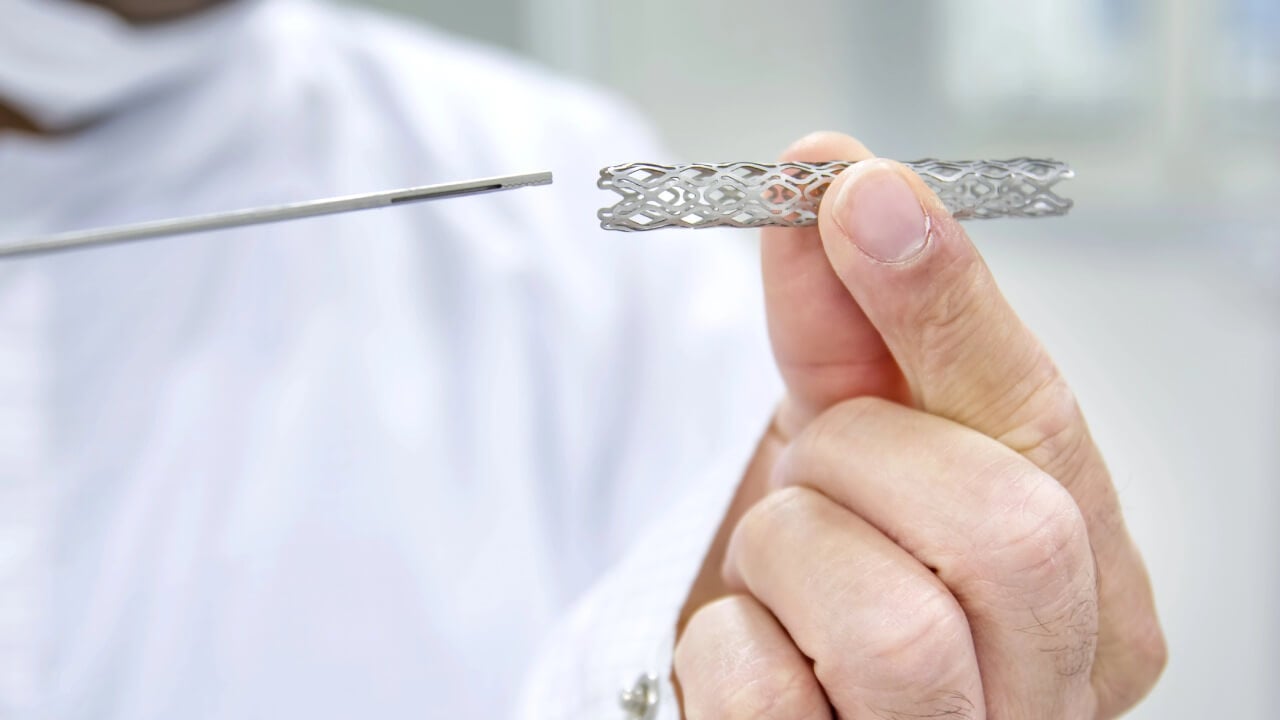
In patients who are not candidates for surgical treatment, as well as in cases of advanced unresectable tracheal tumors, cancer recurrence, decisions on how to treat a disease are increasingly based on combined protocols that combine interventional methods (in particular stenting), radiotherapy and other medical treatments with a palliative or controlled goal. In urgent situations, stents are used as a temporary stage (bridge to treat the airway obstruction) to restore airway patency and create opportunities for further treatment. In more advanced disease, abnormal buildup of tumor tissue in the trachea can compress the larynx voice box and disrupt the function of the larynx, leading to breathing problems (lungs dysfunction) and voice disorders [10].
Interventional methods (in cases of critical airway obstruction, a stent may be inserted into the trachea), regional chemotherapy for tracheal cancer, electrochemotherapy and immunotherapeutic approaches are considered not only as palliative solutions, but also as an alternative to radical surgery in selected clinical situations. They can be used both to treat the disease initially and as part of repeated therapeutic strategies after radiotherapy or systemic therapy, ensuring better tolerability and preservation of quality of life.
Below is a comparative table that reflects the cost and availability of the main treatments for tracheal cancer in different countries and clinical settings.
| Treatment type | Cost Germany | Cost USA | Cost GB | Cost Australia |
|---|---|---|---|---|
| Surgery | €25,000 - €45,000 | €65,000 - €85,000 | €35,000 - €55,000 | €30,000 - €70,000 |
| Chemotherapy | €80,000 - €150,000 full course | €100,000 - €180,000 full course | €90,000 - €165,000 full course | €45,000 - €120,000 |
| Radiotherapy | €28,000 - €42,000 | €40,000 - €80,000 | €35,000 - €65,000 | €25,000 - €50,000 |
| DC therapy | €20,000 - €38,000 | €40,000 - €100,000 | not available | not available |
| Regional chemotherapy | €45,000 per session | €37,000 - €150,000 | €30,000 - €118,000 | €30,000 - €80,000 |
| Electrochemo-therapy | €7,500 - €12,000 per session | €40,000 - €100,000 | €25,000 - €45,000 | not available |
Why do many patients choose treatment abroad for tracheal cancer?
Tracheal cancer treatment abroad is usually carried out in highly specialized centers, where multidisciplinary teams with the participation of thoracic surgeons, oncologists, radiation therapists, endoscopists, immunologists and interventionalists work. It is this team model that is critically important in tracheal and bronchial tumors, where every decision affects not only oncological control, but also the preservation of respiratory function and quality of life.
International centers provide access to innovative and personalized treatment methods, which gives patients a chance even when standard options have been exhausted or radical surgery is not possible, so treatment abroad is often chosen as a path to expertise and modern solutions for rare tracheal cancer.
Why is Germany a leading destination for tracheal cancer treatment?
Tracheal cancer treatment in Germany is one of the leading destinations due to the high concentration of specialized oncology and pulmonology centers that have real experience in the management of rare respiratory tumors. Treatment tactics change if the cancer has spread beyond the primary lesion to other organs. In German clinics, treatment is based on the close integration of surgery, clinical oncology, radiology, interventional methods and immunotherapy, which allows for the formation of individual, organ-preserving strategies.
The key advantages are strict clinical standards, multidisciplinary consultations and access to personalized protocols and innovative treatment for tracheal cancer, which is especially important in rare and complex forms of tracheal cancer, where standard approaches often have limitations.
Electrochemotherapy is increasingly being considered as an innovative, organ-sparing method in the treatment of complex and difficult-to-treat tumors, including in the context of tracheal cancer. To better understand how this approach works and why it is changing current oncology strategies, we recommend watching an exclusive interview with Professor Dr. Attila Kovács, one of the key experts in the development of electrochemotherapy. The video explains in detail the scientific principles of the method, its selective action, the advantages for preserving critical structures, and the prospects for its application in clinical practice.
Prof. Kovács on Electrochemotherapy – How Electric Pulses Help Chemo Actually Work
History of a patient with tracheal cancer
A 52-year-old patient was diagnosed with locally advanced tracheal cancer with significant obstruction of the lumen and risk of tracheostomy (cT3N0M0). He refused radical surgery and standard chemoradiotherapy, stating: "I did not want a treatment after which I would lose the ability to breathe by my lungs normally".
Regional intra-arterial chemotherapy was used as an organ-sparing alternative. As a result of the treatment, tumor shrinkage, restoration of tracheal patency and complete preservation of respiratory function were noted without significant side effects. After two years, the patient remains without signs of progression, summarizing the result with the words: "Today I breathe freely and live a full life".
A Medical Journey: Every Step of the Way With Booking Health
Finding the best treatment strategy for your clinical situation is a challenging task. Being already exhausted from multiple treatment sessions, having consulted numerous specialists, and having tried various therapeutic interventions, you may be lost in all the information given by the doctors. In such a situation, it is easy to choose a first-hand option or to follow standardized therapeutic protocols with a long list of adverse effects instead of selecting highly specialized innovative treatment options.
To make an informed choice and get a personalized cancer management plan, which will be tailored to your specific clinical situation, consult medical experts at Booking Health. Being at the forefront of offering the latest medical innovations for already 12 years, Booking Health possesses solid expertise in creating complex cancer management programs in each case. As a reputable company, Booking Health offers personalized tracheal cancer treatment plans with direct clinic booking and full support at every stage, from organizational processes to assistance during treatment. We provide:
- Assessment and analysis of medical reports
- Development of the medical care program
- Selection of a suitable treatment location
- Preparation of medical documents and forwarding to a suitable clinic
- Preparatory consultations with clinicians for the development of medical care programs
- Expert advice during the hospital stay
- Follow-up care after the patient returns to their native country after completing the medical care program
- Taking care of formalities as part of the preparation for the medical care program
- Coordination and organization of the patient's stay in a foreign country
- Assistance with visas and tickets.
- A personal coordinator and interpreter with 24/7 support
- Transparent budgeting with no hidden costs
Health is an invaluable aspect of our lives. Delegating management of something so fragile yet precious should be done only to experts with proven experience and a reputation. Booking Health is a trustworthy partner who assists you on the way of pursuing stronger health and a better quality of life. Contact our medical consultant to learn more about the possibilities of personalized treatment with innovative methods for tracheal cancer with leading specialists in this field.
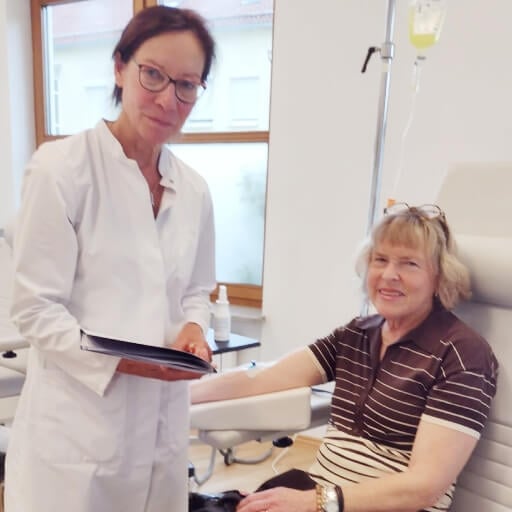
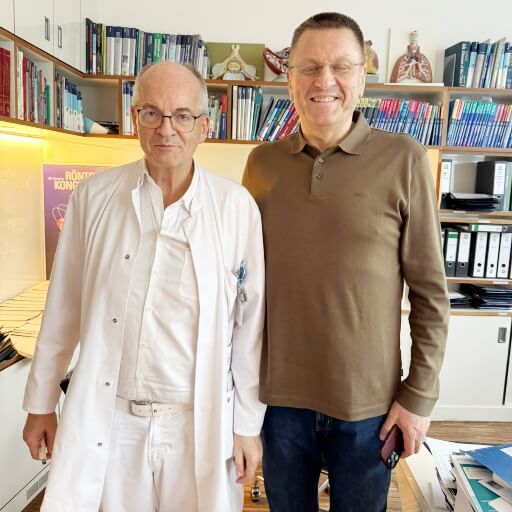
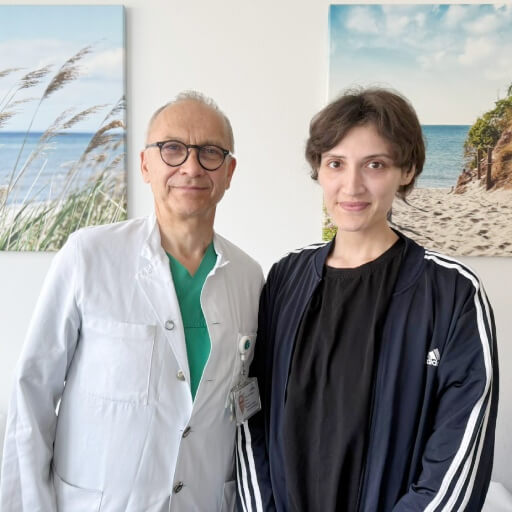
Cancer Treatment Abroad: Patient Experiences with Booking Health


Frequently Asked Questions About Tracheal Cancer
Send request for treatmentSymptoms of tracheal cancer are usually nonspecific and include progressive shortness of breath, wheezing, coughing, hemoptysis, and a feeling of airway obstruction, which often leads to late diagnosis.
Survival rates for tracheal cancer depend on the stage and treatment method: with early detection and radical treatment, the prognosis is much better than with advanced forms of the disease.
The stages of tracheal cancer are determined by the spread of the primary tumor, lymph node involvement, and the presence of distant metastases, similar to the principles of staging head and neck tumors.
The best treatment for tracheal cancer is determined individually and may include surgery, radiation therapy, chemoradiotherapy, or innovative organ-sparing methods depending on the resectability of the tumor.
Yes, organ-preserving treatment for tracheal cancer is possible in selected patients, which allows avoiding radical surgery and preserving respiratory function.
Dendritic cell therapy for tracheal cancer is considered a personalized immunotherapeutic approach that can complement standard treatment and is aimed at preserving function and quality of life, although clinical data are limited due to the rarity of the disease.
Regional chemotherapy for tracheal cancer involves local delivery of drugs to the tumor area, which allows for high drug concentrations with minimal systemic toxicity.
ECT tracheal cancer is a local method that combines electroporation with chemotherapy and is used in unresectable or recurrent tumors to reduce obstruction and control local growth.
Patients choose treatment abroad for tracheal cancer because of access to experienced multidisciplinary teams, innovative methods and personalized protocols.
Tracheal cancer treatment in Germany is associated with a high concentration of specialized centers, strict clinical standards and the integration of surgery, oncology and immunotherapy within individual treatment regimens in Germany.
Choose treatment abroad and you will for sure get the best results!
Authors:
This article was edited by medical experts, board-certified doctors Dr. Nadezhda Ivanisova, and Dr. Daria Sukhoruchenko. For the treatment of the conditions referred to in the article, you must consult a doctor; the information in the article is not intended for self-medication!
Our editorial policy, which details our commitment to accuracy and transparency, is available here. Click this link to review our policies.
Sources:
[1] Jimmie Honings, Jos A A M van Dijck, Ad F T M Verhagen et al. Incidence and treatment of tracheal cancer: a nationwide study in the Netherlands. Ann Surg Oncol. 2007 Feb;14(2):968-76. doi: 10.1245/s10434-006-9229-z. Epub 2006 Dec 2. [DOI] [PubMed]
[2] Paolo Macchiarini. Primary tracheal tumours. Lancet Oncol. 2006 Jan;7(1):83-91. doi: 10.1016/S1470-2045(05)70541-6. [DOI] [PubMed]
[3] Alfredo I Urdaneta, James B Yu, Lynn D Wilson. Population based cancer registry analysis of primary tracheal carcinoma. Am J Clin Oncol. 2011 Feb;34(1):32-7. doi: 10.1097/COC.0b013e3181cae8ab. [DOI] [PubMed]
[4] Khalid Sherani, Abhay Vakil, Chetan Dodhia, Alan Fein. Malignant tracheal tumors: a review of current diagnostic and management strategies. Curr Opin Pulm Med. 2015 Jul;21(4):322-6. doi: 10.1097/MCP.0000000000000181. [DOI] [PubMed]
[5] Jacques Bernier, Christian Domenge, Mahmut Ozsahin et al. Postoperative irradiation with or without concomitant chemotherapy for locally advanced head and neck cancer. N Engl J Med. 2004 May 6;350(19):1945-52. doi: 10.1056/NEJMoa032641. [DOI] [PubMed]
[6] Nikhil P Joshi, Kunhi Parambath Haresh, Prasenjit Das et al. Unresectable basaloid squamous cell carcinoma of the trachea treated with concurrent chemoradiotherapy: a case report with review of literature. J Cancer Res Ther. 2010 Jul-Sep;6(3):321-3. doi: 10.4103/0973-1482.73341. [DOI] [PubMed]
[7] Roman Volchenkov, Florian Sprater, Petra Vogelsang, Silke Appel. The 2011 Nobel Prize in physiology or medicine. Scand J Immunol. 2012 Jan;75(1):1-4. doi: 10.1111/j.1365-3083.2011.02663.x. [DOI] [PubMed]
[8] Karl R Aigner, Emir Selak, Kornelia Aigner. Short-term intra-arterial infusion chemotherapy for head and neck cancer patients maintaining quality of life. J Cancer Res Clin Oncol. 2018 Oct 31;145(1):261–268. doi: 10.1007/s00432-018-2784-4. [DOI] [PMC free article]
[9] Arnoldas Morozas, Veronika Malyško-Ptašinskė, Julita Kulbacka et al. Electrochemotherapy for head and neck cancers: possibilities and limitations. Front Oncol. 2024 Feb 15;14:1353800. doi: 10.3389/fonc.2024.1353800. [DOI] [PMC free article]
[10] Aaron M Allen, Michael S Rabin, John J Reilly, Steven J Mentzer. Unresectable adenoid cystic carcinoma of the trachea treated with chemoradiation. J Clin Oncol. 2007 Dec 1;25(34):5521-3. doi: 10.1200/JCO.2007.13.7273. [DOI] [PubMed]
[11] Aleksandra Piórek, Adam Płużański, Paweł Teterycz et al. Clinicopathological characteristics of patients with primary tracheal tumors: Analysis of eighty-nine cases. Thorac Cancer. 2024 Apr;15(11):878-883. doi: 10.1111/1759-7714.15231. Epub 2024 Mar 1. [DOI] [PubMed]
Read:
Oropharyngeal Cancer: Complete Guide to Modern and Innovative Treatment Options
Nasopharyngeal Cancer Treatment Options
Laryngeal Cancer: Complete Guide to Modern and Innovative Treatment Options