




Lung metastases affect 20-54% of patients with extrathoracic cancers [1]. What is important, they reduce survival rates dramatically – breast cancer survival drops from 96% to 21% with lung spread [2], while colorectal cancer survival falls from 91% to below 10% [6] with metastasis. These secondary tumors commonly originate from breast, colorectal, and prostate tumors, and present diagnostic challenges – due to non-specific or absent symptoms until advanced stages. Despite these obstacles, innovative treatment approaches like TACE and dendritic cell therapy offer patients new hope – they target malignant cells effectively and, which is no less important, preserve lung function and significantly improve both quality of life and prognosis.
What Are Lung Metastases?
Lung metastases develop when cancer cells from a primary tumor, anywhere, spread to the lungs. Actually, the lung is the 2nd most common site for metastatic spread [3].
Cancer cells go a long way to metastasize successfully. First, they break away from the main tumor, enter the bloodstream or lymphatic system; then they survive transit through the body, and settle in lung tissue. Finally, they create a new blood supply.
The lungs are particularly susceptible to metastasis: they receive the entire cardiac output every minute and contain the body's densest capillary network. They provide an oxygen-rich environment ideal for cancer cell growth.
Tumors That Metastasize to Lungs
Several types of cancer frequently metastasize to the lungs – this is connected with their biological nature and patterns of vascularization:
- Breast cancerThis is one of the most common sources of lung metastases, particularly in advanced stages.
- Colon and rectal cancerhave a strong tendency to spread to the lungs through the portal venous system.
- Prostate and testicular cancermay develop lung metastases in later stages of disease progression
- SarcomasShow particular affinity for lung tissue, with up to 80% of metastatic cases involving the lungs [5].
- Kidney cancer is those that often bypasses other organs to metastasize directly to the lungs.
- Melanoma - known for aggressive spread to multiple organs, including lungs.
- Pancreatic cancerfrequently metastasizes to the lungs along with the liver.
- Neuroblastoma and Wilms' tumorare pediatric cancers with high rates of pulmonary spread.
How Tumors Spread to the Lungs
The lungs are uniquely vulnerable to metastasis due to their physiological characteristics: first, they receive the entire cardiac output each minute; second, they contain the body's densest capillary network; third, they feature delicate membranes where circulating tumor cells are absorbed easily.
For metastasis to occur, cancer cells must detach from the primary tumor, enter the bloodstream (this is a hematogenous way of dissemination), survive circulation, adhere to lung vessels, and establish growth in this new environment. This is quite a long journey. Host factors – like cell adhesion molecules, growth factors, and cytokines – all play critical roles in this process.
Researchers debate whether metastatic spread happens after genetic changes or earlier, with cells remaining dormant until they are triggered by environmental factors. The 1st is Fidler's theory and the 2nd is Morgan's theory. Both mechanisms may occur in different tumor types, thus treating pulmonary metastases is a complex task [4].
Symptoms & Diagnostic Procedures
The problem with lung metastases is that they are often asymptomatic – until they become large or numerous. This complicates medical care. When certain symptoms develop, they may mimic other, benign, respiratory conditions.
Patients may complain of:
- Pain in the chest, especially when deep breathe or cough
- Persistent, unexplained cough; hemoptysis which is coughing up blood. This is probably the most worrying symptom for many patients.
- Airways become blocked causing wheezing and respiratory problems – shortness of breath develops
- Recurring respiratory infections caused by both pathogenic and conditionally pathogenic bacteria
- Fatigue that doesn't improve with rest as it used to be
- Sensation of suffocation against the background of luid accumulation around the lungs (pleural effusion) that may require drainage
Diagnostic procedures typically include:
- Chest X-raysOften the initial screening tool, though may miss smaller lesions.
- Computed tomography (CT) Provides detailed cross-sectional images, capable of detecting lesions as small as 3-5mm.
- PET-CT scansCombines anatomical information with metabolic activity to distinguish active cancer from scar tissue.
- MRI scansParticularly useful for evaluating soft tissue involvement and brain metastases.
- Sputum cytology Examination of coughed-up mucus for cancer cells.
- BronchoscopyDirect visualization of airways using a thin, flexible tube with a camera.
- ThoracentesisRemoval and analysis of fluid from around the lungs if present.
- Lung needle biopsyCritically important for definitive diagnosis.
- Lymph node samplingTo determine if cancer has spread beyond the lungs.
After diagnosis, careful staging is performed to determine the extent of metastasis lung involvement, which guides treatment decisions.
The diagnostic record that staging produces — CT cross-sections, PET-CT metabolic activity maps, biopsy histology, and lymph node sampling results — is the foundation on which every treatment decision in the sections below rests. A patient whose most recent CT was performed three months ago, whose biopsy was done before the last line of systemic therapy, and whose PET-CT does not include a current date-stamp is not presenting current staging data.
Booking Health's pre-treatment case review identifies which diagnostic elements are current and complete and which require updating before a treatment pathway is recommended, because the treatment that matches a patient's staging profile from six months ago may not be the right treatment for their profile today.
CHECK IF A BETTER SOLUTION EXISTS FOR YOULung Metastasis Treatment – What the Protocol Offers
Radiation therapy. The method uses high-energy beams to destroy cancer cells. Actually, radiation therapy is quite effective for localized treatment. However, traditional irradiation often cannot deliver a high enough dose to eliminate lung metastases, only with concomitant damage to healthy pulmonary tissue.
Advanced techniques – like stereotactic body radiation therapy (SBRT) – deliver targeted radiation precisely. They require fewer, higher-dose treatments and thus are suitable for patients with a limited number of small metastases.
Immunotherapy (IT) and targeted cancer drugs. IT stimulates the immune system to recognize and attack cancer cells in different ways. Metastases of melanoma and renal cell carcinoma are highly immunogenic – they often respond well to immunotherapy like monoclonal antibodies. Targeted therapy, meanwhile, focuses on specific molecular changes that are present in cancer cells only and help them survive and grow.
Chemotherapy. Conventional chemo is rarely curative for pulmonary metastases. It plays a significant role in certain cases, such as osteogenic sarcomas, where neoadjuvant administration can reduce tumor burden and help control systemic spread. Chemotherapy failure is often related to drug resistance and toxicity. Regional chemotherapy approaches – like TACE – overcome these limitations by delivering higher drug concentrations directly to tumors.
Surgery. Surgical resection is not a first-line option for such cases, but it may be considered if a limited number of lung metastases is detected and there are no metastases in other body regions according to high-resolution scans. It is indicated for metastases from colon cancer, bone tumors or soft tissue sarcomas but not generally for other cancers. It is a major operation, patients must be healthy to undergo it.
Supportive care. In addition to basic treatments, comprehensive medical programs may include:
- Palliative care, the primary aim of which is managing symptoms and improving QoL
- Complementary therapies like acupuncture or meditation, for non-drug symptom control
- Proper nutrition support – to maintain strength during treatment
- Prevention strategies to reduce the risk of complications
- Mental health counseling
Whether a patient's lung metastases are from melanoma, renal cell carcinoma, colorectal cancer, or sarcoma is not a background detail — it is the primary determinant of which treatment pathway above applies.
Melanoma and RCC metastases are immunogenic and tend toward immunotherapy; colorectal lung metastases may support surgical resection where sarcoma metastases often do not; osteogenic sarcoma metastases have a specific indication for neoadjuvant chemotherapy that other tumor types do not share.
Booking Health's physician-level case review begins with confirmed primary tumor histology and current metastatic pattern, because the same lung CT showing multiple pulmonary nodules calls for an entirely different treatment strategy depending on where those cells originated.
New Treatment Methods
Conventional treatments are the standard of care, but medical science has several breakthroughs in treating lung metastases. Innovative approaches that we will discuss offer new hope for patients who do not respond to traditional therapies, seek less invasive options, are afraid of side effects, etc.
Ablation
Several ablation methods can effectively treat lung metastases with precision:
- Radiofrequency ablation (RFA) – it uses heat that is generated by high-frequency electrical currents
- Microwave ablation creates heat by different means – through microwave energy
- Cryoablation freezes and destroys cancer cells directly
- Laser ablation utilizes focused light energy
These minimally invasive procedures are typically performed under CT guidance and can be excellent options for patients with a limited number of small metastases who aren't surgical candidates.
TACE (Chemoembolization)
TACE is a significant advancement in treating lung metastases – it overcomes the limitations of conventional chemotherapy. This procedure serves as a suitable alternative to traditional approaches, especially for patients who cannot undergo surgery, as it:
- Delivers high dose of chemo directly to the tumor site; blocks it here for a longer period
- Blocks blood flow to the tumor – thus depriving it of nutrients and oxygen
- Minimizes systemic exposure and side effects
TACE is performed under imaging guidance. First, a catheter is inserted through the femoral artery. The doctor navigates it to the vessels that feed the lung metastases. Once positioned properly, chemotherapy drugs are injected directly into the tumor. This is followed by the introduction of embolic material to block blood flow [7].
The procedure is typically performed on an outpatient basis or with a short hospital stay – patients can usually return to their normal activities within a day. Follow-up imaging is conducted to assess treatment effectiveness. TACE can be repeated if necessary.
According to studies, TACE can achieve drug concentrations at the tumor site up to 15 times higher than systemic chemotherapy [8]. This makes it particularly effective for patients who haven't responded well to conventional treatments or those with multiple metastases that aren't suitable for surgery.
VIDEO
Prof. Kovács: When to Use DEB-TACE, Conventional TACE, or Radioembolization (TARE)
Interventional Radiology
BOOK CONSULTATION
Dendritic Cells Therapy
Dendritic cell therapy is a novel, promising immunotherapeutic approach for lung metastases treatment. It works by training the patient's immune system to recognize and attack cancer cells – the best way to achieve the long-term result.
The therapy involves:
- Collection of the patient's blood, about 200ml
- Laboratory processing to isolate and activate dendritic cells
- "Training" these cells to recognize cancer-specific antigens, i.e., antigens of the tumor in separate patients
- Reintroduction of the modified cells
Dendritic cells act as the "officers" of the immune system: they identify cancer cells and instruct "soldier" cells (lymphocytes) how to target and destroy them. This approach has several advantages:
- Personalized treatment targeting the patient's specific cancer
- It has minimal side effects compared to conventional therapies
- Can be combined with other treatments, included in complex regimens
- Long-lasting immune response against cancer cells
The function of dendritic cells was investigated by Dr. Ralph Steinman, who received the Nobel Prize in Medicine in 2011 for his discovery [9]. According to the clinical studies, DC therapy can significantly improve survival rates and quality of life for patients with metastasis lungs affection. The effectiveness is as high as 65-80%; some patients achieve complete responses and long-term remission [10].
The antigen loading that makes a DC vaccine effective against lung metastases depends on a current and representative antigen source — which for pulmonary spread means tumor material that reflects the metastatic lesions' current protein expression, not the primary tumor's profile from the time of initial diagnosis.
A sarcoma patient whose primary tumor was resected two years ago and whose lung metastases have since accumulated additional mutations may have an antigen landscape that has shifted substantially.
Booking Health's pre-treatment case review assesses whether current biopsy material from the pulmonary lesions is available before the vaccine preparation or schedules a liquid biopsy, because the personalization that makes DC therapy effective is only as accurate as the antigen data it is built from.
GET A SECOND OPINION FOR MY CASEIt will be valuable for a patient considering this treatment option to hear from a clinical expert – Prof. Gansauge. He is a pioneer in this field with over two decades of extensive experience of using dendritic cell immunotherapy. The interview helps gain deeper insights into this innovative treatment for patients with lung metastases.
VIDEO
How Dendritic Cell Therapy is Transforming Modern Cancer Treatment
Dendritic Cell Therapy
BOOK CONSULTATION
Comparing efficacy: Conventional vs. Novel
| Treatment | Advantages | Limitations | Survival Improvement |
|---|---|---|---|
| Surgery | Complete removal possible | Invasive, limited to few metastases | 5-year survival up to 40% for selected patients |
| Radiation | Non-invasive, targeted | Can damage the surrounding tissue | Minimal effect on overall survival, good for symptom control |
| Systemic Chemotherapy | Treats the entire body | Lower concentration at the tumor site, significant side effects | 10-15% improvement in median survival |
| Ablation | Minimally invasive, preserves lung function | Limited to smaller tumors | Local control up to 70% but modest survival benefit |
| TACE | High drug concentration at the tumor site, minimal systemic effects | Requires specialized expertise | 50-60% increase in progression-free survival |
| Dendritic Cell Vaccination | Activates the immune system, minimal side effects, potential life-long protection | Not available at all healthcare facilities | Up to 80% response rate, significant life extension |
Success Stories
Richard Bam from South Africa was diagnosed with stage IV synovial sarcoma with lung metastases. Facing limited options in his home country, Richard found renewed hope through treatment in Germany – he chose dendritic cell therapy abroad.
"Our experience from start to finish was professional and efficient," – his mother Jeanne says. The medical team developed a treatment plan within one week of initial contact. Richard completed the 2-phase dendritic cell protocol, including comprehensive examinations and blood collection for vaccine manufacturing, followed by vaccination 1 week later.
The process was supported by a dedicated case manager from Booking Health who provided comfortable transportation and an experienced translator. Follow-up evaluations indicated improvement in Richard's condition and demonstrated that international treatment access may offer life-changing outcomes in patients with metastatic lung cancer.
Synovial sarcoma's pulmonary tropism — the up to 80% rate of lung involvement in metastatic sarcoma cases mentioned earlier in this article — made Richard's case one where the antigen source for DC vaccination was the metastatic lung lesions themselves, not a primary tumor that had been resected.
Before Richard's treatment plan was developed within that one-week window, Booking Health's case review confirmed that current tissue material from his pulmonary metastases was available to serve as the antigen source, and verified that his disease profile matched LDG Laboratories' documented experience with sarcoma-origin DC vaccination. The professional efficiency Jeanne describes was built on that prior clinical determination.
FIND THE RIGHT SPECIALIST FOR MY CASE
Treatment with Booking Health
Booking Health supports patients with lung metastases who seek or are already undergoing treatment abroad. A certified medical tourism operator serving patients from over 70 countries, they understand the challenges cancer patients face when seeking international treatment options.
Booking Health assists with basic aspects of implementation of a medical program:
- Selecting appropriate clinics; facilitating communication with medical specialists
- Developing personalized treatment programs
- Securing favorable costs for medical services – without hidden fees or foreign patient surcharges
- Appointments with leading specialists on preferred dates
- Monitoring all stages of the medical program, quality care
- Maintaining communication with the treatment facility after completion of care; arranging additional consultations or examinations if required
- High-quality service for practical needs – hotel bookings, flights, transfers, interpreters, etc.
The Booking Health approach recognizes that patients with lung metastases require advanced medical care, accompanied by comprehensive organizational support, enabling them to focus on treatment and recovery.
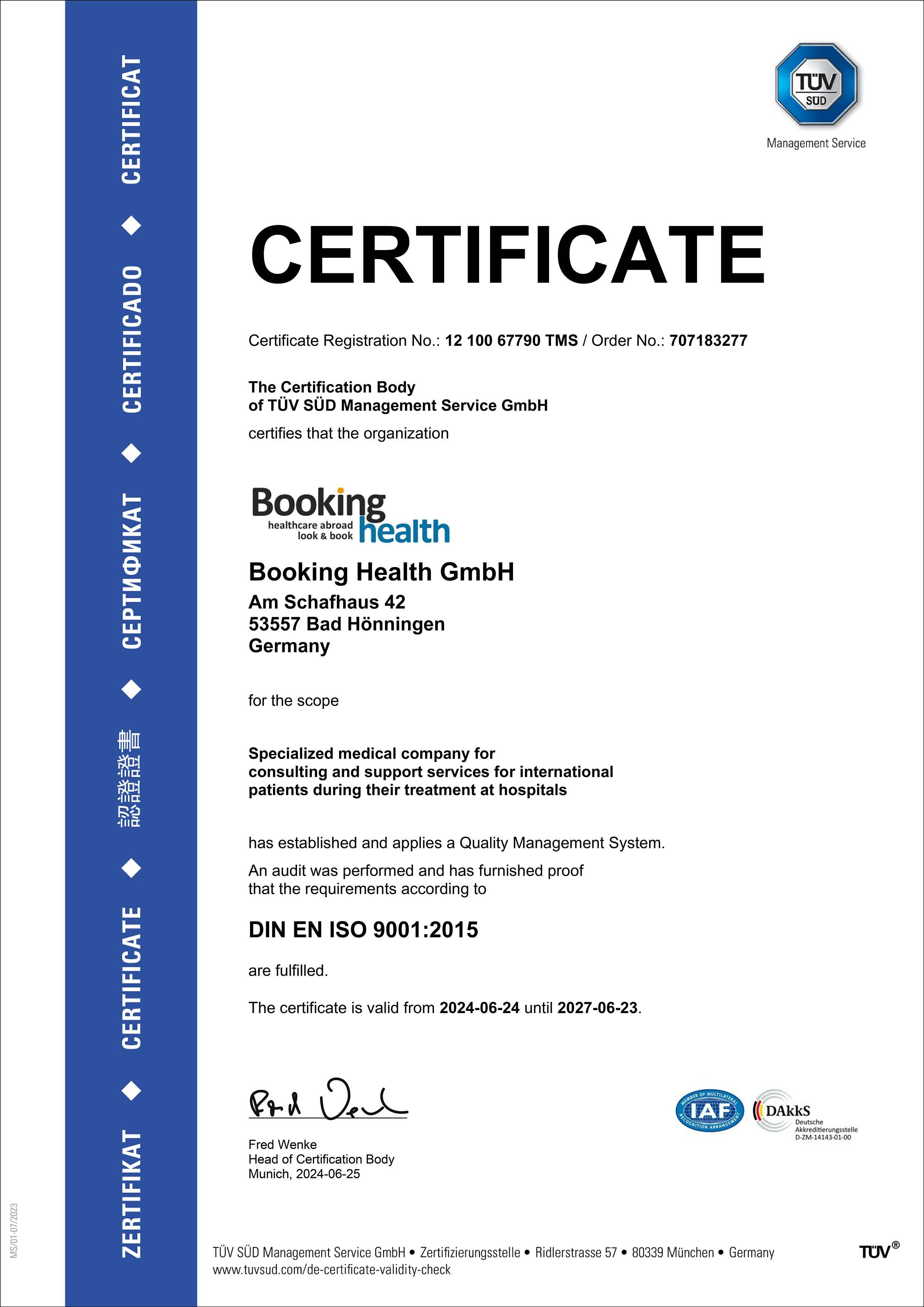
Booking Health holds ISO 9001 quality certification, reflecting well-established processes and strict quality control at every stage of the treatment journey — not just at the initial consultation, but throughout.

Fighting Cancer Together: Treatment Journeys with Booking Health













Frequently Asked Questions of Our Patients About Lung Metastases Treatment
Secondary malignant lesions – lung metastases – occur when cancer cells from a primary tumor invade the lungs. According to clinical registries and case reports, lung metastasis is detected 20-54% of patients with cancers with extrathoracic location; this requires high-quality imaging studies to be performed in advance.
Early lung metastasis is usually asymptomatic. Otherwise, persistent cough, chest pain, shortness of breath, and coughing up blood may disturb patients – these can also be indicative of a benign condition and may be mistakenly neglected, which is really dangerous.
Breast, colorectal, prostate, kidney, thyroid malignancies, sarcomas, and melanoma tend to pulmonary spread – this is explained by their biological peculiarities. That is why whole body imaging may be recommended even in seemingly local cases of these malignancies.
Imaging studies – chest X-rays, CT, and PET-CT scans – may reveal small metastases. A doctor will perform a pulmonary biopsy – taking a piece of lung, minimally invasive, and examining it under the microscope – to confirm the diagnosis and schedule further steps.
Lung metastases are destroyed or suppressed with radiation therapy, immunotherapy, targeted drugs, chemotherapy, and surgery – for limited spread. Ablation, TACE (chemoembolization), and dendritic cell therapy are newer lung metastases treatments.
A cure of multiple lung metastases is difficult but is possible in select cases. The success depends on the primary cancer type and the number of metastases – availability of novel treatments is of primary importance as well.
Lung metastases prognosis varies by primary cancer type and extent of lung involvement. Generally, once cancer spreads to lungs – survival rates decrease significantly. E.g., breast cancer survival drops from 96% to 21%, colorectal cancer survival – from 91% to below 10%.
Yes. Novel therapies for metastasis in the lung are TACE (targeted chemotherapy with blood flow blocking), dendritic cell therapy, and various ablation methods. As reported, these advanced options yield better results compared to standard treatments.
Choose treatment abroad and you will be sure to get the best results!
Sources:
01. Jamil A, Kasi A. Lung Metastasis. In: StatPearls [Internet]. Treasure Island (FL): StatPearls Publishing; 2023 [updated 2023 Jan 9]. Available from: [NCBI]
02. Chen H, Stoltzfus KC, Lehrer EJ, Horn SR, Siva S, Trifiletti DM, et al. The Epidemiology of Lung Metastases. Front Med (Lausanne). 2021;8:723396. doi: 10.3389/fmed.2021.723396. [DOI]
03. Gerull WD, Puri V, Kozower BD. The epidemiology and biology of pulmonary metastases. J Thorac Dis. 2021;13(4):2585-2589. doi: 10.21037/jtd.2020.04.28. [DOI]
04. Stella GM, Kolling S, Benvenuti S, Bortolotto C. Lung-Seeking Metastases. Cancers (Basel). 2019;11(7):1010. doi: 10.3390/cancers11071010. [DOI]
05. Chang CH, Chiang XH, Lin MW, Kuo SW, Huang PM, Hsu HH, et al. Outcome and survival analysis of pulmonary metastasectomy for primary sarcoma with pulmonary metastases. Front Surg. 2024;11:1470784. doi: 10.3389/fsurg.2024.1470784. [DOI]
06. Liu LL, Sun JD, Xiang ZL. Survival nomograms for colorectal carcinoma patients with lung metastasis and lung-only metastasis, based on the SEER database and a single-center external validation cohort. BMC Gastroenterol. 2022;22:446. doi: https://doi.org/10.1186/s12876-022-02547-9. [DOI]
07. Zhu L-Z, Yang R-J, Zhu X. Role of inferior phrenic artery in the interventional treatment of lung metastases tumour: a report of 11 cases. J Cancer Res Ther. 2018 Jan;14(1):61-67. doi:10.4103/jcrt.JCRT_742_17. [DOI]
08. Hori A, Ohira R, Nakamura T, Kimura Y, Ueda S, Torii M, Kennoki N, Hori S. Transarterial chemoembolization for pulmonary or mediastinal metastases from hepatocellular carcinoma. Br J Radiol. 2020 Jun;93(1110):20190407. doi:10.1259/bjr.20190407. [DOI]
09. Stevens D, Ingels J, Van Lint S, Vandekerckhove B, Vermaelen K. Dendritic cell-based immunotherapy in lung cancer. Front Immunol. 2020;11:620374. doi:10.3389/fimmu.2020.620374. [DOI]
10. Ding Z, Li Q, Zhang R, Xie L, Shu Y, et al. Personalized neoantigen pulsed dendritic cell vaccine for advanced lung cancer. Signal Transduct Target Ther. 2021;6(1):26. doi:10.1038/s41392-020-00448-5. [DOI]
Read:
01. Treatment of stage 4 lung cancer in Germany