
Erbs Palsy — Transplantation of Nerve: treatment in the Best Hospitals in the World
Treatment prices are regulated by national law of the corresponding countries, but can also include additional hospital coefficients. In order to receive the individual cost calculation, please send us the request and medical records.
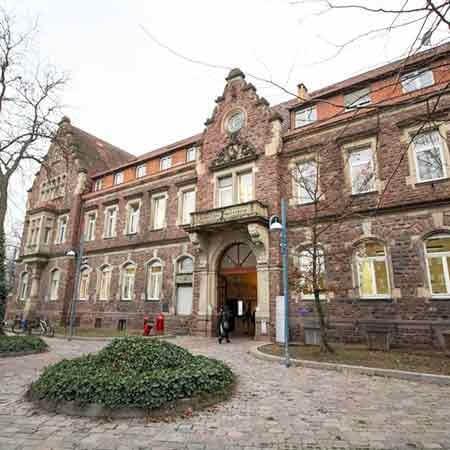
Department of Adult and Pediatric Traumatology, Orthopedic Surgery, Hand and Foot Surgery
The Department of Adult and Pediatric Traumatology, Orthopedic Surgery, Hand and Foot Surgery offers the full range of modern services to the patients with musculoskeletal diseases and injuries. The key areas of specialization include conservative and surgical treatment of injuries and degenerative changes in the limbs, joints, pelvis and spine. The department is certified by the German Trauma Society (DGU) and has an SAV certificate, which indicates the excellent achievements of the medical facility in the treatment of injuries of any severity. The department performs most surgical interventions using minimally invasive and endoscopic surgical techniques, thanks to which the patients can regain their mobility and return to their usual daily life in the shortest possible time. The department's experienced surgeons perform more than 6,000 operations annually, including particularly complex ones. About 3,000 inpatients and more than 20,000 outpatients receive medical care here every year. The department has 90 beds.



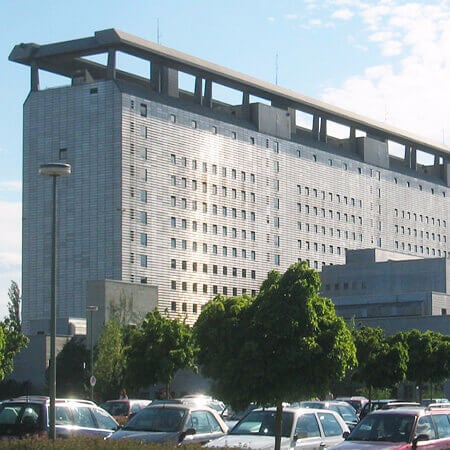
Department of Plastic, Aesthetic and Reconstructive Surgery, Hand Surgery
The Department of Plastic, Aesthetic and Reconstructive Surgery, Hand Surgery is among the leading plastic surgery clinics in Germany and throughout Europe, offering its patients a comprehensive spectrum of services in its areas of specialization. The department's team of skilled surgeons performs reconstructive plastic surgery to repair defects caused by injuries, cancer, and infectious diseases, restoring both function and patients' self-esteem and confidence. Patients who want to make some improvements in their appearance without a medical indication are provided with excellent aesthetic plastic surgery services, including facelifts, otoplasties, rhinoplasties, body lifts, breast augmentations, and anti-aging procedures with Botox and fillers. Another important clinical focus for the department is hand surgery, dealing with finger, hand, and arm replantation, reconstructive surgery for congenital malformations and severe hand injuries, treatment of nerve compression syndromes, such as carpal tunnel syndrome and ulnar nerve compression syndrome, and many other clinical conditions. A team of 17 highly qualified surgeons is available here to provide top-tier medical care in two state-of-the-art operating rooms. The specialists prefer to use modern surgical techniques and high-quality materials in their daily clinical practice, which contributes to outstanding therapeutic and aesthetic results. Another important fact is that the department has been accredited by the German Trauma Society as a Center for Severe Hand Injuries – this accreditation underscores the department's expertise in treating serious hand injuries sustained in the workplace.




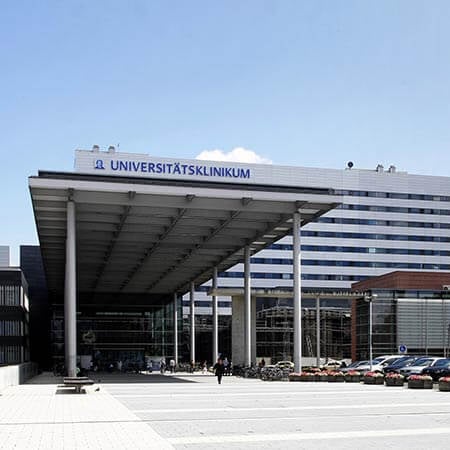
Department of Adult and Pediatric Trauma, Hand and Reconstructive Surgery
The Department of Adult and Pediatric Trauma, Hand and Reconstructive Surgery offers the full diagnostic and therapeutic service range in the fields of its specialization. In addition to medical care for patients with injuries of varying severity, the department specializes in knee surgery, surgical treatment of the hip joint and pelvis, surgery on the spine, shoulder and elbow joints, foot and ankle joints, sports traumatology, purulent surgery, etc. The department's scope of tasks is complemented by pediatric traumatology, surgical oncology, geriatric traumatology, as well as the treatment of patients with polytrauma. With the use of the very latest methods of osteosynthesis, modern replacement surgical techniques and long experience in proven surgical techniques, the department's specialists ensure optimal treatment results.


Erb's palsy is one of the most common birth injuries. It is an injury to the brachial plexus, which is formed from the branches of 5-8 cervical spinal nerves and the first thoracic nerve. The brachial plexus provides mobility for almost all the muscles of the upper limb. Erb's palsy is caused by a rupture of the superior trunk of the brachial plexus, which includes the 5th and 6th cervical spinal nerves. Doctors in developed countries successfully treat the disease with nerve grafting.
Content
The most effective treatment is a nerve transplant. Conservative therapy and rehabilitation involve physiotherapy, therapeutic exercises, botulinum toxin injections, occupational therapy, and other methods.
You can undergo your treatment at the Municipal Hospital Karlsruhe, the University Hospital of Ludwig Maximilian University of Munich, or the University Hospital Frankfurt am Main.
The specialists from the Booking Health company will help you to choose a hospital and organize your trip. You will receive modern treatment at a favorable cost. Your treatment will also be comfortable as you will be accompanied by an interpreter at the hospital, and a personal coordinator will constantly be in touch with any questions that may arise.
Diagnostics
The diagnosis is established by clinical methods. A history includes information about a birth injury. Symptoms are the following:
- the waiter's tip deformity is when the abducted arm hangs down, the shoulder and forearm are turned inward, and the palm is directed outward (a classic sign of Erb's palsy);
- shoulder muscle atrophy;
- the inability to bend the elbow;
- no Moro reflex on the side of the lesion;
- phrenic nerve paralysis may occur, so half of the diaphragm does not move;
- loss of skin sensitivity on the outer surface of the shoulder may also occur.
Instrumental diagnostics are not usually required to confirm Erb's palsy. An MRI scan can be performed if it is necessary to exclude other causes of brachial plexus dysfunction, for example, tumors. X-rays are taken to rule out bone fractures. Muscle strength is assessed using electromyography. Nerve conduction measurement, the time it takes for an electrical impulse to travel along a nerve, can be used as well. The spinal cord can be examined using computed tomography wherever required.
Conservative treatment
Treatment of Erb's palsy abroad begins at a very early age, as soon as possible after the birth of a child. Conservative therapy helps relieve spasm, ensure normal muscle development, and improve limb mobility over time. This therapy is always carried out, but it is an addition to surgery in the case of severe paralysis, and it can be used as a stand-alone method in mild cases.
Doctors use the following methods for conservative treatment and neurorehabilitation for their patients:
- early immobilization followed by passive and active exercises;
- hydrotherapy;
- physiotherapy;
- dry immersion (weightlessness effects);
- positioning therapy;
- botulinum toxin injections to eliminate muscle contractures;
- therapeutic exercises;
- occupational therapy;
- psychological and pedagogical correction.
Surgical treatment
The following two types of operations can be used to treat Erb's palsy:
- nerve decompression;
- transplantation of nerves.
The best results can be provided with a nerve transplant procedure. Doctors take one or more nerves from other parts of the body and restore the trunk of the brachial plexus with their help. As a result, nerve impulses can again pass through this area, and the mobility of the limb improves. The operation restores forearm bending and shoulder abduction.
Doctors can use different donor nerves for transplantation. For example, these may be:
- the intercostal nerves;
- the long thoracic nerve;
- the phrenic nerve;
- the posterior thoracic nerve;
- the spinal accessory nerve.
When using intercostal nerves, doctors take two or three of them, since each contains no more than 500 motor fibers. In Western countries, the operation to connect the phrenic nerve to the musculocutaneous nerve has become widespread.
You are welcome to use the Booking Health service to undergo your treatment in one of the developed countries. Our website offers the best clinics abroad. You can find the prices, compare the cost of services provided by the best medical centers, and make your treatment appointment right away at the best price. Our specialists will help you to choose the most suitable hospitals and organize your trip.
Authors:
The article was edited by medical experts, board-certified doctors Dr. Nadezhda Ivanisova and Dr. Vadim Zhiliuk. For the treatment of the conditions referred to in the article, you must consult a doctor; the information in the article is not intended for self-medication!
Sources: