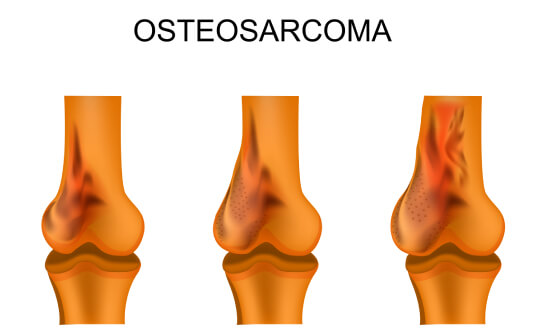





Osteosarcoma (OS) or osteogenic sarcoma is a relatively rare but aggressive primary malignant bone tumour. It makes up about 20% of all malignant bone tumors and mostly affects kids and teenagers before age 25 [1]. Active bone tissue growth gives young people more chances to get this type of cancer. The risk factors of osteosarcoma also include genetic conditions like Li-Fraumeni syndrome, Rothmund-Thompson syndrome, Hereditary retinoblastoma, and Paget disease of bone, as well as radiation exposure [2].
The survival rate for bone cancer diagnosed in early stages is usually 60-75%, which means that most patients diagnosed will be cured [3]. If the cancer spreads to other organs due to metastatic malignant cells invasion, the survival rates drop to 5-30%.
Despite these numbers, due to ongoing research and innovation, many patients with metastatic osteosarcoma live meaningful, active lives for years with the right approach. That’s why oncology teams in Germany use the tailored combination of traditional osteosarcoma treatment with pioneering therapies to ensure that you receive the best possible care, no matter what stage you are diagnosed with.
Which bones does osteosarcoma affect
Usually osteogenic sarcoma (OGS) develops at the ends of long bones (metaphysis), especially around the knee. Mostly affected sites are the femur (thighbone), about 42%, tibia (lower leg bone), 19%, and humerus (upper arm bone), 10% [1]. Less often, osteogenic sarcoma can be developed in other bones of the body, including the pelvis, shoulder girdle, or skull.
As the tumor grows, it can invade nearby structures such as muscles and tendons. Osteosarcoma can also spread through the bloodstream, leading to metastases in other bones or distant organs, most commonly the lungs.
Stages of osteosarcoma
Osteosarcoma (OS) is staged by the Musculoskeletal Tumor Society due to tumour grade, extent within the bone, and the presence or absence of metastases [4]:
Osteosarcoma Stage 1 - G1 Low-Grade Localized
The tumor cells during this stage are growing slowly and remain within the bone tissue. They have the best prognosis and often are completely removed without spreading to nearby tissues or distant organs.
Osteosarcoma Stage 2 - G2 High-Grade Localized
In this stage, tumor cells are poorly differentiated, which results in more aggressive growth due to quick division and rapid growth within the bone.
Osteosarcoma Stage 3 - Metastatic cancer
When the cancerous cells spread to surrounding tissues, lymph nodes, or to further organs like the lungs, it is called metastatic tumors (regardless of grade).
Diagnosis and symptoms of osteosarcoma cancer
The primary symptoms of osteosarcoma can include pain, stiffens, and swelling in the affected site. As the tumor progresses patients can experience decreased movement in the affected limb, increased pain during any physical activity, and spontaneous bone fractures.
Osteogenic sarcoma is diagnosed with [5]:
- X-rays - are the first test usually performed if a bone tumor is suspected.
- Computed tomography scan (CT scan)- is a type of imaging that uses X-rays to make images of the tumor and scan for possible spread to other organs, like the lungs.
- Tumor biopsy- a type of procedure in which the doctor, with a thin needle or during surgery, takes a sample of tissue for further histological verification.
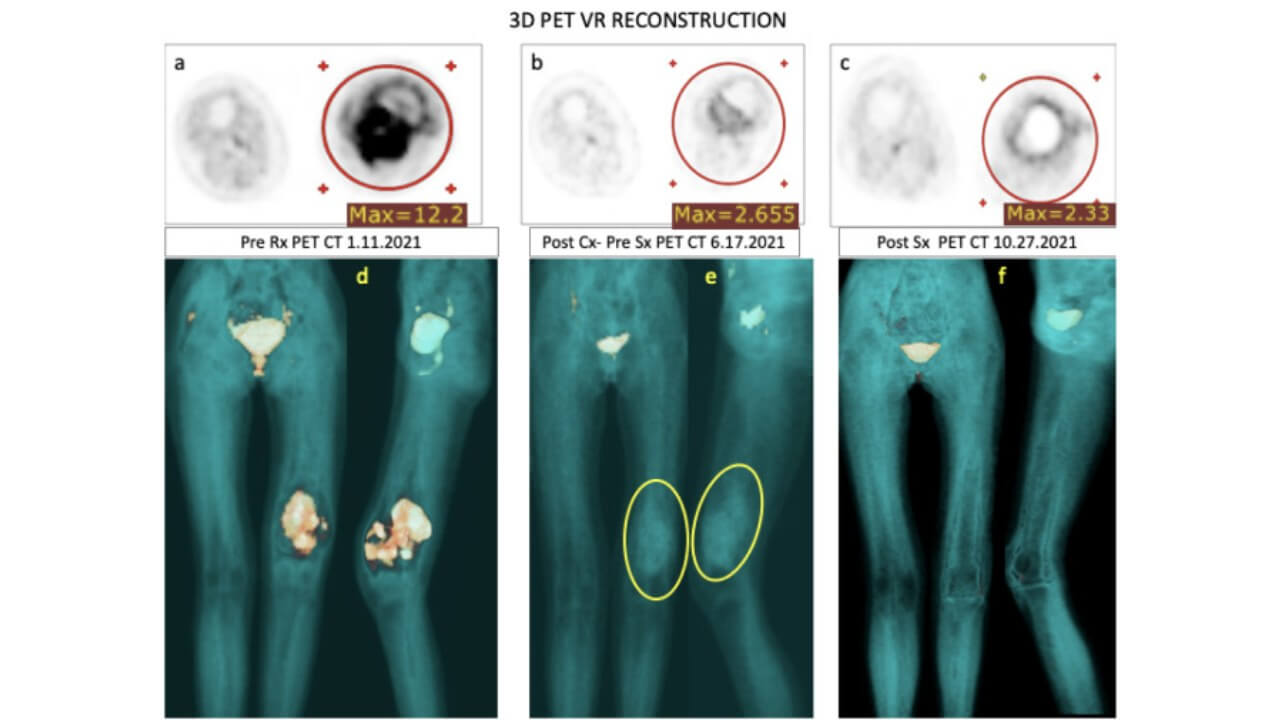
- Positron emission tomography (PET scan)- uses a radioactive substance that accumulates in the cancer cells, with further imaging in the PET scanner. It can show the spread of the malignancy and assess whether the treatment is working.
- Blood test- can detect specific chemicals that indicate the impact osteosarcoma has on the body, like liver and kidney function.
Standard methods of treatment for Osteosarcoma
Treatment for osteogenic sarcoma depends on various factors, like grade, location, as well as metastatic invasion. The most common types include [6]:
- Chemotherapy. It is the standard type of treatment given for patients with all stages of OS before or after the surgery. It has an impact on the whole organism, including metastasis, not only the main tumor, but also has severe side effects.
- Surgery. One of the essential steps for curing osteosarcoma completely. It requires complex evaluation and high surgical skills to completely resect the tumor with a wide margin. Often, this results in amputation of the limb and a lower quality of life for the patient.
- Radiation therapy. It is used to deal with leftover cancerous cells after chemo or surgery, but often the OS is resistant to conventional radiation therapy, which limits its effectiveness.
Innovative methods of treatment of Osteosarcoma
In recent years, the progress in bone cancer research has led to numerous inventions of innovative treatment approaches for osteosarcoma tumors, designed to increase therapeutic effectiveness and extend survival rates.
Regional Chemotherapy
Regional chemotherapy is a treatment that delivers chemotherapy drugs directly to the area of the cancerous lesion, rather than infusing the medication through the bloodstream to the whole body [7]. This allows doctors to administer higher doses in a targeted region while limiting side effects in the rest of the body.
As a part of regional chemotherapy, interventional radiology has become an important new alternative type of care for patients with metastatic osteosarcoma. Thanks to minimally invasive, image-guided techniques, patients are provided with diagnostics (image-guided biopsy of tumors/metastases) and treatment of metastases through ablation (heat/cold to destroy tumors like RFA, cryo, microwave) or embolization (blocking blood supply). This treatment can help make cancer care more effective and more tolerable, reducing the overall tumor burden while causing far less pain, quicker recovery, and fewer complications than traditional procedures. Every new option is a step toward better comfort, better outcomes, and renewed hope.
Also advanced regional chemotherapy technique is the Transarterial Chemoembolization (TACE). It is a procedure in which chemotherapy drugs are delivered directly to the tumor or metastases through the catheter in the artery while limiting exposure to the rest of the body. TACE offers a targeted, organ-focused approach that can treat difficult metastatic areas more directly, while helping patients stay stronger and feel better throughout their treatment journey.
Extended Isolated Stopflow Limb Infusion (EISLI)
Extended Isolated Stop-Flow Limb Infusion (EISLI) is a new emerging regional treatment of osteogenic sarcoma. During EISLI, the blood flow to the tumor region is temporarily interrupted, and isolated perfusion with chemotherapeutic agents is performed [8]. This allows the chemotherapy to be delivered directly to the tumor, and thanks to the restricted blood flow, the concentration of the drug stays high for an extended period, which makes treating cancer more efficient. This creates a controlled environment that prevents chemotherapeutic agents from being rapidly diluted or cleared through systemic circulation. This target approach reduces systemic toxicity and lowers side effects, which we can see with standard chemotherapy.
Isolated perfusion with chemotherapeutic agents is often presented as a limb-saving treatment for osteosarcoma, allowing the treatment to shrink the tumor enough to perform limb-sparing surgery. This gives patients a possibility to avoid amputation, preserve limb function, quality of life, and give significant psychological comfort.
Dendritic cell (DC) vaccines
Dendritic cell (DC) vaccines are an emerging therapy being explored for patients with bone cancer. Dendritic cells are immune cells that "present" cancer markers like osteosarcoma cells to T-cells, essentially teaching the immune system what to attack. By enhancing this process, DC vaccines aim to improve the body’s ability to recognize and destroy cancer cells. Dendritic cells' groundbreaking discovery was awarded with the Nobel Prize in Physiology or Medicine in 2011, highlighting the key role of dendritic cells in initiating and regulating immune responses [9].
Dendritic cell vaccines are created by collecting blood from the patient with further isolation of the dendritic cells from the sample, and exposing them to tumor-specific antigens in the laboratory. Once injected back into the patient’s body, these primed dendritic cells present the antigens to T-cells, effectively "teaching" the immune system to recognize and attack osteosarcoma cells. That’s why these vaccines are highly personalized and tend to be low-toxicity and valuable for patients who experience severe side effects from traditional treatments. This type of therapy is great not only for stage 1 but also for stage 4 osteosarcoma treatment.
Dendritic Cell Therapy Explained: exclusive interview from Prof. Gansauge
Treatment for Metastatic Osteosarcoma
When the bone tumor cells spread beyond the primary bone site to the lymph nodes and other organs like lungs and bones, it is called metastatic osteosarcoma and is a stage 4 bone cancer. More than two-thirds of patients don’t achieve lasting results with standard bone cancer treatment options [10].
Management of metastatic osteosarcoma includes a combination of intensive chemotherapy in addition to surgery aimed to remove the primary tumor and metastatic sites, if possible. This cancer stage requires creating a personalized, proactive multimodal plan tailored to each patient’s unique situation.
With the advances in regional chemotherapy, now patients can benefit from dendritic cell therapy and Extended Isolated Stop-Flow Limb Infusion that can help slow the primary tumor growth as well as metastases. This metastasis bone cancer treatment can be used in addition to surgery or as a stand-alone approach in inoperable cases, which can preserve limb function and quality of life as long as possible.
Even though the disease is advanced, there are more treatment options than ever before, and many people live meaningful, active lives for years with the right approach.
| Overall toxicity | Severe cosmetic effect | Duration | |
|---|---|---|---|
| Innovative treatments | Low; mainly localized effects | Minimal to moderate; often limb-sparing | Shorter treatment cycles for regional therapy |
| Standard methods | High; systemic side effects are common | Often significant, especially if amputation or extensive surgery is required | Longer overall treatment duration due to multiple chemo cycles and recovery from surgery |
Osteosarcoma Treatment Options and Advantages in Germany
Over the years, Germany has become one of the top centers for treating cancer , focusing on innovative therapies for patients with osteogenic sarcoma. Treatment of osteosarcoma in Germany provides highly personalized plans based on the stage of osteosarcoma and how well patients can tolerate the bone tumor treatment. German centers are experts in limb-sparing surgery, which boosts the chances of completely removing tumors while preserving function whenever possible. This expertise makes them some of the best bone cancer treatment centers. They use high-standard chemotherapy protocols along with regional methods like Extended Isolated Stop-Flow Limb Infusion (EISLI) to improve tumor control and slow down its spread. Treatment for osteosarcoma cancer in Germany also allows patients to access advanced immunotherapy options, such as dendritic cell therapy, especially for metastatic or recurrent cases. Access to these new techniques and top-notch treatments leads to many patients achieving successful outcomes while maintaining their quality of life, establishing them as the best bone cancer hospital in the world.
| Treatment methods | Germany | USA | Great Britain | Australia |
|---|---|---|---|---|
| Surgery | €25,000 - €45,000 | €65,000 - €85,000 | €35,000 - €55,000 | €30 000 - €50 000 |
| Chemotherapy | full course €80,000 - €150,000 | full course €100,000 - €180,000 | full course €90,000 - €165,000 | full course €50,000- €200 000 |
| Dendritic cell therapy | €20,000 - €38,000 | €100,000 - €150,000 | Not available | Not available |
A Closer Look at the Patient Journey
Diagnosis of osteosarcoma may be scary, especially for young adults who are mostly affected by this type of tumor. Bone cancer may seem like a death sentence, and sometimes it’s hard to comprehend the next steps to deal with osteosarcoma, especially when survival rates directly depend on the speed of cancer treatment initiated. That’s why it’s important to research all available other treatments like dendritic cell immunotherapy or Extended Isolated Stop-Flow Limb Infusion that can show amazing results and give a patient a chance for cure.
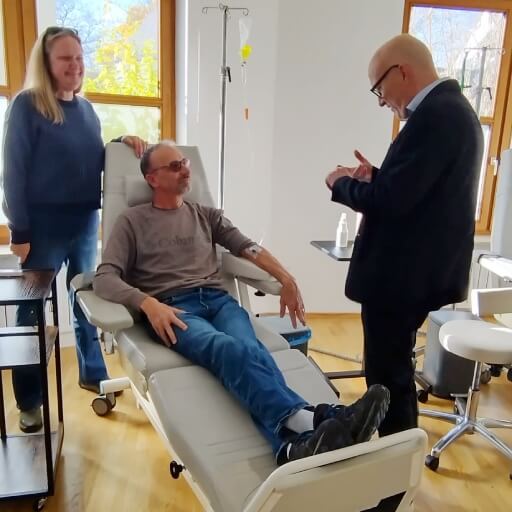
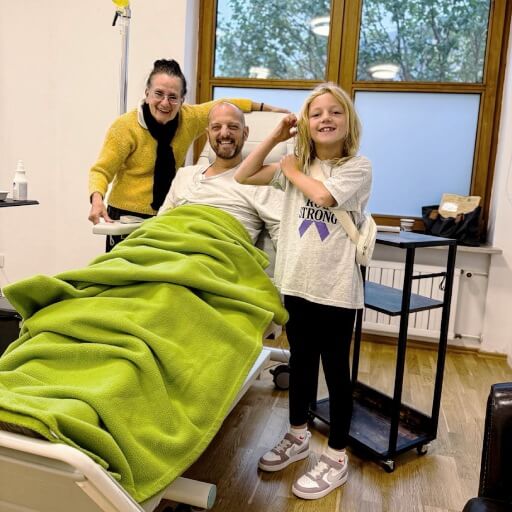
Marco Diaz, a 42-year-old father of two, presented with metastasized and inoperable osteosarcoma. The previous stage 4 bone cancer treatment, like chemotherapy, was highly difficult to bear and was accompanied by severe side effects. Marco almost lost hope, but he contacted Booking Health and got a chance to undergo immunotherapy for osteosarcoma in the best bone cancer clinic in Germany. This was a life-changing moment because within a month, the osteosarcoma stopped growing. He got a chance to see his daughter growing and be with them during important moments of their lives. Also, he was amazed by the medical team working with him, their supportiveness and kindness, as well as their personalized approach, helped him find hope for the future and continue to fight for his life.
Stories like this prove that no matter how advanced the tumor can be or the circumstances you are in, there is hope in the new treatments like dendritic cell vaccines. You, as a patient, deserve the chance to be supported in this hard fight against cancer and have a team that is dedicated to your specific treatment plan, which will lead you toward healing, dignity, and hope.
A Medical Journey: Every Step of the Way with Booking Health
Finding the best treatment strategy for your clinical situation is a challenging task. Being already exhausted from multiple treatment sessions, having consulted numerous specialists, and having tried various therapeutic interventions, you may be lost in all the information given by the doctors. In such a situation, it is easy to choose a first-hand option or to follow standardized therapeutic protocols with a long list of adverse effects instead of selecting highly specialized innovative treatment options.
To make an informed choice and get a personalized cancer management plan, which will be tailored to your specific clinical situation, consult medical experts at Booking Health. Being at the forefront of offering the latest medical innovations for already 12 years, Booking Health possesses solid expertise in creating complex cancer management programs in each case. As a reputable company, Booking Health offers personalized osteosarcoma cancer treatment plans with direct clinic booking and full support at every stage, from organizational processes to assistance during treatment. We provide:
- Assessment and analysis of medical reports
- Development of the medical care program
- Selection of a suitable treatment location
- Preparation of medical documents and forwarding to a suitable clinic
- Preparatory consultations with clinicians for the development of medical care programs
- Expert advice during the hospital stay
- Follow-up care after the patient returns to their native country after completing the medical care program
- Taking care of formalities as part of the preparation for the medical care program
- Coordination and organization of the patient's stay in a foreign country
- Assistance with visas and tickets.
- A personal coordinator and interpreter with 24/7 support
- Transparent budgeting with no hidden costs
Health is an invaluable aspect of our lives. Delegating management of something so fragile yet precious should be done only to experts with proven experience and a reputation. Booking Health is a trustworthy partner who assists you on the way of pursuing stronger health and a better quality of life. Contact our medical consultant to learn more about the possibilities of personalized treatment with innovative methods of bone cancer with leading specialists in this field.
Fighting Cancer Together: Treatment Journeys with Booking Health



Frequently asked questions about Osteosarcoma Treatment
Send request for treatmentOsteogenic sarcoma is a relatively rare but aggressive primary malignant bone tumour. It makes up about 20% of all malignant bone tumors and mostly affects kids and teenagers.
Early osteosarcoma is diagnosed with clinical symptoms including discomfort and swelling in the tumor region, as well as pain during physical activity.
In most cases, osteosarcoma doesn’t have a genetic predisposition, but some genetic disorders like hereditary retinoblastoma or Li-Fraumeni syndrome can higher the risk of osteosarcoma.
Osteosarcoma symptoms include pain, stiffens, and swelling in the affected site. As the tumor progresses patients can experience decreased movement in the affected limb, increased pain during any physical activity, and spontaneous bone fractures.
Looking at the prognosis by stage, in the early stage, most patients, about 60-75%, diagnosed with osteosarcoma are completely cured. In the later stages it is now possible to stop the tumor growth and give patients a chance to maintain quality of life.
When the bone tumor cells spread beyond the primary bone site to the lymph nodes and other organs like lungs and other bones, it is called metastatic osteosarcoma stage 4.
Using target therapies, patients can achieve great results in tumor control and keep a high quality of life in advanced stages of bone cancer, even when not achieving a complete cure.
Osteosarcoma develops primarily from the bone cells- osteoblasts. Other cancers that can affect the bone can be chondrosarcoma (develops from cartilage) or Ewing sarcoma (starts from small nerve cells).
Osteosarcoma is rarely cured without surgery because the primary tumor damages bone cells, which affects their function. But the surgery is usually one of the steps in the standard treatment protocol with chemotherapy or radiation therapy.
Osteosarcoma treatment Germany is performed in the best bone cancer treatment centers using an innovative approach, new technology, and personalized treatment plans. So, you, as a patient, are supported every step of the way.
Osteosarcoma cost of treatment in the USA is around €200 000, not including dendritic cell immunotherapy. Innovative therapies in Germany are much more available and start from €40 000.
Mayo Clinic, Memorial Sloan Kettering (MSK), and MD Anderson Cancer Center are the world’s top institutions for osteosarcoma therapy. The top cancer centres for bone tumors in Germany are Charité University Hospital Berlin, and University Hospital of Munich.
The best approach is usually a combination of surgery and advanced therapies like regional chemotherapy or immunotherapy. A tailored approach usually increases survival rates for metastatic osteosarcoma. Osteosarcoma treated with this approach can be controlled.
Choose treatment abroad and you will for sure get the best results!
Authors:
This article was edited by medical experts, board-certified doctors Dr. Nadezhda Ivanisova, and Dr. Yana Dmytryshyn. For the treatment of the conditions referred to in the article, you must consult a doctor; the information in the article is not intended for self-medication!
Our editorial policy, which details our commitment to accuracy and transparency, is available here. Click this link to review our policies.
Sources:
[1] Anna Greenwood, Rahul Arora, Hira Shaikh. NCBI. Osteosarcoma (Osteogenic Sarcoma). https://www.ncbi.nlm.nih.gov/books/NBK563177/
[2] Omneya Hassanain, Mahmoud Alaa, Mohamed K. Khalifa et al. Genetic variants associated with osteosarcoma risk: a systematic review and meta-analysis. Scientific Reports volume 14, Article number: 3828 (2024). doi: 10.1038/s41598-024-53802-w. [DOI]
[3] American Cancer Society. Survival Rates for Osteosarcoma. https://www.cancer.org/cancer/types/osteosarcoma/detection-diagnosis-staging/survival-rates.html
[4] Zile Singh Kundu. Classification, imaging, biopsy and staging of osteosarcoma. Indian J Orthop. 2014 May-Jun;48(3):238–246. doi: 10.4103/0019-5413.132491. [DOI] [PMC free article]
[5] American Cancer Society. Tests for Osteosarcoma. https://www.cancer.org/cancer/types/osteosarcoma/detection-diagnosis-staging/how-diagnosed.html
[6] American Cancer Society. Treating osteosarcoma. https://www.cancer.org/cancer/types/osteosarcoma/treating.html
[7] W D Ensminger, J W Gyves. Regional cancer chemotherapy. Cancer Treat Rep. 1984 Jan;68(1):101-15. [PubMed]
[8] Kornelia Aigner, Emir Selak, Sabine Gailhoferet et al. Case report: Extended Isolated Stopflow Limb Infusion (EISLI) for highly malignant osteosarcoma - complete pathological tumor remission and implantation of a knee joint prosthesis. Int J Surg Case Rep. 2023 Mar:104:107918. doi: 10.1016/j.ijscr.2023.107918. [DOI]
[9] Roman Volchenkov, Florian Sprater, Petra Vogelsang, Silke Appel. The 2011 Nobel Prize in physiology or medicine. Scand J Immunol. 2012 Jan;75(1):1-4. doi: 10.1111/j.1365-3083.2011.02663.x. [DOI] [PubMed]
[10] Michael A Harris, Christine J Hawkins. Recent and Ongoing Research into Metastatic Osteosarcoma Treatments. Int J Mol Sci. 2022 Mar 30;23(7):3817. doi: 10.3390/ijms23073817. [DOI] [PMC free article]
Read:
New Effective Treatments for Stage 4 Cancer: Innovations in Oncology