



Bowel cancer is a malignancy that occurs anywhere in the large bowel, including the colon and rectum. It often develops from a benign polyp that undergoes a malignant transformation over time. Research shows that about 15% to 40% of colon cancers originate from colon polyps over the course of 2 to 5 years [1]. Colon cancer survival rate varies from patient to patient, and is influenced by key factors: the stage of disease at the time of diagnosis, tumor type and location, presence of concomitant diseases, and treatment methods. Advances in screening methods, surgical techniques, and regional and systemic therapies can significantly improve outcomes and help detect tumors early, resulting in a better prognosis. World statistics data are constantly updated and provide a basis for estimating the success of treatment for bowel cancer at each stage. That’s why survival rates can give you the idea of how likely your treatment will be successful rather than the number of years you left to live. It helps patients and their families better understand the possible outcomes and support informed decision-making.
What is colon cancer?
Colon cancer develops from the uncontrolled growth of cells in the lining of the colon, and most often is histologically described as adenocarcinoma. The cells forming the tumor can have varying levels of differentiation, with poorly differentiated histotypes being more aggressive. The first signs of bowel cancer are changes in bowel habits, such as constipation, diarrhea, or narrow stools [2]. Later, feelings of incomplete emptying, blood in stool, weakness, and weight loss can occur. At the advanced stages, bowel obstruction with peritonitis can result in sharp abdominal pain and require emergency interventions.
The earlier bowel cancer is detected, the more successful treatment options tend to be. If you’re experiencing any unusual changes in your health, it’s important to know the symptoms of bowel cancer, as early recognition can significantly improve outcomes.
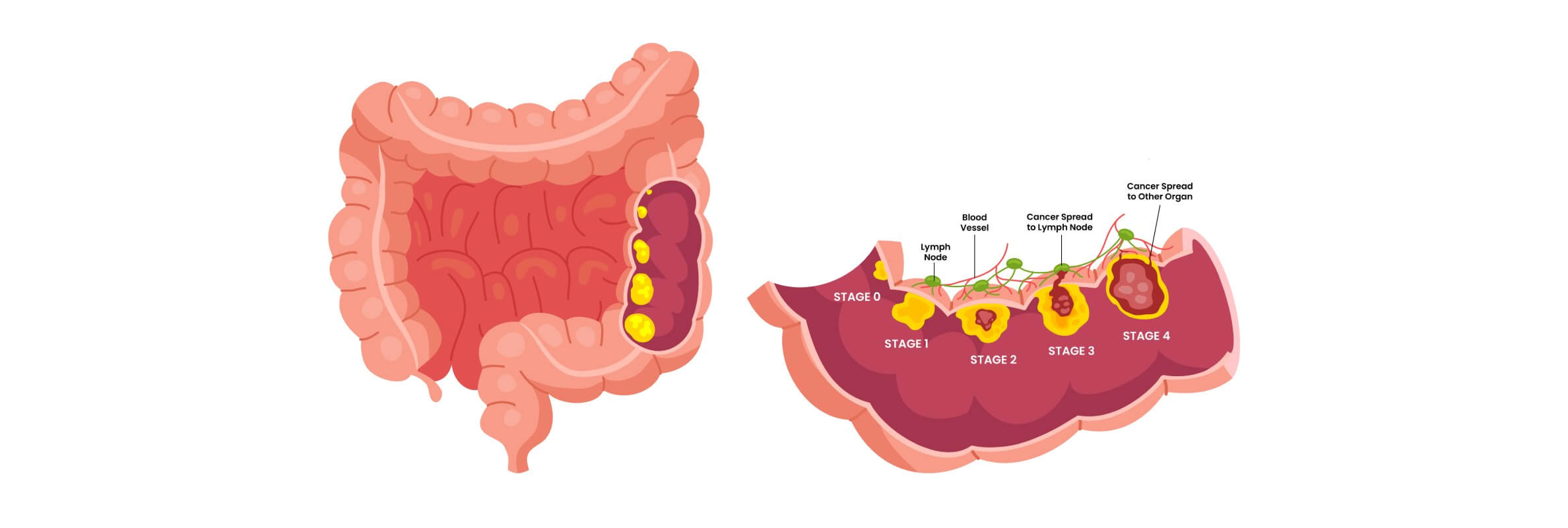
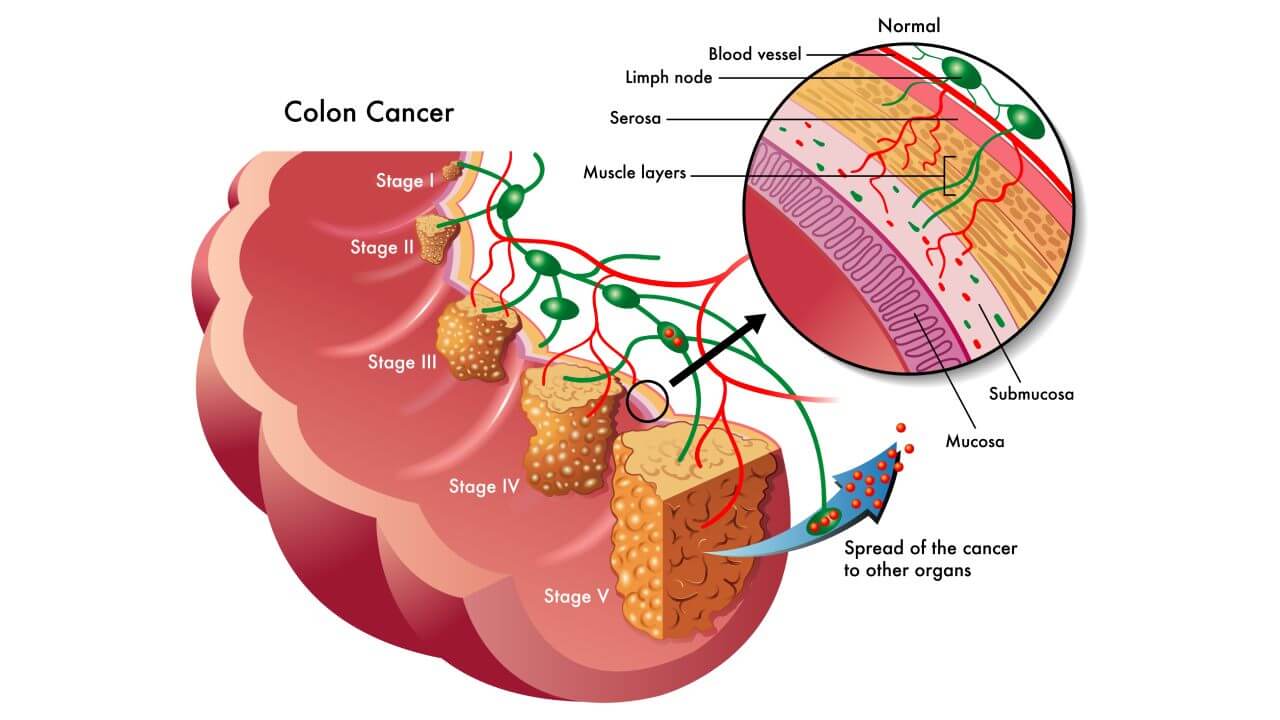
Bowel cancer is classified into different stages based on tumor size, lymph node involvement, and spread to other organs. These stages help doctors choose the most effective treatment strategy. Understanding the stages of colorectal cancer can provide clearer insight into disease progression [3]:
- Stage I. Cancer is localized within the mucosal and submucosal levels
- Stage IIA. The tumor grew to the outer layer
- Stage IIB. It grows through the entire bowel wall
- Stage IIC. Cancer started to penetrate into nearby tissues and organs
- Stage IIIA. It spreads to the limited local lymph nodes
- Stage IIIB. Higher lymph node involvement combines with deep bowel wall invasion
- Stage IIIC. Many lymph nodes are involved with the tumor spreading into nearby tissues
- Stage IVA. It has spread to one distant organ
- Stage IVB. It has spread to more than 1 distant organ
- Stage IVC. It grew across the peritoneum (lining of the abdomen)
Bowel cancer survival rates
| SEER stage | 5-year survival rate |
|---|---|
| Localised | 91,5% |
| Regional | 74,6% |
| Distant (metastatic) | 16,2% |
| Unknown | 49,4% |
Read the full guide to colon cancer treatment options
Bowel cancer life expectancy highly depends on the cancer stage at the moment of diagnosis. It is determined by how deeply the tumor has grown into the bowel wall and whether it spreads to lymph nodes or to organs such as the lungs, liver, or bones. Also, age, overall health, and tumor biology heavily influence the treatment course and response that are critical for prolonged survival.
During stage 1, the tumor is localized within the inner layers of the bowel, and with early diagnosis during endoscopy, most patients have a near-normal life expectancy after adequate treatment, providing reassurance about quality of life after successful intervention.
Stage 2 cancer also has favorable outcomes, and a large portion of patients live many years after receiving treatment.
If cancer spreads to lymph nodes or organs, a personalized treatment plan can support long-term stage three bowel cancer prognosis, helping patients feel more confident in their care.
When facing a stage 4 colon cancer, it is crucial to limit the tumor growth and control the spread of metastases, which can be a key factor to improve the bowel cancer survival rate.
Stage 1 bowel cancer life expectancy
As long as the question about bowel cancer life expectancy depends on the actual primary tumor size and qualitative detection of metastases, it is important to undergo a special examination on time at the onset of bowel cancer symptoms: constant abdominal pain and problems with stool, blood, or pus in the faeces.
If the disease is detected at the first stage, colon cancer prognosis is as favorable as it can be possible. According to the National Cancer Institute, the 5-year survival rate for bowel cancer in the early stage is 91,5% [5].
This means that more than 91,5% of people affected by the disease will be well-tolerant of treatment according to the standard protocol, achieve remission, and successfully live for more than 5 years after that. Surgical interventions in bowel cancer are mostly performed at this stage.
Stage 2 bowel cancer life expectancy
Stage 2 bowel cancer survival directly depends on the layer of the intestinal wall affected by the malignant tumor [6]. In stage 2a, the disease involves the entire intestinal wall but does not extend beyond its borders. At the same time, the oncologic focus can be clearly separated from surrounding tissues, thereby increasing the effectiveness of surgical treatment.
At stage 2b, the tumor spreads to the neighboring organs – the liver, bladder, and uterus in women. Relatively favorable prognosis and high life expectancy in bowel cancer are associated with the complete absence of metastases in other sites of the body or the spread of cancer to the lymphatic system.
Moreover, women have a more favorable prognosis for stage 2 bowel cancer, which is due to the peculiarities of the tumor focus growth on the background of the influence of female sex hormones [7].
The patient's life expectancy with bowel cancer is determined by the surgeon's professionalism and the completeness of the operation. In case of complete removal of the oncologic focus, the postoperative period recovery is easier, and a minimum course of chemotherapy is required for bowel cancer.
According to the National Cancer Institute, the 5-year survival rate for bowel cancer at stage 2 reaches 87% at stage 2a and 63% at stage 2b.
Stage 3 bowel cancer life expectancy (3A, 3B, 3C)
Prognosis and clinical signs of bowel cancer stage 3 survival depend on the size and location of the tumor in the intestinal wall, in combination with the number and location of the affected lymph nodes. In stage 3a, the tumor is small and predominantly located in the intestinal lumen. It does not affect adjacent organs. Despite this, a thorough examination reveals the process has spread to nearby lymph nodes.
Next, the 3b stage is characterized by a large tumor and more aggressive spread along the intestinal wall and into abdominal organs. Colon cancer stage 3b survival prognosis depends on the development of additional disease complications.
The most common complications are:
- Acute obstruction of the intestine, which often develops when the neoplasm is located in the initial parts of the intestine
- Infectious complications, phlegm, and abscesses of retroperitoneal tissue
- Symptoms of damage to organs adjacent to the tumor
Stage 3c colon cancer differs from previous stages with the spread of the pathological process involving a large number of lymph nodes. The inability to completely remove all cancer sites in stage 3c reduces the 5-year survival rate to 53%. In this case, after the surgical treatment, the second stage - treatment with polychemotherapy will inevitably follow. Modern pharmacological advances can improve expectations for survival from bowel cancer.
Stage 3 colon cancer survival rate by age can vary, but the prognosis of stage 3a colon cancer life expectancy is relatively favorable, and 89% of patients affected by the disease overcome the 5-year threshold after the precise diagnosis and modern treatment [8]. As for stage 3b colon cancer life expectancy, 5-year-survival reaches 69%.
Stage 4 bowel cancer life expectancy (metastatic)
An important distinctive feature of stage 4 bowel cancer is the detection of metastases in remote areas of the body. First, metastases develop in the liver, which receives blood from the organs of the abdominal cavity and the small pelvis. The number and location of metastases significantly affect the stage 4 colon cancer life expectancy prognosis.
Often, a short life expectancy with the disease is connected with late diagnosis, making for improper selection of individual treatment. Despite the disappointing statistical data, bowel cancer stage 4 prognosis is extremely personalised.
The following factors have the greatest importance in the treatment of bowel cancer at the 4th stage and in the determination of prognoses:
- Age – the chances of recovery are higher in patients under the age of 60
- Gender – prognosis is more favorable in men
- The presence of concomitant diseases, the most important in this regard dysfunctions of the liver and kidneys, and the state of the cardiovascular system
- If bowel cancer is a primary diagnosis, with no presence of an oncology in the anamnesis, then the prognosis is more favorable
- Sensitivity of tumor cells to chemotherapy
To predict the life expectancy prognosis for stage 4 bowel cancer, it is important to assess not only medical factors and the possibility of specialized treatment, but also the patient's psychological state. Competent psychological support helps a person find the strength to fight the disease and believe in the attainability of remission.
Life expectancy for stage 4 colon cancer is not the only thing that matters, but also the patient’s life quality and its fullness.
It will be useful to:
- Attend individual and group sessions of supportive psychotherapy
- Determination of a competent regime of physical activity by the attending physician
- Communication with patients in disease-related communities, acquaintance with those who have recovered from the disease
According to the National Cancer Institute, the 5-year stage 4 colon cancer survival rate for patients reaches 16,2% [9].
Find out about treatment options for advanced colon cancer and how they may influence survival
What affects colon cancer life expectancy?
Colon cancer survival rates by stage and age vary widely among patients. General statistics provide estimates and guidance on individual outcomes, based on a combination of medical, biological, and individual factors. Understanding what influences prognosis can help you make informed decisions about your treatment.
Stage at diagnosis. It is one of the most important factors that influences survival. The earlier the stage, the higher the survival rates and the greater the likelihood of long-term remission. As the stage progresses, life expectancy for colon cancer decreases, and when the tumor starts to spread to lymph nodes and distant organs, the chances are getting even lower. That’s why early detection is one of the most important steps. Through widely available screening tests, patients can be diagnosed early and receive the most appropriate treatment.
Tumor type and genetics. Colon cancer can have a different histological subtype, tumor grade, and molecular state, and all of these characteristics can influence the prognosis. Markers such as microsatellite instability (MSI), mismatch repair (MMR) deficiency, KRAS, NRAS, BRAF mutations, and CpG island methylator phenotype (CIMP) status directly affect tumor response to treatment and tumor aggressiveness [10]. For example, MSI-high malignancies often have better survival rates and are especially sensitive to immunotherapy, even in advanced stages. All of these genetic factors should be evaluated before creating a treatment plan to increase treatment efficiency and improve bowel cancer 5 year survival.
Age and overall health status. Considering age and comorbid conditions is an essential part of treatment planning and can play a central role in what is life expectancy for colon cancer. This influences how well a patient recovers after surgery and systemic therapies. Some of the chronic illnesses that can affect the course of treatment are diabetes mellitus type I or II, chronic obstructive pulmonary disorder, coronary artery disease, heart failure, or arrhythmias, chronic kidney disease, cirrhosis or hepatitis, as well as different hormonal disorders. The presence of such comorbidities can influence treatment selection, dosing, and intensity.
Completeness of surgical resection. It is an important determinant of life expectancy for colon cancer, especially in regionally advanced tumors. Complete tumor removal lowers the risk of recurrence and metastasis. Also, the surgical removal of metastases in common sites such as the lungs or liver can significantly extend survival and reduce symptoms, improving quality of life even during advanced stages. At early stages, surgery is usually well tolerated, and bowel cancer operation survival rates are high.
Response to systemic therapy. The use of an appropriate systemic therapy, such as chemotherapy, targeted agents, and immunotherapy, depending on the tumor’s genetic features, directly determines the colon cancer survival rate. Adjuvant chemotherapy can enhance the effectiveness of surgery by killing residual cancer cells, while systemic therapy administered for metastatic invasion can help to control symptoms. And if the tumor is responsive to immune therapy, it is a great way to achieve control of spread and growth.
Colon cancer 5-year survival rates
| Disease spread | Medical term/SEER stage | 5-year survival rate |
|---|---|---|
| Cancer only in the bowel | Localised | 91,5% |
| Cancer in nearby lymph nodes | Regional | 74,6% |
| Cancer spread to distant organs | Distant (metastatic) | 16,2% |
| All stages combined | – | 49,4% |
*Based on the data from the National Cancer Institute.
How to improve your outlook
Can you survive bowel cancer? That’s the question every patient asks themselves. Yes, a diagnosis can be scary and overwhelming, but many factors that influence the outcome are within a patient's control. In addition to medical treatment, daily chores, active participation in care, and lifestyle adjustments can meaningfully improve overall outlook, quality of life, and long-term survival. Here are the key steps to improve colorectal cancer survival rates.
- Choose the right treatment center. You should prioritize treatment in a high-performance oncology center with a multidisciplinary approach. You must seek access to advanced technologies and modern therapies, which can increase metastatic cancer life expectancy in colon cancer patients. Also, in centers with more experience, you can be sure to receive the best care and a personalized treatment plan. They know exactly how to handle difficult cases and can adjust the procedures towards your specific needs. Modern cancer centers always strive to preserve as much function as possible, with expertise in organ-preservation surgeries and treatments.
- Manage your chronic illnesses. Conditions like diabetes, heart disease, and hypertension can influence the timing of how long colon cancer takes to kill you. Keeping them under control guarantee less complications and more effectiveness of cancer therapy. You should always mention your comorbidities and previous history to your doctor.
- Follow recommendations and follow-up plan. It is an important part of the treatment process and directly influences disease control. Regular clinic visits, imaging, and blood tests help to detect any abnormalities quickly, when they are more treatable.
- Keep good nutrition. Through food, you can support immune function and wound healing and improve tolerance to treatment. Your diet needs to be rich in protein, fruits and vegetables, as well as fiber, to control your weight and nourish your body with the right micro- and macronutrients to help fight the disease, tolerate treatment, and increase colorectal cancer survival rate.
- Avoid smoking and alcohol consumption. Your bad habits can be the primary reason for your condition. Smoking slows healing and immune function, and results in more cell damage, which can lead to secondary tumors or recurrent cancer. Alcohol can interfere with the treatment process by influencing the work of chemotherapy drugs and overall metabolism.
- Support mental health. You may think that your psychological well-being has nothing to do with life expectancy for colon cancer. But the fact is that long-term depressive symptoms are associated with 30% to 40% higher mortality risks [11]. Screening for depression and anxiety should be considered a part of colon cancer care. That’s why it’s important to seek support from family, support groups, and, most importantly, healthcare professionals to reduce stress, improve adherence to treatment, and enhance quality of life.
These are some of the most important steps in your treatment that you can control. Being active in your daily routine, eating healthy, and avoiding bad habits can play a crucial role in improving rectal cancer recovery rates and prolonging survival. You should feel in control of your disease, and with the help of modern approaches and comprehensive care, you can increase your life expectancy for stage 4 colon cancer spread to liver or other distant organs.
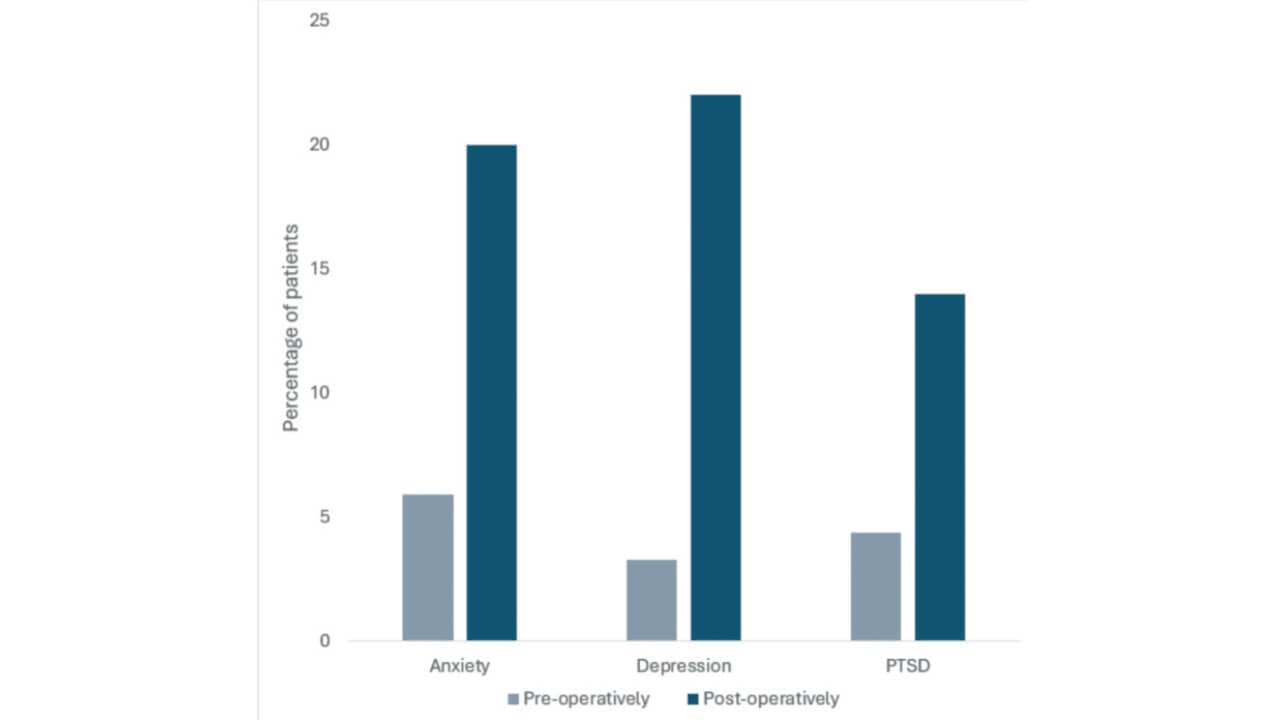
The graph shows levels of anxiety, depression, and PTSD before surgery for colorectal cancer, which are 5.9%, 3.3%, and 4.4%, respectively, after they increase to 20%, 22%, and 14%, respectively [12].
Hospitals and the cost of treatment for colon cancer abroad
Germany is among the countries where patients seek treatment in specialized oncology centers for bowel and intestinal cancer. German hospitals are famous for their high-quality standards, government oversight, comprehensive care, and the most modern diagnostic and treatment technologies, making them a top destination if you want to influence how long you can live with bowel cancer. A multidisciplinary approach is achieved by a team of surgeons, oncologists, radiologists, pathologists, and researchers, allowing an individualized treatment plan and precise diagnostics.
Here you can explore best hospitals in Germany specializing in bowel cancer treatment.
The cost of examination and treatment in hospitals abroad depends, first of all, on the country and the level of the medical facility. The cost of the medical program is also influenced by the patient's age, the presence of concomitant diseases, the stage of cancer, and the type of tumor. Leading hospitals for colon cancer treatment abroad are:
- Helios Hospital Berlin-Buch, Department of Gastroenterology, Hepatology, and Infectology
- University Hospital Duesseldorf, Department of Gastroenterology, Hepatology and Infectology
- University Hospital of Ludwig Maximilian University of Munich, Department of Gastroenterology and Hepatology
- University Hospital Ulm, Department of Gastroenterology and Hepatology
| Treatment Method | Germany | Great Britain | Australia | The USA |
|---|---|---|---|---|
| Innovative treatments | €25,000 - €60,000 full course | €70,000 - €120,000 full course | €80,000 - €200,000 | €100,000 - €150,000 full course |
| Standard treatment options | €80,000 - €150,000 full course | €90,000 - €165,000 full course | €90,000 - €165,000 | €100,000 - €180,000 full course |
* Prices may vary depending on the course of treatment and tumor characteristics.
A Medical Journey: Every Step of the Way With Booking Health
Finding the best treatment strategy for your clinical situation is a challenging task. Being already exhausted from multiple treatment sessions, having consulted numerous specialists, and having tried various therapeutic interventions, you may be lost in all the information given by the doctors. In such a situation, it is easy to choose a first-hand option or to follow standardized therapeutic protocols with a long list of adverse effects instead of selecting highly specialized innovative treatment options.
To make an informed choice and get a personalized cancer management plan, which will be tailored to your specific clinical situation, consult medical experts at Booking Health. Being at the forefront of offering the latest medical innovations for already 12 years, Booking Health possesses solid expertise in creating complex cancer management programs in each case. As a reputable company, Booking Health offers personalized bowel cancer treatment with direct clinic booking and full support at every stage, from organizational processes to assistance during treatment. We provide:
- Assessment and analysis of medical reports
- Development of the medical care program
- Selection of a suitable treatment location
- Preparation of medical documents and forwarding to a suitable clinic
- Preparatory consultations with clinicians for the development of medical care programs
- Expert advice during the hospital stay
- Follow-up care after the patient returns to their native country after completing the medical care program
- Taking care of formalities as part of the preparation for the medical care program
- Coordination and organization of the patient's stay in a foreign country
- Assistance with visas and tickets.
- A personal coordinator and interpreter with 24/7 support
- Transparent budgeting with no hidden costs
Health is an invaluable aspect of our lives. Delegating management of something so fragile yet precious should be done only to experts with proven experience and a reputation. Booking Health is a trustworthy partner who assists you on the way of pursuing stronger health and a better quality of life. Contact our medical consultant to learn more about the possibilities of personalized treatment with innovative methods for colon cancer with leading specialists in this field.
Hope in Cancer Treatment: Patient Success with Booking Health








Frequently Asked Questions About Bowel Cancer Life Expectancy
Send request for treatmentLife expectancy for colon cancer is the most favorable when the disease is diagnosed early. With the right approach, you can achieve the bowel cancer 5-year survival rate up to 91,5%.
Yes, stage 3 bowel cancer survival is possible and can be achieved with advanced modern treatments. Bowel cancer stage 3 survival rates are different depending on substage, but generally are around 75%.
You can significantly reduce the risk of developing colon cancer by regular colonoscopy screening and removing precancerous polyps with further histological evaluation. Also, lifestyle factors like a healthy diet, avoiding smoking, and alcohol can lower the risk of developing cancer and improve colorectal cancer survival rates.
Choose treatment abroad and you will for sure get the best results!
Authors:
This article was edited by medical experts, board-certified doctors Dr. Nadezhda Ivanisova, and Dr. Yana Dmytryshyn. For the treatment of the conditions referred to in the article, you must consult a doctor; the information in the article is not intended for self-medication!
Our editorial policy, which details our commitment to accuracy and transparency, is available here. Click this link to review our policies.
Sources:
[1] Duan B, Zhao Y, Bai J, et al. Colorectal Cancer: An Overview. In: Morgado-Diaz JA, editor. Gastrointestinal Cancers [Internet]. Brisbane (AU): Exon Publications; 2022 Sep 30. Chapter 1. [NCBI]
[2] Sofia M McCulloch, Imran Aziz, Annikka V Polster et al. The diagnostic value of a change in bowel habit for colorectal cancer within different age groups. United European Gastroenterol J. 2019 Nov 6;8(2):211–219. doi: 10.1177/2050640619888040. [DOI] [PMC free article]
[3] Bruening W, Sullivan N, Paulson EC, et al. Imaging Tests for the Staging of Colorectal Cancer [Internet]. Rockville (MD): Agency for Healthcare Research and Quality (US); 2014 Sep. (Comparative Effectiveness Reviews, No. 142.) Introduction. [NCBI]
[4] National Cancer Institute. Colon and Rectum (including Appendix) SEER 5-Year Relative Survival Rates, 2015-2021
[5] Valeria Tonini, Manuel Zanni. Why is early detection of colon cancer still not possible in 2023? World J Gastroenterol. 2024 Jan 21;30(3):211–224. doi: 10.3748/wjg.v30.i3.211. [DOI] [PMC free article]
[6] Carolyn C Compton. Colorectal Carcinoma: Diagnostic, Prognostic, and Molecular Features. Modern Pathology Volume 16, Issue 4, 1 April 2003, Pages 376-388. https://doi.org/10.1097/01.MP.0000062859.46942.93. [DOI]
[7] Amani A. Mahbub. Therapeutic Strategies and Potential Actions of Female Sex Steroid Hormones and Their Receptors in Colon Cancer Based on Preclinical Studies. Life 2022, 12(4), 605; https://doi.org/10.3390/life12040605. [DOI]
[8] Yoo Sung Lee, Hee Cheol Kim, Kyung Ook Jung et al. Oncologic Outcomes of Stage IIIA Colon Cancer for Different Chemotherapeutic Regimens. J Korean Soc Coloproctol. 2012 Oct 31;28(5):259–264. doi: 10.3393/jksc.2012.28.5.259. [DOI] [PMC free article]
[9] National Cancer Institute. Cancer Stat Facts: Colorectal Cancer
[10] Zhengdong Yang, Xinyang Wang, Huiying Zhou et al. Molecular Complexity of Colorectal Cancer: Pathways, Biomarkers, and Therapeutic Strategies. Cancer Manag Res. 2024 Oct 10;16:1389–1403. doi: 10.2147/CMAR.S481656. [DOI] [PMC free article]
[11] Shane Lloyd, David Baraghoshi, Randa Tao et al. Mental Health Disorders are More Common in Colorectal Cancer Survivors and Associated with Decreased Overall Survival. Am J Clin Oncol. Author manuscript; available in PMC: 2020 Apr 1. Published in final edited form as: Am J Clin Oncol. 2019 Apr;42(4):355–362. doi: 10.1097/COC.0000000000000529. [DOI] [PMC free article]
[12] Olorungbami K Anifalaje, Charles Ojo, Oluwaseyi T Balogun et al. The Determinants of Long-Term Outcomes After Colorectal Cancer Surgery: A Literature Review. Cureus. 2024 Dec 2;16(12):e74985. doi: 10.7759/cureus.74985. [DOI] [PMC free article]
Read:
Comprehensive Guide to Colon Cancer Treatment: New and Standard Treatment Options for Bowel Cancer
Colon Cancer Stage 4: Full 4 Stage Bowel Cancer Treatments Guide