Ovarian cancer is the eighth most common cancer among women, with approximately 324,603 new cases just in 2022 alone. It represents a global health concern with over 206,000 related deaths [1]. Thanks to the fact that the disease often presents with general symptoms, there are many cases diagnosed in the later stages. The five-year survival rates range from 36% to 46% [2].
In Germany, ovarian cancer also represents a serious issue, with nearly 7,500 new cases each year [1]. The county's advanced healthcare system is investing in the early detection and development of advanced treatment options. This helped to increase the relative five-year survival rate of approximately 44%. And when the tumor is diagnosed at an early stage, the five-year survival rate can reach up to 90% [3].
That is why Germany can be called a leader in providing modern cancer care and commitment to advanced international protocols. They evaluate each patient's case with the multidisciplinary team and develop a personalized treatment plan that includes the most modern therapies available. If you seek cancer care in Germany, you will get a great mix of modern medical protocols and empathetic care.
What Is Ovarian Cancer?
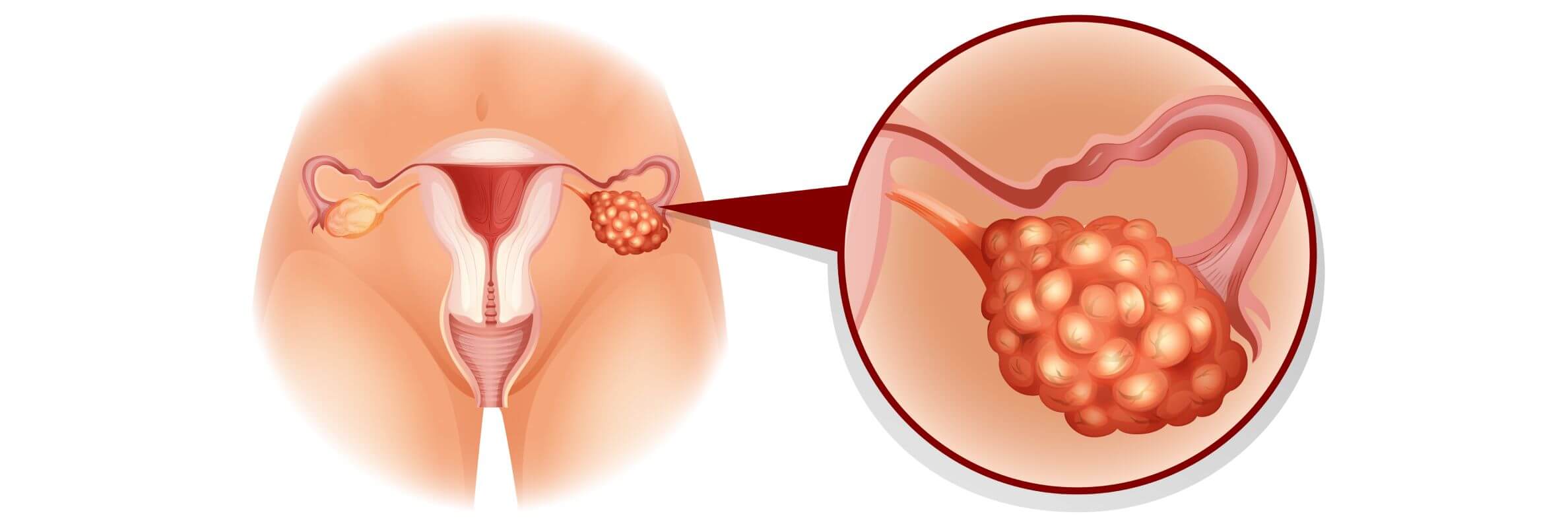
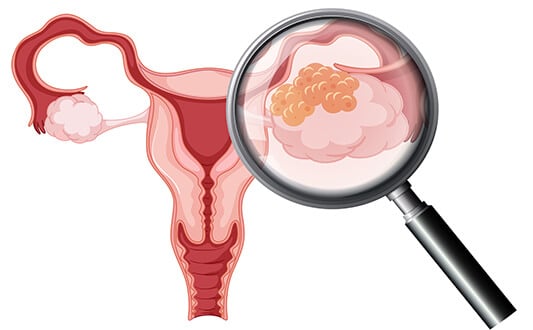
Ovarian cancer develops in the ovaries and can be named a "silent mirror", because the early symptoms are often non-specific. This leads to late diagnostics when cancer is already in the advanced stage [4].
Types of Ovarian Cancer
These tumors differ in the type of cells. The first type is epithelial cancer, which starts from the cells that cover the surface of the ovaries and accounts for nearly 90% of all ovarian cancers [5, 6]. There are a few subtypes of epithelial cancer:
High-grade serous carcinoma,which is the most common and aggressive form
Low-grade serous carcinoma,a slow-growing type
Endometrioid carcinoma,which can originate from endometriosis cells
Clear cell carcinomais also linked to endometriosis and has a low response to chemotherapy
Mucinous carcinomais a rare type that can be diagnosed early
The second type is the germ cell tumors, which take their start from the reproductive cells themselves and make up about 2% of all ovarian cancers [6]. They often develop in young women and differentiate into dysgerminomas and yolk sac tumors [5, 6].
The third type is called sex cord-stromal tumors, such as granulosa cell tumors and Sertoli-Leydig cell tumors [5-7]. They originate from the connective tissue in the ovaries and can produce hormones.
Stages of Ovarian Cancer
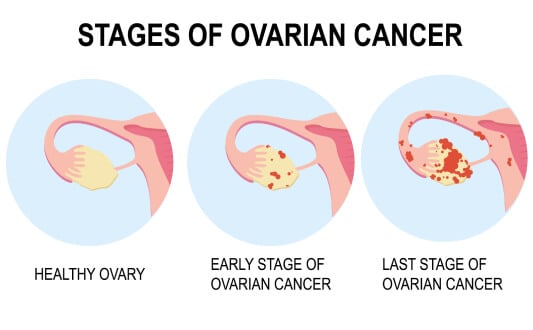
The staging of ovarian cancer is as follows:
Stage I: The tumor is found in one or both ovaries only.
Stage II: The cancer has spread to the pelvic organs, such as the uterus, fallopian tubes, bladder, and rectum.
Stage III: The cancer had spread either to the abdominal cavity or the lymph nodes.
Stage IV: Cancer has metastasized to other parts of the body, such as the liver or lungs.
If ovarian cancer is detected early, the survival rates can be greatly improved. The 5-year survival rate is approximately 89% for stage I diagnosis and around 71% for stage II. But, due to the fact that ovarian cancer often does not cause any symptoms early in the course of the disease, the 75% of women are diagnosed at later stages. For stage III, survival rates fall up to 40%, and for stage IV, they are about 20% [6, 8].
Unfortunately, there are no screening programs for women to detect ovarian cancer early, which is why it is important to notice symptoms and signs like ongoing bloating, pelvic or abdominal pain, and any changes in your urinary habits and discuss them with your physician.
Why Choose Germany for Ovarian Cancer Treatment?
When looking for the best treatment options for ovarian cancer patients often seek high medical standards and personalized care. Germany’s healthcare system is a perfect combination of both. Some of the advantages of cancer treatment in Germany are:
Quality controlHospitals in Germany are strictly regulated regarding medical care and patient outcomes, and are certified and supervised by organizations such as the German Cancer Society.
Modern technologiesThe hospitals are equipped with advanced diagnostic and treatment instruments, such as PET scanners for imaging and robotic surgical systems that enable minimally invasive procedures.
Experienced medical staffGerman healthcare centers have experienced oncologists and gynecologic oncology departments that focus on the latest care.
Access to researchMany hospitals work closely with universities that offer access to scientific programs. This enables patients in Germany to receive innovative ovarian cancer therapies, such as dendritic cell immunotherapy.
Personalized approachGerman centers prioritize individualized strategies that take into account tumors' specific characteristics and spread to optimize outcomes for each patient's needs.
Choosing Germany for treatment of ovarian cancer provides patients with a personalized and modern approach that blends innovation with precise care. This combination helps improve both survival rates and quality of life.
Clinics in Germany are famous for providing women with ovarian cancer access to advanced technologies, multidisciplinary teams, and treatment tailored specifically for each patient. They offer procedures that require the latest tools and equipment that are not widely available in the rest of the world.
Booking Health assists patients in overcoming the limitations of local healthcare systems and provides them with an opportunity to access premium oncology programs in Germany. We provide not only consultations but also a full sequenced treatment path, assistance with travel and visas, and personal support during and after treatment.
Standard Treatment Options for Ovarian Cancer in Germany
Standard procedures for ovarian cancer treatment cannot be so beneficial for patients when used as a standalone approach. German hospitals provide an individualized combination of conventional therapies and modern technologies to improve outcomes and quality of life. Here, we present some of the primary treatment modalities available in German cancer clinics.
Ovarian cancer surgery in Germany is a crucial step to complete recovery. Hospitals in Germany are specializing in modern surgical interventions that are aimed at removing as much cancer as possible. So when a tumor is in the early stage, it can be fully resected with the use of minimally invasive procedures like laparoscopy and robotic surgery. They are performed with small incisions, which helps reduce the recovery period and return to usual activities more quickly.
In cases of advanced ovarian cancer, there may be a need for extensive debulking surgery, which consists of the removal of all the visible tumor tissue. It can also include the resection of the ovaries, tubes, uterus, and surrounding organs.
Research shows that around 85% of ovarian cancer surgeries in Germany are performed using laparotomy methods. However, there is a trend moving towards minimally invasive techniques, which have a lower in-hospital mortality rate of 0.4% compared to 2.9% for open surgeries [9].
Chemotherapy for Ovarian Cancer
This kind of systemic therapy is usually added to the treatment plan after the surgery to kill the remaining cancer cells. In addition to modern chemotherapy strategies, oncology centers in Germany prioritize the well-being and efficacy of patient treatment.
Some of the things to know about chemotherapy for ovarian cancer in Germany:
Treatment is administered in cycles to allow normal cells to recover and to reduce toxicity.
Dose-dense scheduling: smaller, more frequent doses may improve outcomes in some cases.
Combination with innovative techniques: hyperthermic intraperitoneal chemotherapy (HIPEC) is often combined with chemotherapy during surgery to achieve a better local effect.
This enables German clinics to achieve international recognition for the use of chemotherapy in advanced, individualized treatment concepts.
Targeted Therapy for Ovarian Cancer
Targeted therapy has transformed ovarian cancer treatment by focusing on specific biological mechanisms that allow cancer cells to grow and spread. Unlike traditional chemotherapy, targeted therapies aim to minimize damage to healthy tissues while disrupting cancer development.
In Germany, targeted therapies are a part of advanced ovarian cancer treatment strategies, often used alongside or after initial treatments to extend remission periods and improve survival rates.
During the course of treatment of ovarian cancer, targeted therapy is meant to impact the particular mechanisms in the cell division cycle, which make it possible for cancer to grow and multiply. Unlike chemotherapy, which does much damage, targeted drugs do not affect healthy surrounding tissues. German cancer centers use targeted therapy in the treatment strategies for advanced ovarian cancer to prolong remission and improve survival rates in all stages of the disease.
When receiving targeted therapy for ovarian cancer in Germany, you can expect:
High precision.These drugs target only the tumor proteins that are involved in the cell division cycle.
Lower side effects.The therapy helps spare healthy tissues.
Improved remission.The disease progression is often blocked thanks to high personalization.
Integration with standard therapies.It is often used in combination with surgery or chemotherapy, delivering a more comprehensive and effective treatment approach.
The latest advancements in targeted therapy can be available for the patients in leading German clinics as part of a personalized treatment plan.
Radiotherapy for Ovarian Cancer
While it is not a part of usual ovarian cancer care, radiation therapy can be a great addition to the management of advanced cases with a palliative approach to reduce symptoms and deal with bleeding and pain. It can significantly improve patients' quality of life and help to make life more fulfilling even when the disease has metastasized.
Advanced techniques such as helical tomotherapy were developed to minimize damage to surrounding organs and provide better control over dosage.
The timing of the procedures influences the course of treatment and response significantly. The sooner you can start your personalized treatment, the more efficient it will be. Molecular diagnostics and comprehensive body scanning provide experts with all the information needed to develop a treatment plan just for you.
Booking Health helps patients to find the next step when standard options no longer provide results.
Innovative and Advanced Therapies for Ovarian Cancer
HIPEC (Hyperthermic Intraperitoneal Chemotherapy) for Ovarian Cancer
HIPEC is an advanced treatment where heated chemotherapy drugs are administered directly into the abdominal cavity after cytoreductive surgery. It targets residual cancer cells in patients with advanced tumors.
HIPEC can be performed in special centers in Germany. Their studies reported an increase in median survival up to 35 months in patients who underwent complete tumor removal with further HIPEC and additional systemic therapy [10, 11].
Electrochemotherapy (ECT) Treatment for Ovarian Cancer
ECT for ovarian cancer works exactly where tumor is localized. It uses local electrical pulses to open pores in cancer cell membranes – when cells are vulnerable, chemotherapy floods in at concentrations virtually impossible with IV treatment.
Electrochemotherapy in gynecological cancer is carried out as follows: electrodes positioned around tumor, computer-controlled pulses delivered under anesthesia, cancer cells become permeable. High-dose chemotherapy is administered through arterial catheters during isolated perfusion – drug uptake increases exponentially. Electro-chemotherapy action is based on difference: malignant cells are more vulnerable to electrical pulses than healthy tissue.
After 15-minute perfusion under hypoxic conditions, chemofiltration removes excess drugs – side effects are minimal, patients walk around clinic same afternoon. The method is particularly effective for peritoneal carcinosis resistant to chemo regimens.
The cost of electrochemotherapy is available through Booking Health website. Electrochemotherapy cost may differ in healthcare facilities based on their location and level.
Regional Chemotherapy for Ovarian Cancer
Regional chemotherapy for ovarian cancer delivers concentrated drugs directly to tumor. Professor Aigner uses cooking analogy: when he cooks with same ingredients as his wife, his dish isn't as tasty – so, it's essential to know exactly how to do it right. And he knows how to properly administer chemotherapy because he's been doing it for almost 45 years.
Hypoxic isolated abdominal perfusion has the following stages: balloon catheters isolate abdominal circulation, chemotherapy drugs are injected as bolus. Fifteen minutes under hypoxic conditions and then chemofiltration removes drugs, preventing undesired systemic toxicity.
Regional chemotherapy in Germany at Medias Klinikum Burghausen shows such results: 107 patients, median survival 11.9 months (drug-refractory cases), response rates 69%, quality of life improved 74%. Professor Aigner performed 20,000+ procedures – no one else worldwide has that experience.
EXPERT
Professor Karl Reinhard Aigner
Oncology, Regional Chemotherapy, Oncological Surgery
Professor Karl Reinhard Aigner pioneered combining arterial perfusion with electrooration, he performed over 20,000 procedures throughout his career.
Immunotherapy for Ovarian Cancer: Dendritic Cell Therapy
Dendritic cell vaccination (DCV) is a modern type of immunotherapy that is becoming a growing innovation in the management of ovarian cancer. The process starts from harvesting patients’ own dendritic cells from the blood, and in laboratory settings, they are exposed to tumor antigens without the harmful influence of the tumor microenvironment. This helps these antigen-presenting cells develop properly, and when administered back as the vaccine, stimulate an active immune response against cancer cells.
The role of dendritic cells was discovered by Ralph Steinman, who was awarded the Nobel Prize in Physiology or Medicine in 2011, laying the foundation for the development of cancer vaccination. DCV is known as a safe and beneficial procedure that has been shown in numerous scientific studies. One of them indicates that the combination of a cancer vaccine and chemotherapy prolongs overall survival by 13.4 months [12].
FAPI PET Imaging and FAPI-Based Therapy for Ovarian Cancer
Ovarian cancer's tendency to scatter small foci across peritoneal surfaces is precisely what makes standard imaging insufficient for treatment planning — and what makes FAPI PET for ovarian cancer a clinically meaningful addition to the diagnostic picture. The tracer binds to fibroblast activation protein in tumor stroma rather than glucose metabolism, producing cleaner contrast in the abdomen where FDG background activity is highest. FAPI PET/CT for ovarian cancer has shown particular value in identifying peritoneal deposits that influence whether HIPEC, PIPAC, or cytoreductive surgery is the appropriate next step.
Because the scan measures FAP expression directly, FAPI PET CT for ovarian cancer also determines whether FAPI therapy for ovarian cancer — pairing the molecule with Lutetium-177 — is biologically viable for a specific patient. Booking Health's case review identifies where this imaging adds value and connects patients with German centers offering both the scan and, where uptake confirms it, the therapy.
Personalized Medicine for Ovarian Cancer
Each tumor has its own unique characteristics in terms of genetic and biochemical markers. Personalized medications are tailored specifically to match and effectively target ovarian cancer cells. Each patient undergoes comprehensive genome profiling as well as biomarker identification. This provides clinicians with valuable information about the tumor and helps in selecting targeted therapies that will be more effective and cause fewer side effects.
German cancer clinics have fully integrated this approach into everyday practice. Almost 80% of patients are offered genetic testing when they are just diagnosed with ovarian cancer [13]. This process helps make more effective clinical decisions and improve outcomes even in women with advanced tumors.
With so many therapy options available, it can be hard to choose the right clinic on your own. Finding the "perfect match" requires understanding the annual caseload for the specific procedure and its success rate, not just its online reputation.
Booking Health's physician-level case matching offers just that. It ensures you get a response within 24 hours after sending your records.
We provide a thoughtful recommendation based on procedural experience and published results for the specific diagnosis.
Best Hospitals for Ovarian Cancer Treatment in Germany
The effectiveness of ovarian cancer therapy largely depends on the right choice of medical institution. Booking Health cooperates with leading cancer centers in the world which implement modern treatment approaches. Such clinics are distinguished by high standards of medical care, significant experience of gynecological oncologists and wide application of innovative technologies (including alternative ovarian cancer treatment in Germany).
International patients choose these institutions not only because of stable clinical results, but also due to the presence of international certifications (JCI, ISO) and orientation to the individual needs of each woman. A special place among them is occupied by ovarian cancer treatment centers in Germany which combine academic medicine with advanced clinical protocols.
Best Hospitals for Ovarian Cancer Treatment in Germany
Hospital
Location
Features
University Hospital Ulm
Ulm
Advanced gynecologic oncology, HIPEC, personalized care
Asklepios Hospital Barmbek Hamburg
Hamburg
Multidisciplinary approach, certified oncology center
University Hospital Rechts der Isar Munich
Munich
Comprehensive gynecologic oncology, minimally invasive surgery and access to research
University Hospital Tuebingen
Tuebingen
Specialized ovarian cancer center, clinical research and individualized treatment strategies
LDG Laboratories Dr. Gansauge
Berg
Dendritic cell immunotherapy and other innovative immunological approaches
University Hospital Essen
Essen
Robotic-assisted gynecologic surgeries, advanced oncology care and multidisciplinary treatment planning
University Hospital Ulm
The University Hospital Ulm is one of the leading centers in Germany for the treatment of complex oncological and gynecological cases. A multidisciplinary approach to the treatment of ovarian cancer in Germany is used here, including cytoreductive surgery, HIPEC and individually selected systemic therapy regimens. Treatment is planned taking into account the stage of the disease and the molecular characteristics of the tumor. The clinic's active participation in international research opens up access to new therapeutic protocols for patients, which allows it to be considered the best ovarian cancer hospital in Germany for many international patients.
Asklepios Hospital Barmbek Hamburg
Asklepios Hospital Barmbek in Hamburg has the status of a certified oncology center and significant experience in the treatment of tumors of the female reproductive system. The main emphasis is on teamwork of specialists of different profiles, which allows achieving stable results even in complex clinical situations. The clinic actively implements ovarian cancer treatment options in Germany, in particular modern targeted drugs and cellular techniques. Patients undergo a full cycle of treatment – from accurate diagnosis to long-term observation.
University Hospital Rechts der Isar Munich
The Rechts der Isar Clinic at the Technical University of Munich combines academic medicine with extensive practical experience in the treatment of cancer patients. The Gynecological Oncology Center specializes in minimally invasive interventions and complex cytoreductive surgeries. Access to international research and new clinical protocols allows the clinic to be included in the list of best hospitals for ovarian cancer treatment in Germany – where therapy is planned taking into account the histology of the tumor.
University Hospital Tuebingen
The University Hospital of Tübingen is known for its scientifically oriented approach to the treatment of cancer. Close cooperation with research institutes allows for the rapid introduction of new therapeutic strategies into clinical practice. It is here that the areas that form the best ovarian cancer treatment in Germany are actively developing – including innovative methods and patient participation in research programs.
LDG Laboratories Dr. Gansauge
Headed by Dr. Frank Gansauge, LDG Laboratories offers innovative dendritic cell therapy, making it a leader in immunotherapy for ovarian cancer Germany offers. The clinic’s focus is on high personalization and precision in cell-based therapies, with dendritic cell vaccination being their primary specialization. They offer every patient a chance to take control over their disease with options beyond standard chemotherapy and surgery.
University Hospital Essen
University Hospital Essen is ranked among the top hospitals for ovarian cancer in Germany. The hospital focuses on robotic-assisted gynecologic surgeries led by its department head, Prof. Dr. Klaus Rainer Kimmig. His extensive experience with minimally invasive procedures ensures patients recover quickly.
Our patients leave high reviews of Essen University Hospital, especially for the personalized approach, care, and support throughout the treatment journey. This results in improved quality of life and better tumor control.
Patient Story: Gretta Gasparian's Experience
Hospitals in Germany are very good at managing patients with advanced cancer. People from all over the world seek the best care they can get. German clinics have all the tools, so that women with ovarian cancer are able to achieve the best possible outcomes.
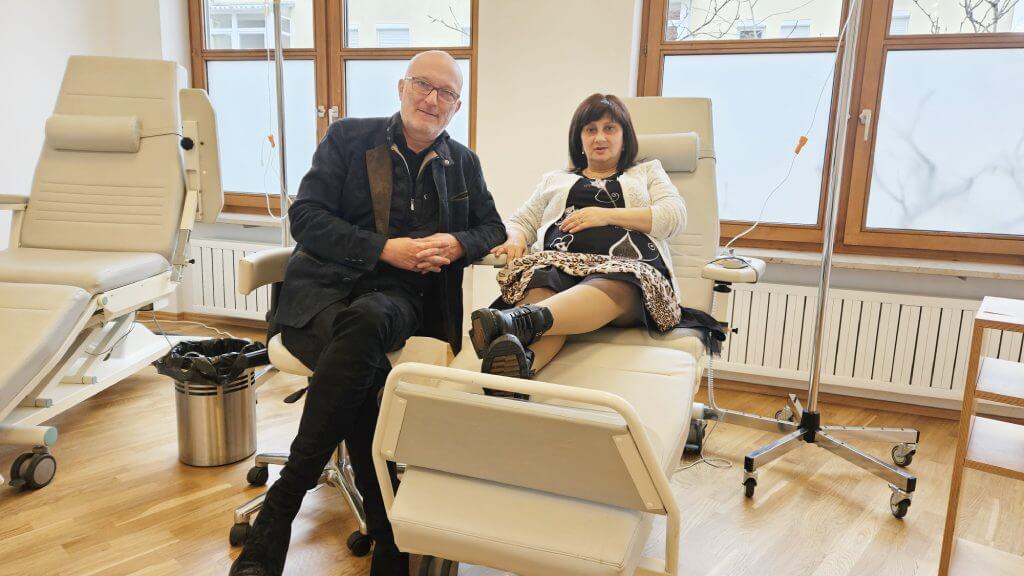
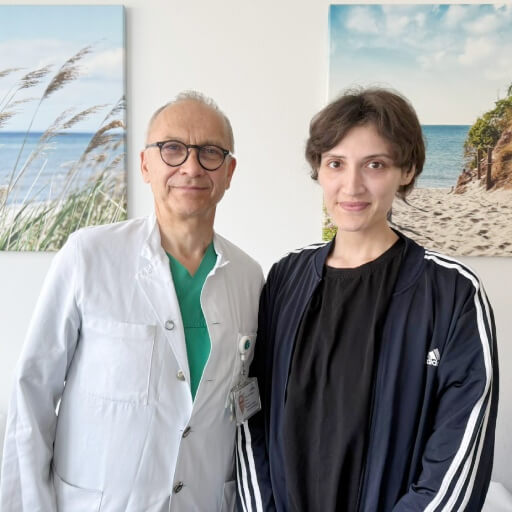
Gretta Gasparian was diagnosed with stage 4 ovarian cancer. She traveled from Russia to receive dendritic cell therapy at LDG Laboratories, Dr. Gansauge. Booking Health helped Gretta to access the clinic in a timely manner. She was amazed by the team's support and assistance during her entire journey. Gretta received help with medical documentation, visa, and translation on-site. Dr. Gansauge provided personalized care when receiving dendritic cell vaccination. She is now feeling much better with improved quality of life and fewer symptoms, even though her tumor is advanced. Gretta’s story encourages women from all around the world to remain hopeful and seek options that can help them spend more time with their family and friends.
Gretta Gasparian and Prof. Gansauge
Ovarian Cancer Treatment Costs
The cost of ovarian cancer treatment in Germany is based on criteria such as the selected hospital and therapies required. When deciding to receive treatment in Germany, you will receive only transparent prices and high-quality care. Women are also provided with a detailed treatment plan and cost estimates.
Below you can take a look at the comparison between standard and innovative therapies, as well as prices of ovarian cancer treatment around the world.
Comparative Table: Ovarian Cancer Treatments
Booking Health data
Therapy Type
2-Year Survival Rate
Response Rate
Duration
Side Effects
Standard Treatment
~25% for advanced cancer
Less than 10%
Several cycles
Severe (nausea, fatigue, hair loss, immunosuppression, skin irritation)
Innovative Methods
~60% for advanced cancer
45-65%
Up to 4 sessions
Mild (localized discomfort)
Patients considering advanced treatment for ovarian cancer abroad often compare countries based on technology, access to innovation, and cost. Here is a comparison of Germany with other popular medical tourism destinations:
Medical Procedures Costs for Ovarian Cancer
*Prices may vary depending on the course of treatment and tumor characteristics
Treatment Method
GERMANY*
GB
USA
Standard Treatment
€80,000 - €150,000 full course
€90,000 - €165,000 full course
€100,000 - €180,000 full course
Innovative Methods
€25,000 - €60,000 full course
€70,000 - €120,000 full course
€100,000 - €150,000 full course
When considering treatment abroad, patients often have a fear of high prices, especially when their diagnosis requires comprehensive integration of different procedures like surgery, immunotherapy, or minimally invasive chemotherapy. Costs depend on disease stage and treatment intensity. But it’s so important to know what you’ll pay and to have a plan so you’re not surprised and everything goes smoothly with your care.
Booking Health offers patients a clear treatment plan and a full cost breakdown. Transparent prices for patients – no hidden fees. This is made possible through direct contracts with leading German hospitals.
Medical Travel Support for Ovarian Cancer with Booking Health
In recent years, ovarian cancer treatment has shifted to the use of modern technologies, minimally invasive procedures, and personalized targeted therapies, which can be accessed by patients from all around the world in Germany. Modern hospitals, multidisciplinary teams, treatments like HIPEC, DCV, or electrochemotherapy are giving patients a chance at recovery, no matter what stage of cancer they are diagnosed with.
Booking Health offers comprehensive support to international patients, managing all aspects of their medical journey. This includes organizing consultations and hospital admissions, helping with paperwork and visas, and professional medical translation. Booking Health takes care of all logistics so that the patient can concentrate on their recovery.
Booking Health helps with:
Evaluation and review of medical reports
Development of the healthcare program
Choosing an appropriate site for treatment
Preparing medical documents and sending them to an appropriate clinic
Initial consultations with clinicians to develop medical care programs
Guidance from professionals during your hospital stay
Follow-up care once the patient has returned to their home country
Handling the formalities involved in preparing for the medical care program
Managing and arranging the patient's stay abroad
Support with visa applications and ticket bookings
A personal coordinator and interpreter available 24/7 for support
Clear budgeting that reveals all costs upfront
Get in touch with Booking Health to receive a consultation from a medical expert so that you can begin your treatment as soon as possible and receive the most favorable outcomes.
Modern Cancer Treatment: Patient Journeys with Booking Health
Sarah M. (United Kingdom), April 2026
Diane O. (United Kingdom), March 2026
Faeqa M. (Bahrain), March 2026
Joy F. (United Kingdom), January 2026
Patricia J. (USA), November 2025
Monica A. (Croatia), October 2025
Eliza A. (Armenia), June 2025
Susan Clark L. (USA), April 2025
Frequently Asked Questions About Ovarian Cancer Treatment in Germany
What are the treatment options for ovarian cancer in Germany?
Patients can receive innovative therapies for ovarian cancer. Germany offers highly effective care, including standard treatments such as surgery, chemotherapy, and targeted therapy, as well as advanced treatments such as HIPEC (hyperthermic intraperitoneal chemotherapy) and dendritic cell immunotherapy.
How much does ovarian cancer treatment cost in Germany?
The cost of ovarian cancer treatment in Germany can be €20,000 to €50,000. It depends on the complexity of your diagnosis and the procedure. This price includes additional diagnostics, consultations, treatment itself, and follow-up care.
What hospitals in Germany are best for ovarian cancer treatment?
Asklepios Hospital Barmbek is one of the best hospitals with experience in gynecology and oncology. Also, LDG Laboratories is a leader in providing women with ovarian cancer access to advanced cell-based therapies.
Can international patients receive treatment for ovarian cancer in Germany?
Yes, many international patients travel to Germany to access advanced therapies. Booking Health helps to make this process easier and arrange your stay in another country, as well as the entire treatment process.
Is HIPEC available for ovarian cancer in Germany?
Yes, patients can undergo advanced procedures like HIPEC in German clinics. It is a great option for cases with metastatic and locally advanced ovarian cancer.
What's the success rate of ovarian cancer treatment in Germany?
German hospitals report a success rate of up to 90% with personalized therapies and prompt use, which is one of the highest in Germany.
How to start treatment in Germany for ovarian cancer?
To access the best available options quickly, contact Booking Health. We organize every step of your treatment journey, from documentation to post-treatment rehabilitation.
What symptoms does ovarian cancer show?
Persistent bloating, pelvic or abdominal pain, feeling full quickly, urinary changes, unexplained weight loss – all are non-specific manifestations.
What are the costs of ovarian cancer treatment in different countries?
Germany: €20,000-€50,000 – the best balance of cost and innovative care. Great Britain offers €90,000-€165,000 (standard) / €70,000-€120,000 (innovative). USA: €100,000-€180,000 (standard) / €100,000-€150,000 (innovative). You can find prices you need on the Booking Health website.
What is the 2-year survival rate (standard vs innovative)?
Standard treatment for advanced disease has a survival rate ≈ of 25% at 2 years. Innovative methods (HIPEC, dendritic cell therapy, etc.) raise this to about 60%.
What is the response rate (standard vs innovative)?
Standard therapies show <10% response in advanced cases. Innovative approaches typically achieve a roughly 45-65% response.
What is the typical treatment duration (standard vs innovative)?
Standard therapy takes multiple cycles over several months. Innovative protocols are often completed in a few sessions.
What side effects occur (standard vs innovative)?
Standard treatment causes severe systemic effects (nausea, fatigue, hair loss, immunosuppression). Innovative methods cause mostly mild, localized and short-term reactions.
What is the most effective treatment for ovarian cancer?
In Germany advanced ovarian cancer treatment combines HIPEC, PIPAC, dendritic cell therapy, regional chemotherapy and interventional radiology – treatment plans are personalized to the patient’s tumor profile and overall health.
What country is the best for ovarian cancer treatment?
Germany offers leading care for stage 4 ovarian cancer. Here specialized centers provide advanced diagnostics and treatments demonstrating some of the best results worldwide.
How do I choose a reliable clinic for ovarian cancer in Germany?
You need to take into account hospitals' specialization, available treatments, and whether or not they offer services for international patients. To navigate this complex path, contact Booking Jealth and let us handle all the organization so that you can focus on your recovery.
Are there hospitals in Germany specializing in late-stage ovarian cancer?
Yes, the best hospitals for ovarian cancer treatment in Germany provide care for patients with advanced tumors, which are aimed at reducing symptoms and maintaining the quality of life as much as possible.
Choose treatment abroad and you will for sure get the best results!
Authors:
This article was edited by medical experts, board-certified doctors Dr. Nadezhda Ivanisova, and Dr. Yana Dmytryshyn. For the treatment of the conditions referred to in the article, you must consult a doctor; the information in the article is not intended for self-medication!
Our editorial policy, which details our commitment to accuracy and transparency, is available here. Click this link to review our policies.
04. Sindhu Sekar, Srividhya Budithi, Sujeewa Fernando. Trends in the incidence and mortality of cervical, ovarian, and corpus uteri cancers in Wales, UK: A joinpoint regression analysis from 2002 to 2021. Cancer Epidemiol. 2024 Dec:93:102660. doi: 10.1016/j.canep.2024.102660. Epub 2024 Sep 10.[DOI][PubMed]
05. Ovarian Cancer Research Alliance.Ovarian Cancer. Published 2024.
06. National Ovarian Cancer Coalition.Types and Stages. Published 2024.
09. Pietro Trocchi, Pawel Mach, Karl Rainer Kimmig, Andreas Stang. Ovarian cancer surgery in Germany: An analysis of the nationwide hospital file 2005–2015. Womens Health (Lond). 2022 Jan-Dec:18:17455065221075903. doi: 10.1177/17455065221075903.[DOI][PubMed]
10. Edin Karabeg, Philipp Harter. Expert commentary on HORSE/MITO18 and CHIPOR. J Gynecol Oncol. 2025 Mar 19;36(2):e87. doi: 10.3802/jgo.2025.36.e87.[DOI][PMC free article]
11. Philipp Harter, Gerhard Bogner, Luis Chiva et al. Statement of the AGO Kommission Ovar, AGO Study Group, NOGGO, AGO Austria, Swiss AGO, BGOG, CEEGOG, GEICO, and SFOG regarding the use of hyperthermic intraperitoneal chemotherapy (HIPEC) in epithelial ovarian cancer. Bull Cancer. 2024 Mar;111(3):277-284. doi: 10.1016/j.bulcan.2023.02.011.[DOI][PubMed]
12. David Cibula, Lukas Rob, Peter Mallmann et al. Dendritic cell-based immunotherapy (DCVAC/OvCa) combined with second-line chemotherapy in platinum-sensitive ovarian cancer (SOV02): A randomized, open-label, phase 2 trial. Gynecol Oncol. 2021 Sep;162(3):652-660. doi: 10.1016/j.ygyno.2021.07.003.[DOI][PubMed]
13. Bich Doan Nguyen-Sträuli, Joanna Baum, Philipp Meyer-Wilmes et al. Survey on implementation of molecular testing in ovarian cancer and PARP inhibitor: a national North-Eastern German Society of Gynecologic Oncology/Young Academy of Gynecologic Oncology/Arbeitsgemeinschaft Gynäkologische Onkologie intergroup analysis. Int J Gynecol Cancer. 2022 Oct 3;32(10):1297-1302. doi: 10.1136/ijgc-2022-003637.[DOI][PubMed]
thank you for reaching out! One of our medical advisors is currently reviewing your details. You can expect a call from us within one business day to discuss your request.
Note: The incoming call will appear as a German number or your local area code. This call is entirely free of charge.
Booking Health guarantees:
Expert Placement
We use rigorous statistical analysis to ensure you are treated at the best-rated facility for your specific diagnosis.
Total Cost Protection
No hidden fees or unexpected bills. We provide a fixed price guarantee, backed by insurance that covers any additional complications.
12-Month Extended Care
Your recovery is our priority. Benefit from a full year of direct medical support following your procedure.