The central nervous system (CNS) disorders are a rare group of diseases that can affect people of all ages. Even with decades of research about the etiology of pediatric and adult brain tumors, there is no single risk factor to be found that leads to the development of pediatric and adult brain tumors in a significant proportion of cases. There are over 100 histopathologic types of these tumors, according to the WHO's International Classification of Diseases in Oncology, making brain malignancies histologically and clinically complex [1].
Like other malignancies, brain tumors display the classic cancer hallmarks—dysregulated cell growth, metabolic changes, new blood vessel formation, and tissue invasion [2–3]. This has boosted the development of accurate and minimally invasive treatment options by neurooncologists [4].
In recent years, Gamma Knife surgery has become an advanced and innovative modality of treatment for brain lesions, where effective tumor control is achieved without the need for open craniotomy. This non-invasive Gamma Knife procedure enables accurate delivery of radiation to the diseased brain tissue with significant improvement in outcomes in patients diagnosed with brain malignancies.
Understanding Brain Tumors: Pathophysiology and Risk Factors
The brain is a highly complex organ, and even small changes in its cells can cause serious disruptions to important neurological functions. Brain tumors develop when abnormal cells multiply without control, creating lumps in the brain’s tissues. These lumps put pressure on surrounding brain structures and disrupt important functions such as movement, speech, and thinking. Despite the many advances in the use of radiation and surgery to treat brain tumors, there are significant challenges due to the delicate nature of the brain, especially for deep-seated tumors or those that are present in multiple locations throughout the brain.
Pathophysiology of Brain Tumors
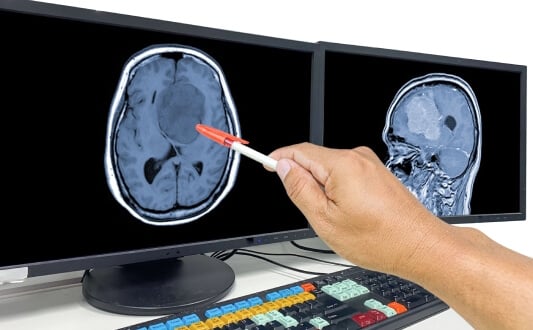
The majority of brain tumors originate from glial, meningeal, or nerve cells that undergo genetic changes altering growth control and apoptosis. The aberrant growth of these cells leads to tumor growth, which can infiltrate surrounding normal tissue or increase intracranial pressure. Both benign brain tumors and malignant brain tumors can cause signs of severe loss of neurological function, unless their size, location, and rate of growth have been controlled with surgery or radiation therapy. In the modern treatment program, precise imaging such as magnetic resonance imaging (MRI) helps specialists determine where to direct treatment. Also, this kind of imaging helps differentiate between types of tumors and develop the most effective treatment methods, including Gamma Knife radiosurgery.
Types of Brain Tumors
The World Health Organization (WHO) has identified over one hundred histological subtypes of primary brain tumors一they can be broadly classified as either benign brain tumors (such as meningioma and pituitary adenoma) or malignant (including glioblastoma multiforme and metastatic brain cancer). Brain metastases from other cancer sites typically require a multidisciplinary approach with input from radiation oncology, neurosurgery, and radiology to optimize local control of the brain metastases while minimizing impact on the patient's neurological function.
Risk Factors and Epidemiology
Although there is a large body of knowledge on the subject of CNS tumors, little is known about what causes them. Risk factors are thought to be, at least partially, due to exposure to ionizing radiation, genetic syndromes (Li-Fraumeni syndrome, neurofibromatosis), and possibly, in some rare instances, environmental effects. While it is true that there are many sporadic instances of CNS tumors where an identifiable cause cannot be established, this lack of understanding makes it especially important to continue with additional research and to utilize advanced treatment options such as the Gamma Knife surgery to provide targeted radiation treatment to tumor sites without damage to adjacent, normal tissue.
While brain tumors may be a wide and heterogeneous group of neoplasms, they all require highly specialized and precise treatment strategies. It is due to the fact that they are often located near the delicate brain structures that regulate vital functions.
To be able to access the best care possible, reach out to Booking Health. We specialize in organizing treatment abroad for patients with all types of brain tumors.
Once you submit your documentation, our medical experts will contact you within 24 hours with a personalized treatment plan and recommended diagnostic tests to ensure you receive the care quickly and effectively.
What Is Gamma Knife Radiosurgery
Gamma Knife radiosurgery has dramatically altered the approach to managing brain tumors for the last few decades, as it is a high-precision, minimally invasive treatment for brain tumor patients when compared with traditional forms of surgery for brain tumors [5]. This advanced radiation therapy technique is called "surgical", but it involves no actual surgical incision.
Principle of Gamma Knife Radiosurgery
The Gamma Knife for brain tumors delivers over 200 beams from cobalt-60 sources that are focused (narrow) to create a precise radiation field on a target site. Each beam delivers a very low radiation dose and passes harmlessly through normal brain tissue, as the energy is too weak to cause damage on its own. But when all these beams converge to one spot on the target area they add up to a large dose of radiation sufficient to kill cancer cells or to damage abnormal blood vessel formations, like an arteriovenous malformation.
This method enables physicians to accurately treat malignant tumors with precision down to less than a millimeter while avoiding damage to the surrounding brain tissue.
Mechanism and Procedure
The patient's head is fixed in place during the Gamma Knife procedure by either a stereotactic frame or a frameless mask system to provide the highest level of precision possible. In addition to MRI, some physicians will use angiography to help define the precise location, size, and configuration of the lesion. The physician then develops a specific treatment plan based upon this information, which includes defining the target for the treatment and determining the appropriate radiation dosage. Since no incision is made and general anesthesia is not required, the majority of Gamma Knife treatments can be performed as outpatient procedures, and most patients can return home the same day after treatment.
The Gamma Knife delivers excellent results when used as part of multimodal treatment planning. Before the procedure, a comprehensive diagnostic is needed to map tumors, including their location, size, and proximity to critical brain structures. Sometimes the most effective approach is chosen by a multidisciplinary tumor board: radiosurgery, surgery or a combination.
With Booking Health, you will have a complete analysis of all the medical records and imaging data, so nothing will be missed. Based on this assessment, patients leave with specific recommendations for a clinic and specialist team, ensuring treatment decisions are based on clinical accuracy rather than general protocols.
Traditional surgical approaches to remove brain tumors remain the primary method of treatment, but there are certain situations where this may not be possible. Some brain tumors have locations that are too close to important regions of the brain to safely attempt removal using open surgery. In contrast to the invasive nature of traditional brain surgery, the Gamma Knife surgery does not need a craniotomy or general anesthesia.
Key Advantages
No post-operative recovery or hospitalization is required
The Gamma Knife procedure is painless and well-tolerated
Minimal risk of injury to functionally active parts of the brain
Precise targeting with minimal radiation dose to surrounding healthy tissue
Suitable for both benign brain tumors and malignant lesions
Allows treatment of small tumors located deep in the brain
The precision (sub-millimeter) of the Gamma Knife surgery allows surgeons to deliver radiation precisely to the tumor with minimal damage to surrounding healthy tissues and minimal potential side effects. This is especially useful when treating benign tumors such as pituitary adenomas, or when there are arteriovenous malformations that cannot be safely operated on via an open-brain surgical procedure.
While the Gamma Knife surgery has some benefits, it also has limitations. The Gamma Knife stereotactic radiosurgery can only treat small tumors, which generally will not exceed 3 cm in size. Tumors larger than three centimeters in size, or multiple malformations that are too large for treatment by one radiosurgical device, such as CyberKnife, would need additional forms of treatment.
Sub-millimeter accuracy using stereotactic radiosurgery
Depends on surgeon’s skill and access during operation
Effect on Healthy Tissue
Gamma rays focus precisely on the treatment target, sparing healthy tissue
Possible damage to surrounding brain tissue
Risk of Complications
Very low risk of infection or bleeding
Higher risk due to invasive nature
Treatment Session
Usually single treatment session; painless
One or more operations may be needed
Tumor Control
High local tumor control with targeted radiation
Effective for complete tumor removal when possible
Steps of the Gamma Knife Treatment Procedure
The patient doesn’t feel any pain. Some patients experience a feeling of compression in the head, which usually doesn’t cause any noticeable discomfort and quickly goes away. Steps of the Gamma Knife treatment procedure:
A stereotactic frame is fixed on the patient's head.
Diagnostic tests are performed (usually CT or magnetic resonance imaging (MRI), sometimes PET).
A treatment plan is developed based on the data obtained. It takes into account the location of the tumor, the proximity of the functionally active brain tissue, the shape of the tumor, the number of tumors, the position of the patient’s head in space, and the total radiation dose.
The patient is placed on the table.
The table moves into the Gamma Knife machine, where gamma rays irradiate the treatment target to achieve tumor control.
The frame is removed from the patient's head after the Gamma Knife surgery. The places of its attachment are treated with an antiseptic. Then the patient can go home. Patients usually feel well after the Gamma Knife treatment.
This precise stereotactic radiosurgery method ensures protection of surrounding healthy tissue while treating brain tumors, including benign brain tumors and metastatic brain tumors.
German Hospitals Where to Undergo Gamma Knife Treatment
There are several clinics and medical centers in Germany where foreign patients can undergo treatment for a brain tumor with the Gamma Knife machine. Among such clinics are:
Krefeld Gamma Knife Center
Krefeld Gamma Knife Center has the latest equipment in the world for radiosurgery procedures. The innovative Gamma Knife machine is used. It has a high accuracy of direction. It has 192 radiation sources, which allows radiation oncologists to accurately focus the rays, depending on the shape of the tumor.
Aachen University Hospital
There is a Gamma Knife center founded in 1998. The effectiveness of treatment reaches 90%. Here, many patients treated with a Gamma Knife surgery have the same life expectancy as after traditional brain surgery.
Hannover Gamma Knife Center
Experts in the field of neurosurgery and radiation therapy work here. They will remove the brain tumor up to 3 cm in size in one session. Meningiomas, neurinomas, gliomas, pituitary tumors, and brain metastases can be treated at Hannover Gamma Knife Center.
German hospitals are well-known for their expertise in innovative technologies and treatments such as the Gamma Knife. This is usually performed as a single outpatient procedure and does not require open surgery or general anesthesia, making it a great option even for complicated cases or those with limited surgical options.
Booking Health has more than 20 years of international medical experience and an ISO 9001 quality certificate. We help patients to find the best centers specializing in radiosurgery and neuro-oncology in Germany. We are committed to providing reliable, professional care every step of the way, allowing you to focus on what matters most – your health.
The cost of treatment depends on the diagnosis, the general health condition of the patient, the medical center, and other factors. The average cost of treating brain neoplasms with the Gamma Knife surgery is as follows:
A Medical Journey: Every Step of the Way With Booking Health
Finding the best treatment strategy for your clinical situation is a challenging task. Being already exhausted from multiple treatment sessions, having consulted numerous specialists, and having tried various therapeutic interventions, you may be lost in all the information given by the doctors. In such a situation, it is easy to choose a first-hand option or to follow standardized therapeutic protocols with a long list of adverse effects instead of selecting highly specialized innovative treatment options.
To make an informed choice and get a personalized cancer management plan, which will be tailored to your specific clinical situation, consult medical experts at Booking Health. Being at the forefront of offering the latest medical innovations for already 12 years, Booking Health possesses solid expertise in creating complex management programs in each individual case. As a reputable company, Booking Health offers personalized treatment plans with direct clinic booking and full support at every stage, from organizational processes to assistance during treatment.
We provide:
Assessment and analysis of medical reports
Development of the medical care program
Selection of a suitable treatment location
Preparation of medical documents and forwarding to a suitable clinic
Preparatory consultations with clinicians for the development of medical care programs
Expert advice during the hospital stay
Follow-up care after the patient returns to their native country after completing the medical care program
Taking care of formalities as part of the preparation for the medical care program
Coordination and organization of the patient's stay in a foreign country
Assistance with visas and tickets
A personal coordinator and interpreter with 24/7 support
Transparent budgeting with no hidden costs
Health is an invaluable aspect of our lives. Delegating management of something so fragile yet precious should be done only to experts with proven experience and a reputation. Booking Health is a trustworthy partner who assists you in pursuing stronger health and a better quality of life. Contact our medical consultant to learn more about the possibilities of personalized treatment with innovative methods and with leading specialists in this field.
Hope in Cancer Treatment: Patient Success with Booking Health
>
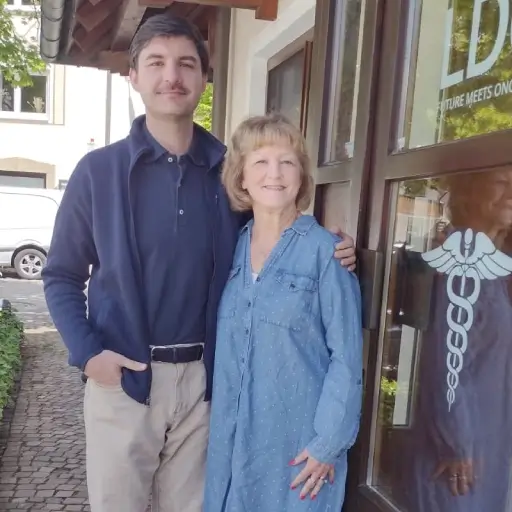
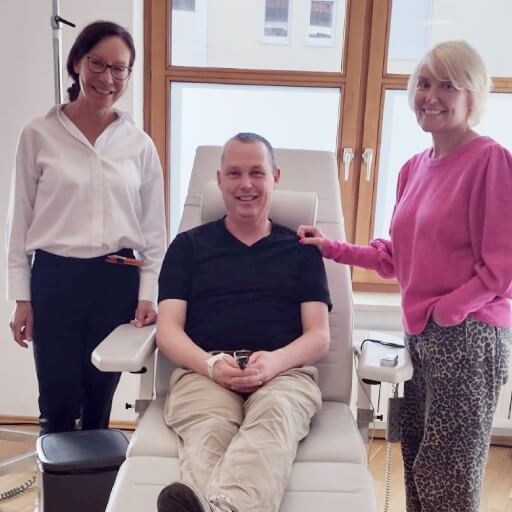
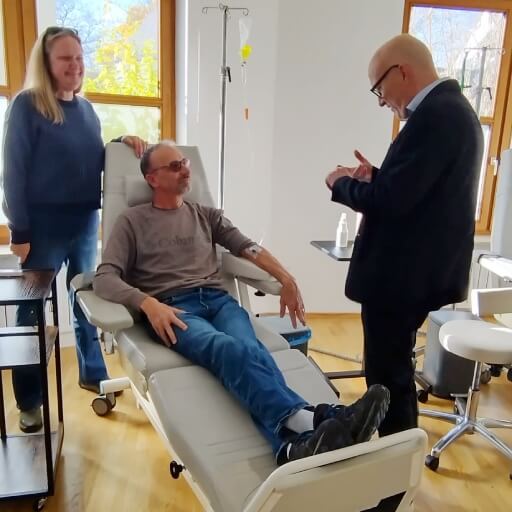
Cynthia B. (Canada), May 2026
Jared Todd M. (USA), February 2026
Anna J. (USA), February 2026
Joy F. (United Kingdom), January 2026
Patrick D. (Ireland), December 2025
Ronald C. (Canada), November 2025
Jean N. (USA), October 2025
Kristijan I. (Croatia), July 2025
Elaine Alexandra W. (United Kingdom), July 2025
Deborah S. (United Kingdom), May 2025
Anthony H. (United Kingdom), April 2025
FAQ: Gamma Knife Radiosurgery
What is Gamma Knife radiosurgery for brain tumors?
Gamma Knife brain tumor radiosurgery definition—it is a non-invasive procedure that uses focused gamma rays to treat brain tumors precisely without the need for an open craniotomy, minimizing damage to surrounding healthy tissue.
How effective is a Gamma Knife on a brain tumor?
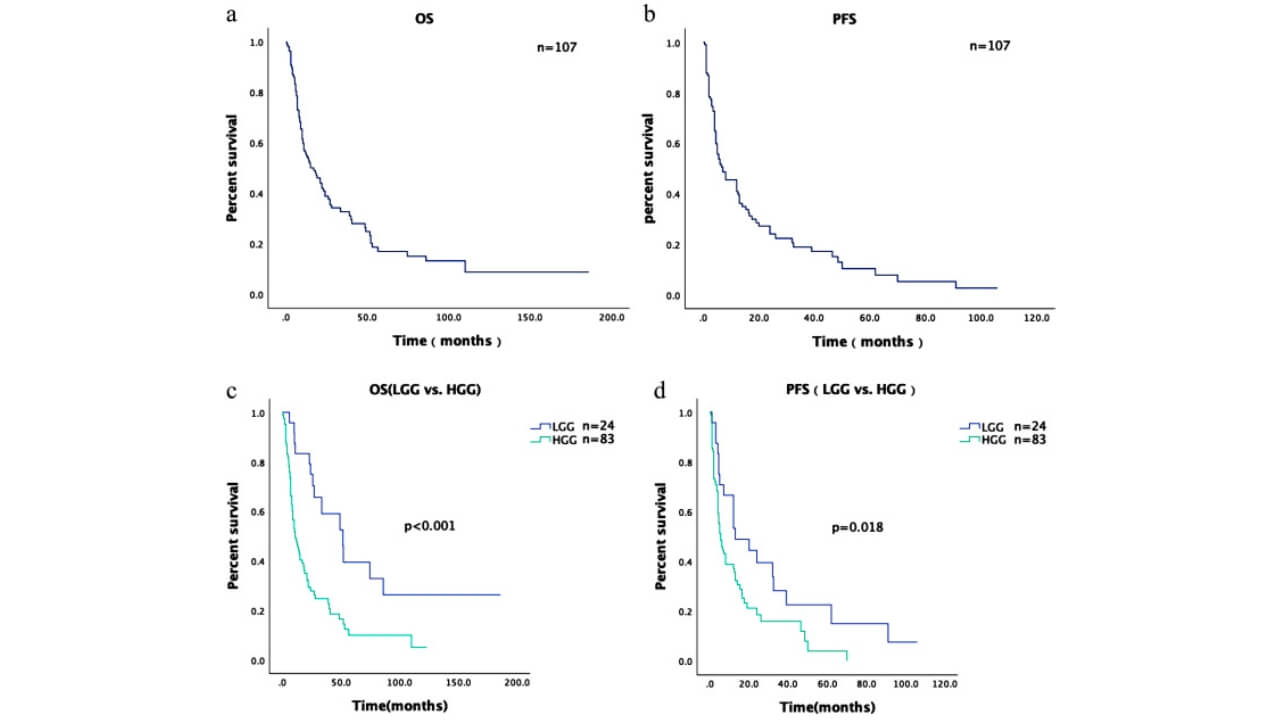
Clinical studies show high local control rates for small brain tumors, including metastatic lesions with minimal recurrence and excellent preservation of neurological function. These results highlight the strong treatment success rates of the Gamma Knife.
What is the recovery time for Gamma Knife brain surgery?
Recovery is minimal. Most patients resume normal activities the same day or within 24 hours, as the procedure steps for the Gamma Knife brain tumor are simple, non-invasive and usually performed as an outpatient intervention.
What are the side effects of Gamma Knife radiation on the brain?
The Gamma Knife functions with exceptional precision, minimizing exposure to surrounding brain tissue. Side effects are rare and mild, such as brief headache or fatigue and usually resolve quickly without complications.
What are the drawbacks of a Gamma Knife?
This technology is most effective for small tumors, typically less than 3 cm in diameter. Larger or irregular lesions exceed the Gamma Knife eligibility size limits and may require open or fractionated radiosurgery.
What is the life expectancy of a person with a brain tumor?
Tumor types largely determine prognosis. Patients with benign or slow-growing tumors often live many years, while aggressive malignant brain tumors carry a shorter life expectancy even with advanced care.
How long does it take a brain to heal after a Gamma Knife?
The Gamma Knife surgery delivers targeted radiation without an incision. Because normal tissue remains intact, the brain usually recovers rapidly and most patients return to routine life almost immediately.
What are the advantages of the Gamma Knife over surgery?
Advantages of the Gamma Knife vs surgery for brain tumors—non-invasive, painless, minimal recovery, precise targeting, reduced risk to critical brain tissue and suitability for deep-seated tumors.
How does the Gamma Knife compare to other radiation methods?
The Gamma Knife delivers converging gamma rays with sub-millimeter precision, sparing healthy tissue more effectively than traditional radiation therapy or linear accelerator systems.
How to start treatment with Booking Health?
To begin, patients contact Booking Health, submit medical records, and receive coordination for diagnostics, a personalized treatment plan and scheduling at a certified Gamma Knife center in Germany.
Choose treatment abroad and you will for sure get the best results!
Authors:
This article was edited by medical experts, board-certified doctors Dr. Nadezhda Ivanisova, and Dr. Yana Dmytryshyn. For the treatment of the conditions referred to in the article, you must consult a doctor; the information in the article is not intended for self-medication!
Our editorial policy, which details our commitment to accuracy and transparency, is available here. Click this link to review our policies.
Sources:
01. David N Louis, Arie Perry, Guido Reifenberger et al. The 2016 World Health Organization Classification of Tumors of the Central Nervous System: a summary. Acta Neuropathol. 2016 Jun;131(6):803-20. doi: 10.1007/s00401-016-1545-1. Epub 2016 May 9.[DOI][PubMed]
02. Douglas Hanahan, Robert A Weinberg. Hallmarks of cancer: the next generation. Cell. 2011 Mar 4;144(5):646-74. doi: 10.1016/j.cell.2011.02.013.[DOI][PubMed]
03. Douglas Hanahan, Robert A Weinberg. The Hallmarks of Cancer. Cell. 2000 Jan 7;100(1):57-70. doi: 10.1016/s0092-8674(00)81683-9.[DOI][PubMed]
04. Quinn T Ostrom, Stephen S Francis, Jill S Barnholtz-Sloan. Epidemiology of Brain and Other CNS Tumors. Curr Neurol Neurosci Rep. 2021 Nov 24;21(12):68. doi: 10.1007/s11910-021-01152-9.[DOI][PMC free article]
05. Shigeo Matsunaga, Takashi Shuto, Masaaki Yamamoto et al. Gamma Knife Radiosurgery for Metastatic Brain Tumors from Malignant Melanomas: A Japanese Multi-Institutional Cooperative and Retrospective Cohort Study (JLGK1501). Stereotact Funct Neurosurg. 2018;96(3):162-171. doi: 10.1159/000489948. Epub 2018 Jul 3.[DOI][PubMed]
06. Ying Sun, Peiru Liu, Zixi Wang et al. Efficacy and indications of gamma knife radiosurgery for recurrent low-and high-grade glioma. BMC Cancer. 2024 Jan 5;24(1):37. doi: 10.1186/s12885-023-11772-8.[DOI][PubMed]
thank you for reaching out! One of our medical advisors is currently reviewing your details. You can expect a call from us within one business day to discuss your request.
Note: The incoming call will appear as a German number or your local area code. This call is entirely free of charge.
Booking Health guarantees:
Expert Placement
We use rigorous statistical analysis to ensure you are treated at the best-rated facility for your specific diagnosis.
Total Cost Protection
No hidden fees or unexpected bills. We provide a fixed price guarantee, backed by insurance that covers any additional complications.
12-Month Extended Care
Your recovery is our priority. Benefit from a full year of direct medical support following your procedure.