The last update on the medical services cost: June 2026.
In the whole world, the German health care system is recognized as one of the best and most advanced systems. This is because it consistently delivers impressive patient outcomes. Worldometers [1] shows that the average life expectancy in Germany is around 81.7 years. This data allows placing the country among the global leaders in health indicators.
Germany's commitment to healthcare is measurable in its spending: the highest in the European Union, accounting for approximately 12.6% of national GDP [2]. That investment is not abstract — it translates directly into the infrastructure, technology, and specialist depth that international patients travel to access. Approximately 88% of Germany's 83 million residents are covered through the public healthcare system [3], which means the quality standards governing German medical facilities are maintained for the vast majority of the population rather than reserved for those who can afford private care.
For international patients, two features of the German system carry particular weight. Transparent pricing — treatment fees set at the national level by official regulatory institutions rather than negotiated individually — eliminates the cost uncertainty that makes medical travel financially precarious elsewhere. Modern infrastructure, consistently maintained through the country's sustained healthcare investment, ensures that the facilities patients travel to reflect the same standards that attract them in the first place. The combination of regulated pricing, public accountability, and clinical excellence is not incidental to Germany's position as a leading medical tourism destination. It is the structural foundation on which that position was built.
Perhaps, many know that treatment costs can increase during the course of care in some countries. In comparison, Germany provides fixed rates, transparent billing, and predictable expenses. Patients should know that the country also offers access to skilled specialists and medical professionals in various fields, who implement the most innovative treatment options currently available. In view of this, it becomes evident how Germany creates a reliable environment where patients can find evidence-based medical care without hidden financial risks.
How Treatment Costs Are Set in Germany
Germany's approach to healthcare pricing reflects the same principle that governs access to care: that the system should treat all patients fairly, which requires that costs be determined by federal oversight rather than by individual negotiation. Two bodies shape the regulatory architecture within which medical pricing operates:
The Federal Ministry of Health establishes the overarching policy and legal framework that defines how prices are set across the system — the structural foundation on which everything downstream depends. The Federal Medical Association builds consistency on top of that foundation, collaborating across institutions to ensure that fee schedules and reimbursement structures remain uniform between hospitals and practices rather than varying according to institutional size or negotiating leverage.
Evidence-based treatment standards and cost-efficiency assessments are the responsibility of the Federal Joint Committee and the Institute for Quality and Efficiency in Healthcare — bodies that evaluate both the clinical validity of procedures and their economic justification before they enter the pricing framework. For international patients, the practical consequence of this architecture is straightforward: the price a foreign patient is quoted for treatment in Germany reflects a nationally regulated figure, not a number generated by what the market will bear from someone who traveled internationally and has limited alternatives.
When setting prices, Germany does not discriminate between local and foreign patients. In other words, the price difference between medical services for nationals versus international patients is virtually nonexistent.
Regulation and Pricing in Germany's Healthcare System
Regulatory Body
Role in Cost Setting
Federal Ministry of Health
Sets legal pricing framework and policy oversight
Federal Medical Association
Standardizes fee schedules across hospitals and services
G-BA and IQWiG
Define evidence-based procedures and cost-efficiency
In summary, Germany has managed to develop a highly effective model. It ensures that patients do not pay extra for most services, as medical costs in Germany are equivalent for all.
The regulatory framework above describes Germany's baseline tariff — the G-DRG system that applies equally to German citizens and international patients. What it does not describe is the additional fee that German hospitals routinely apply to self-referred international patients, which sits outside the regulated tariff and is not visible in published pricing.
Booking Health's direct institutional contracts eliminate that fee, which is why the prices patients pay through Booking Health reflect the regulated rate the framework above was designed to produce — rather than the higher figure that independent international referral typically generates.
Treatment costs in Germany are shaped by the clinical complexity of each case rather than by a fixed institutional rate — which means the final figure reflects what the patient's disease actually requires rather than what a standard package includes. Five variables consistently determine where that figure lands:
Diagnosis drives complexity — late-stage cancer, advanced neurological disease, and other conditions requiring multi-modal intervention generate higher costs than straightforward presentations of the same disease caught earlier, because the clinical resources they demand are genuinely greater.
Procedures vary in price according to their technical demands — minimally invasive and highly specialized interventions are priced differently from standard surgical approaches, reflecting the infrastructure, imaging technology, and specialist expertise their execution requires.
Hospital stays accumulate costs beyond the clinical procedure itself — accommodation, nursing care, and rehabilitation expenses extend the bill in proportion to how long inpatient treatment continues, which is why early-stage disease is consistently less expensive to treat than advanced presentations requiring prolonged hospitalization.
Medical professionals multiply in number as cases grow more complex — oncologists, radiologists, anesthesiologists, and rehabilitation specialists contributing simultaneously to a single patient's care each represent a component of the final cost, and the multidisciplinary team model that produces Germany's strongest outcomes is also what produces its more detailed billing.
Additional services required by international patients — companion accommodation, professional translation, advanced diagnostics not covered by standard protocols — are charged separately, and their contribution to overall cost depends on the individual patient's circumstances and logistical needs.
Germany's inpatient costs are higher than most EU countries. What that differential purchases is equally measurable: better clinical outcomes, shorter waiting times, and access to highly qualified medical professionals whose involvement is not incidental to those results but directly responsible for them [4].
Average Costs by Specialties in 2026
To help patients understand the average costs in Germany for various treatments and procedures, Booking Health offers an overview of 2026 price updates. Typically, patients pay for treatment up front. One of the benefits is: they know the exact amount in advance.
Comprehensive neurological diagnostics after a stroke, conservative treatment
11,300
Gynecology and Obstetrics
Procedure
Average Price (€)
In vitro fertilization (IVF)
21,520
Total resection of the uterus and omentum
32,540
Natural childbirth
6,120
Childbirth through the cesarean section
11,490
Da Vinci myomectomy in uterine fibroids
15,670
Urology
Procedure
Average Price (€)
Kidney removal (laparoscopic nephrectomy with ureterectomy)
34,240
Kidney stone fragmentation (lithotripsy)
9,040
Varicocele: surgical treatment
9,240
Treatment of erectile dysfunction
Upon request
Prostate adenoma: Resection of the prostate (TUR) using a green laser
16,524
Chronic prostatitis: Conservative treatment
7,060
Otolaryngology (ENT)
Procedure
Average Price (€)
Tonsillectomy for tonsil cancer
13,366
Eardrum drainage for otitis media
5,300
Tinnitus: Diagnostics and therapy
Upon request
Otosclerosis: Stapes surgery
9,700
Rehabilitation
Procedure
Average Price (€)
Orthopedic rehabilitation
Upon request
Neurorehabilitation phase C
Upon request
Pediatric neurological rehabilitation
Upon request
Cardiological rehabilitation
Upon request
The prices across these tables are Germany's regulated institutional rates — the same tariff that applies to German citizens. A patient who approaches a German hospital independently as an international inquiry will typically encounter a higher figure, because hospitals apply a surcharge to self-referred foreign patients that sits outside the G-DRG framework and is not reflected in any published tariff.
Booking Health's direct contracts with the leading German hospitals access these rates without that addition.
Every program begins with a fully itemized budget confirmed before any commitment is made, complication insurance of €200,000 is included as standard, and any balance remaining after the program concludes is returned to the patient.
Stem Cell Therapy
Stem cell therapy has emerged as one of the most consequential developments in modern regenerative medicine — and Germany is among the few countries where patients can access it at the clinical level its complexity demands. Dr. Siebenhüner, whose four decades of medical experience include nearly twenty years focused specifically on regenerative medicine, describes the therapy's core principle with precision that cuts through the complexity: tissues that have lost their normal functions can be restored with stem cells. That statement is not a promotional claim. It is the distillation of a clinical direction that has been building its evidence base for two decades — and that patients traveling to Germany for treatment are increasingly choosing to pursue.
Currently, stem cell therapy is used to address various conditions. These include neurological disorders (e.g., multiple sclerosis and Alzheimer's disease), organ pathologies (e.g., liver cirrhosis, kidney failure, etc.), and degenerative joint diseases. There are certain cases where patients, who had lost mobility, were able to walk again after receiving just a few treatment courses.
The cost of stem cell treatment in Germany is approximately €21,100, which includes the collection of stem cells (from bone marrow, blood, or adipose tissue), their preparation, and administration. As outcomes can vary depending on disease type and stage, as well as overall patient health, Germany's specialized clinics ensure that each individual is assessed for suitability.
VIDEO
"Restoring Body Functions": Dr. Siebenhüner's 18 Years of Stem Cell Therapy Innovation
Germany's healthcare system operates through two parallel structures that serve different populations through different funding mechanisms — and understanding which applies to an international patient determines the financial planning their treatment requires.
Public healthcare, financed through income-based contributions shared between employers and employees, provides comprehensive coverage for the majority of German residents — preventive check-ups, inpatient care, and essential medications included. What statutory insurance covers depends on medical necessity and the individual patient's health status rather than on a fixed service catalog applied uniformly.
Private healthcare is typically chosen by higher earners or those whose priorities include shorter waiting times, private rooms, and greater flexibility in selecting treating physicians. Prices are negotiated with providers but remain subject to regulatory oversight — the same federal framework that governs public pricing extends its principles into the private sector rather than leaving it entirely to market forces.
International patients fall outside both structures by default. Germany's statutory insurance does not automatically extend to foreign patients, which means treatment costs must be covered either through private international insurance or directly out of pocket. For patients without insurer coverage, understanding the full cost of their specific treatment program before arrival is not financial due diligence — it is the practical foundation on which the entire treatment decision rests. Booking Health's transparent pricing model addresses that need directly, ensuring that what patients commit to financially reflects what their care will actually cost rather than what a preliminary estimate suggested before clinical details were fully assessed.
Coverage Differences Between Locals and International Patients
Category
Local Residents (Public Healthcare)
International Patients
Basic diagnostics
Fully covered (if medically necessary)
Must pay in full
Hospital stays
Costs covered by statutory insurance
Must pay in full
Preventive check-ups
Included in public healthcare
Paid separately
Specialist consultations
Covered
Paid privately
Companion stay/private room
Not covered, paid extra
Paid extra
This approach ensures that German citizens receive secure coverage. International patients, in turn, benefit from regulated pricing when they choose to undergo treatment in one of the country's hospitals.
Why International Patients Choose Germany
Germany treats over 250,000 foreign patients annually [5] — a figure that reflects sustained demand rather than reputation alone, and that is built on clinical and institutional factors that other destinations have not replicated at equivalent scale.
Advanced medicine and genuine therapeutic innovation drive a significant portion of that demand. German clinics integrate the latest clinical research into practice with a speed and consistency that distinguishes active adoption from theoretical access — proton therapy, immunotherapy, and stem cell applications are available not as experimental adjuncts but as established components of treatment programs delivered by specialists who helped develop the evidence base supporting them. Many German doctors participate directly in international research, which means the care they provide reflects knowledge at its current frontier rather than guidelines written at a distance from the work producing them. Multidisciplinary collaboration — oncologists, radiologists, specialists, and rehabilitation experts working from a shared clinical plan — ensures that diagnostic accuracy and treatment effectiveness reflect the combined judgment of multiple disciplines rather than the limitations of any single one.
Transparent pricing removes the financial uncertainty that makes medical travel abroad feel precarious for many patients. The total cost of healthcare in Germany is established at the outset and does not increase during hospitalization — a structural feature of Germany's regulated pricing system rather than a policy choice individual hospitals make independently. For international patients managing both a serious diagnosis and an unfamiliar healthcare system simultaneously, that predictability is not a secondary advantage. It is the condition under which every other aspect of the treatment decision can be made clearly.
VIDEO
From Mitral Valve Prolapse to a Healthy Heart in Germany I Our Patient Shares Her Experience
German hospitals specialize across different clinical domains, but a consistent standard governs all of them — strict oversight by the Federal Ministry of Health and the Federal Medical Association ensures that the regulatory framework patients rely on applies equally regardless of which institution they choose or which specialty it leads in.
Several hospitals have built particular reputations in specific fields:
University Hospital Rechts der Isar in Munich
University Hospital Rechts der Isar in Munich is recognized for minimally invasive surgery and gynecologic oncology — a center where surgical precision and women's cancer care operate at a level that general hospitals cannot replicate.
LMU Klinikum in Munich
LMU Klinikum in Munich houses one of the largest cardiovascular centers in Europe alongside programs in neurosurgery and oncology — an institution whose scale translates directly into the breadth of expertise available to patients.
University Hospital Freiburg
University Hospital Freiburg has established strong outcomes in hematology, oncology, and stem cell transplantation, supported by active immunotherapy research that keeps its clinical protocols aligned with evidence still being generated rather than guidelines written years before the patient arrived.
University Hospital RWTH Aachen
University Hospital RWTH Aachen specializes in advanced radiology, cardiology, and interventional oncology — fields where the intersection of imaging technology and clinical intervention defines what treatment can achieve.
ViDia Christliche Kliniken Karlsruhe
ViDia Christliche Kliniken Karlsruhe, an academic hospital of Freiburg University, maintains high standards across oncology, orthopedics, and urology — a facility whose academic affiliation connects clinical practice directly to the research infrastructure that sustains it, and where English-speaking doctors are available.
Each of these clinics has built their reputation for outstanding care and outcomes in specific specialties. Therefore, patients have the freedom to receive their treatment at the medical center that best matches their diagnosis and personal needs.
Each center's listed specialization reflects its highest-volume, most research-active clinical area — which means the right hospital for a patient with a specific diagnosis is not determined by general reputation but by the match between their condition and the center's documented procedural experience.
Booking Health's center selection operates at that level of specificity: the patient's diagnosis, required procedure, and functional priorities are mapped to the center whose documented capabilities most directly address their clinical situation — not to the hospital with the broadest general prestige.
A Medical Journey: Every Step of the Way With Booking Health
Navigating the international healthcare environment can be overwhelming. Many patients arrive in Germany after exhausting traditional options in their home countries, uncertain about how to choose the right clinic, manage documentation, or calculate potential expenses. This is where Booking Health GmbH provides crucial support.
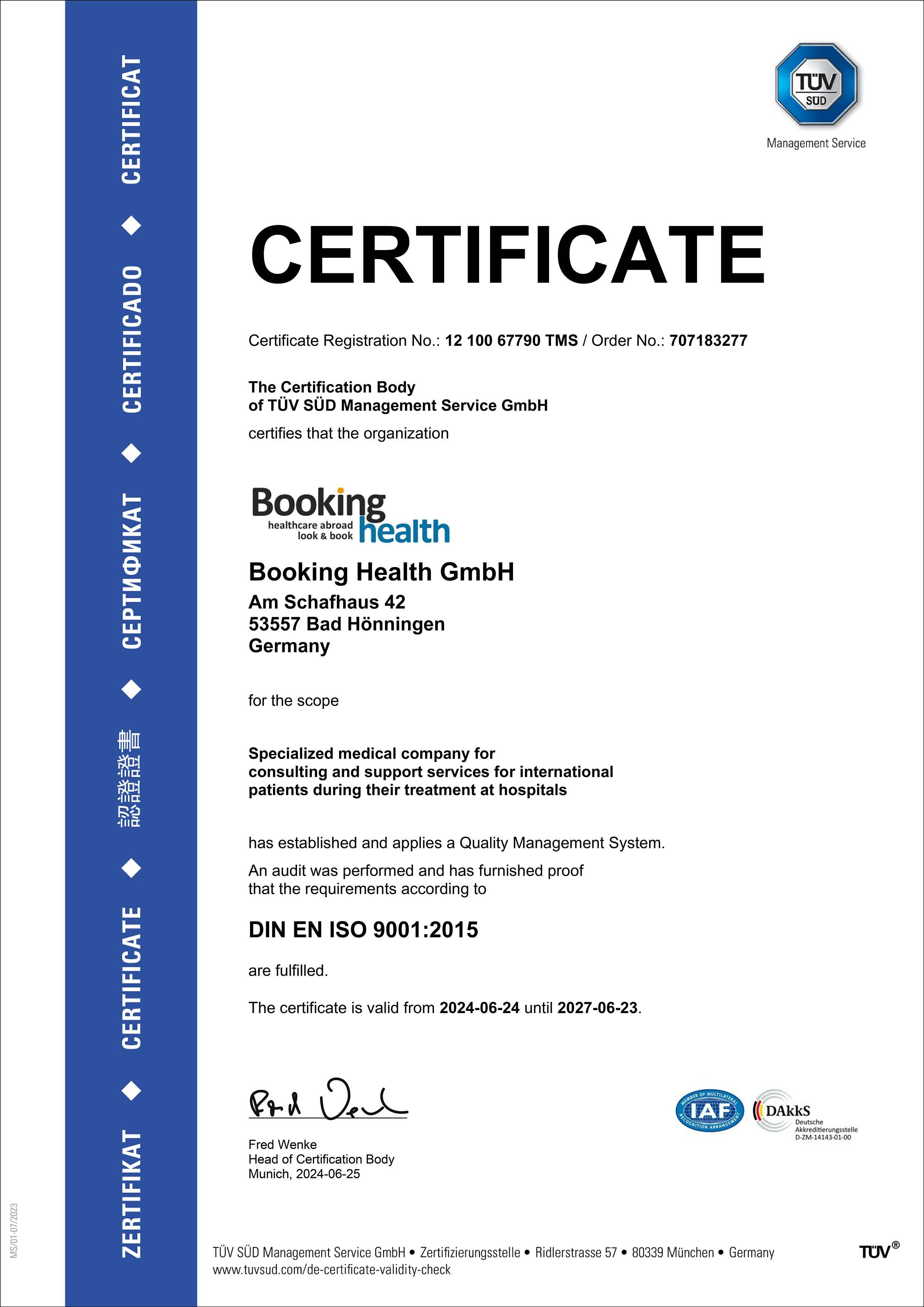
With more than 10 years of experience and certification under ISO 9001, Booking Health specializes in organizing personalized treatment programs in Germany. The company negotiates with hospitals directly, ensuring cost transparency and protecting patients from unforeseen expenses with insurance coverage of up to €200,000. This approach not only builds trust but also helps patients save money while accessing high-quality medical services.
Booking Health provides a complete range of services, including:
Professional assessment of medical reports.
Tailored treatment program development.
Selection of the most suitable clinic or medical center.
Preparation and translation of medical documentation.
Visa, travel, and accommodation support.
Personal coordinators and interpreters with 24/7 assistance.
Transparent budgeting with no hidden charges.
Germany is considered one of the most reliable destinations for international healthcare, offering innovative therapies, advanced technology, and a transparent pricing structure. The country's hospitals are not only equipped with modern facilities but also staffed by highly trained specialists and English-speaking doctors who provide individualized treatment plans tailored to each patient's needs.
For international patients, Booking Health serves as a bridge to this trusted system, ensuring organizational support and comprehensive assistance. From document preparation to interpreter services and insurance against unforeseen expenses, the company provides everything needed to make treatment in Germany both efficient and safe.
When choosing Germany for your medical care, you can rely on Booking Health as your partner in achieving better health and quality of life. In addition, with Booking Health, you never pay hidden charges, as all expenses are agreed upon in advance.
Contact Booking Health today to receive a personalized treatment plan, transparent cost estimate, and full support at every stage of your medical journey in Germany.
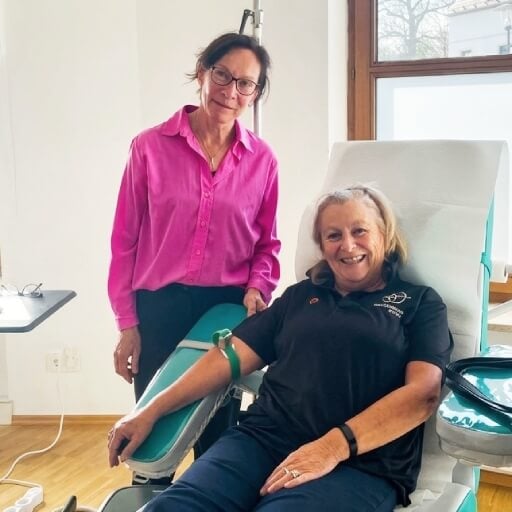
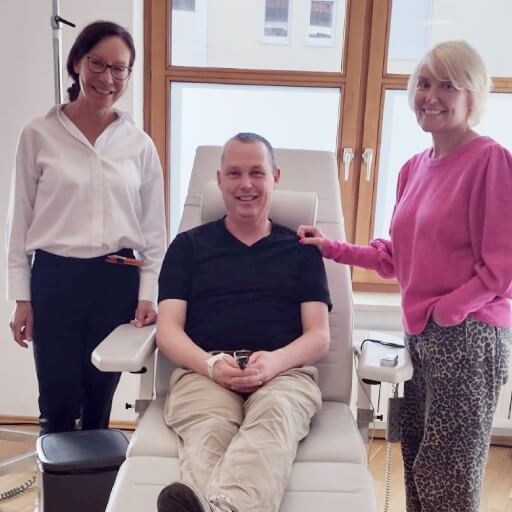
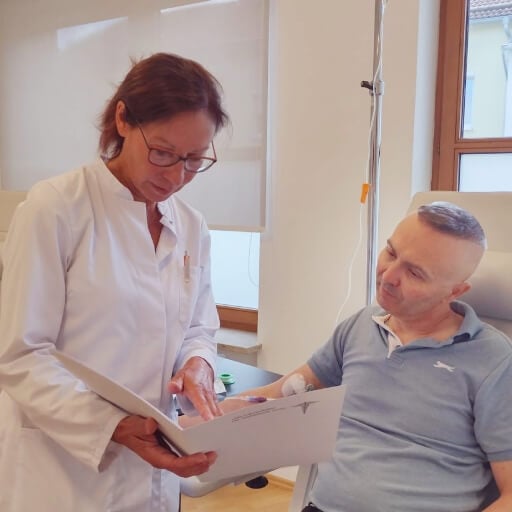
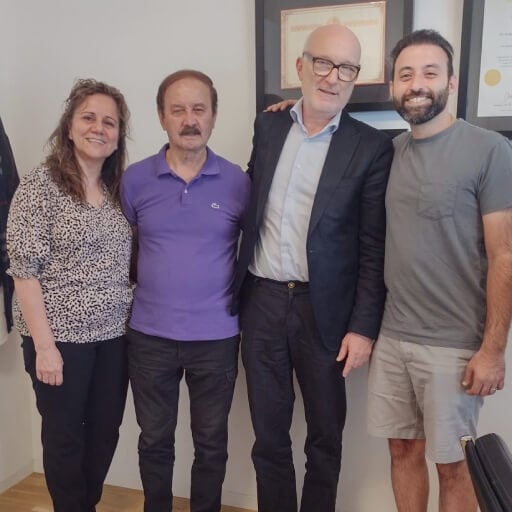
Every Patient Has a Story: Booking Health Treatment Journeys that Inspire
Ronald John C. (Canada), May 2026
Tommy G. (Ireland), April 2026
Sarah M. (United Kingdom), April 2026
Diane O. (United Kingdom), March 2026
Faeqa M. (Bahrain), March 2026
Paul K. (United Kingdom), February 2026
Jared Todd M. (USA), February 2026
Emmanuel K. (USA), January 2026
Peter H. (United Kingdom), January 2026
Patrick D. (Ireland), December 2025
Monica A. (Croatia), October 2025
Robert B. (USA), September 2025
David D. (United Kingdom), September 2025
Sargon B. (USA), August 2025
Frequently Asked Questions of Our Patients
How can international patients pay for medical treatment in Germany?
International patients can pay through international insurance coverage or specialized medical tourism facilitators.
Is it possible to receive planned medical treatment in Germany?
Yes — and the infrastructure for doing so is well established. Medical tourism agencies handle visa arrangements, treatment coordination, and the documentation that German hospitals require before admission. The German Medical Visa, issued as a Schengen C-Visa, provides legal entry specifically for patients traveling for planned medical procedures.
What financial assistance options are available for patients seeking treatment in Germany?
Booking Health manages all medical bills directly, serves as a payment guarantor throughout the treatment process, and provides insurance against unforeseen expenses up to €200,000. Direct hospital payment, full cost transparency before commitment, and a refundable margin system ensure that patients are not exposed to financial surprises during a process that already demands enough of their attention.
How are medical treatment prices set in Germany?
Treatment prices are regulated at the national level through official fee schedules developed under the supervision of the Federal Ministry of Health and the Federal Medical Association. The same pricing structure applies to German citizens and international patients alike — which means foreign patients are not subject to inflated rates that reflect their limited alternatives rather than the actual cost of care.
What factors influence treatment cost?
Treatment cost in Germany is influenced by several factors, including hospital stays and length of inpatient care; the number of specialists and senior consultants involved; the complexity of procedures or therapies; and additional costs (e.g., companion accommodation, rehabilitation services, etc.). These elements explain why some treatments (e.g., oncology surgeries or neurological interventions) are more expensive than basic check-ups. Nonetheless, all costs remain regulated across German hospitals.
How does Booking Health help with cost planning?
Booking Health negotiates directly with hospitals, manages all documentation and logistics, and provides predictable pricing before the patient commits to treatment — removing the financial uncertainty that makes medical travel abroad feel risky for many patients. Insurance against unforeseen expenses up to €200,000 provides a safety net for complications that no planning can fully anticipate. The result is a patient who can focus entirely on recovery, supported by an organization that has already resolved every financial and organizational variable the treatment process would otherwise require them to manage alone.
Choose treatment abroad, and you will get the best results for sure!
Authors:
This article was edited by medical experts, board-certified doctors Dr. Nadezhda Ivanisova, and Dr. Bohdan Mykhalniuk. For the treatment of the conditions referred to in the article, you must consult a doctor; the information in the article is not intended for self-medication!
Our editorial policy, which details our commitment to accuracy and transparency, is available here. Click this link to review our policies.
thank you for reaching out! One of our medical advisors is currently reviewing your details. You can expect a call from us within one business day to discuss your request.
Note: The incoming call will appear as a German number or your local area code. This call is entirely free of charge.
Booking Health guarantees:
Expert Placement
We use rigorous statistical analysis to ensure you are treated at the best-rated facility for your specific diagnosis.
Total Cost Protection
No hidden fees or unexpected bills. We provide a fixed price guarantee, backed by insurance that covers any additional complications.
12-Month Extended Care
Your recovery is our priority. Benefit from a full year of direct medical support following your procedure.